Modern factories need reliable parts that perform well and cost less to produce. Sintered metal products deliver both advantages by turning powdered metal into precision components. This guide explains everything about this smart manufacturing method.
What is Sintered Metal Products
Sintered metal products are solid metal components made by pressing fine metal powder into a specific shape and then heating it in a controlled furnace. The powder does not melt completely. Instead, the particles bond together at temperatures just below the melting point. This bonding process, called sintering, creates a strong, durable part with precise dimensions.
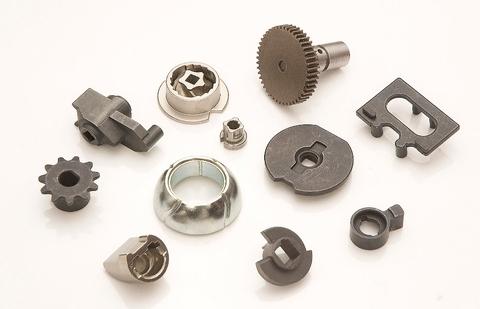
The starting material is a carefully blended metal powder. Common powders include iron, copper, nickel, stainless steel, and various alloy mixtures. The powder is poured into a precision die and compressed under enormous pressure, sometimes exceeding 50 tons. This creates a green compact that holds its shape but remains fragile. The compact then moves through a sintering furnace where heat fuses the particles into a solid metal component. Sintered metal products emerge from this process nearly finished, requiring minimal grinding or cutting.
How to Produce Sintered Metal Products
Manufacturing sintered metal products involves a carefully controlled sequence of steps. Each stage contributes to the final quality and performance of the component.
Step 1: Powder Selection and Blending
The process begins with selecting the base metal powder. Iron powder is the most common choice for structural parts. Alloying elements like copper, nickel, graphite, and molybdenum are added in precise amounts. These additions improve strength, hardenability, and wear resistance. A solid lubricant such as zinc stearate is mixed into the powder blend. This lubricant helps the powder flow smoothly into the die and reduces friction during pressing. The blending must be thorough to ensure every part has consistent properties.
Step 2: Compaction in a Precision Die
The blended powder flows into a die cavity shaped exactly like the desired part. Punches enter the die from above and below, compressing the powder. The pressure typically ranges from 400 to 800 megapascals for ferrous materials. Under this pressure, the powder particles deform and interlock mechanically. The result is a green compact that holds its shape. Complex parts with multiple levels, hubs, or flanges require sophisticated tooling with independently controlled punches. The green compact is strong enough to handle but fragile compared to the finished product.
Step 3: Sintering in a Controlled Atmosphere
The green compacts travel through a continuous furnace on a mesh belt or in ceramic trays. The furnace has distinct temperature zones. The first zone heats the parts to about 400 to 600 degrees Celsius to burn off the pressing lubricant. This delubrication must happen slowly to prevent soot from forming inside the pores. The next zone reaches the sintering temperature, typically 1100 to 1150 degrees Celsius for iron-based alloys. The metal particles bond through atomic diffusion. Copper additions melt and flow between iron particles, strengthening the bonds. A protective atmosphere of nitrogen and hydrogen prevents oxidation.
Step 4: Sizing and Calibration
After sintering, the parts may have slight distortion from thermal expansion and contraction. A sizing operation represses the part in a second die to achieve final dimensional accuracy. This step also burnishes the surface, improving smoothness and appearance. For sintered metal products requiring tight tolerances, sizing is essential.
Step 5: Secondary Operations
Many sintered metal products require additional finishing. Oil impregnation fills the internal pores with lubricant for self-lubricating bearings. Heat treatment hardens the surface for wear resistance. Steam treatment creates a black oxide layer that seals pores and prevents rust. CNC machining adds features that cannot be pressed, such as cross-holes or threads. Each secondary operation adds value and tailors the part to its specific application.
Related: Common Materials Used in Sintered Metal Products
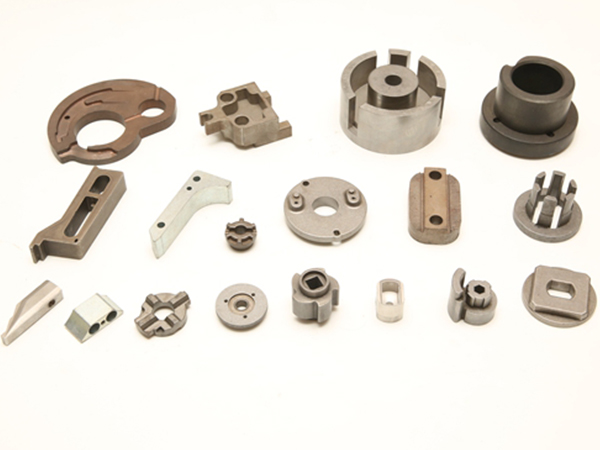
The choice of material determines how sintered metal products perform in different environments. Understanding the available options helps engineers select the right alloy for each application.
Iron-based materials dominate the powder metallurgy industry. Pure iron powder produces parts with moderate strength and good magnetic properties. Adding carbon transforms iron into steel during sintering, increasing hardness and tensile strength. Iron-copper alloys offer improved strength without requiring heat treatment because copper melts during sintering and infiltrates the iron structure. These materials suit automotive brackets, housings, and general structural components.
Iron-nickel alloys provide excellent toughness and fatigue resistance. Nickel contents of 1 to 4 percent refine the microstructure and improve impact properties. These alloys respond well to heat treatment, achieving high surface hardness while maintaining a ductile core. Gears, sprockets, and components subject to cyclic loading benefit from nickel additions.
Stainless steel powders produce sintered metal products with excellent corrosion resistance. Grade 316L offers the best protection against chlorides and harsh chemicals. Grade 304L provides good general corrosion resistance at lower cost. These materials suit medical instruments, food processing equipment, and marine hardware. Sintering stainless steel requires precise atmosphere control to prevent chromium oxidation that would compromise corrosion resistance.
Copper and bronze powders create sintered metal products with good electrical conductivity and natural lubricity. Porous bronze bearings absorb oil and release it during operation, providing maintenance-free lubrication. Copper-infiltrated iron parts combine the strength of steel with the conductivity and sealability of copper. These materials serve in electrical contacts, bearing applications, and fluid system components.
Soft magnetic materials represent a specialized category. Iron-phosphorus and iron-silicon alloys produce sintered metal products with controlled magnetic properties. These materials appear in sensors, actuators, and electromagnetic cores. The powder metallurgy process allows complex magnetic circuit shapes that would be difficult to machine from laminated sheets.
Related: Quality Control and Testing of Sintered Metal Products
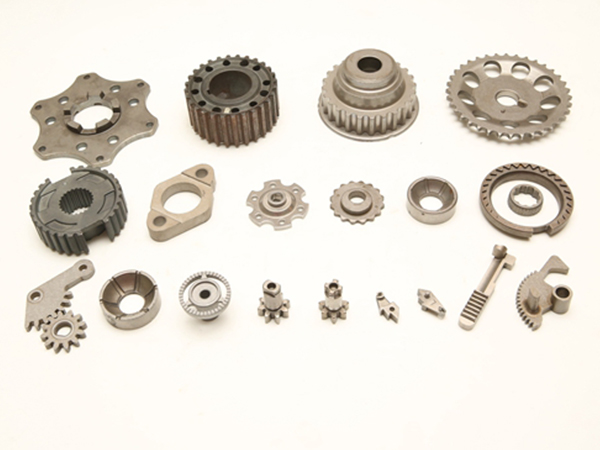
Ensuring consistent quality requires rigorous testing throughout the production process. Sintered metal products must meet mechanical, dimensional, and metallurgical specifications before shipment.
Density measurement is the most fundamental quality check. Technicians weigh parts in air and water using the Archimedes principle to calculate density. This test verifies that the compaction and sintering processes achieved the specified density level. Low density indicates poor compaction or insufficient sintering, compromising strength and fatigue life.
Mechanical testing evaluates how sintered metal products perform under load. Tensile bars pressed from the same powder batch reveal yield strength and ultimate tensile strength. Transverse rupture testing applies a bending load to a rectangular specimen until fracture. Hardness testing uses Rockwell or Vickers scales to verify surface hardness after heat treatment. Impact testing measures toughness for parts subject to shock loading.
Metallographic examination reveals the internal structure. A cross-section of the part is polished and examined under a microscope. The microstructure shows whether sintering was complete, whether pores are properly rounded, and whether any unwanted phases formed. For sintered metal products that undergo heat treatment, metallography confirms the case depth and core microstructure match specifications.
Dimensional inspection uses coordinate measuring machines and optical comparators. Critical dimensions are checked against the engineering drawing. Statistical process control tracks dimensional trends over time, allowing operators to adjust the process before parts go out of tolerance. First article inspection reports document every dimension of sample parts before full production begins.
FAQ: Your Sintered Metal Products Questions Answered
1. What is the difference between sintered metal and cast metal parts?
Sintered metal products are formed by pressing powder and heating below the melting point. Cast metal parts are made by pouring molten metal into a mold. Sintering produces finer microstructures and better dimensional accuracy because no liquid-to-solid shrinkage occurs. Cast parts can achieve larger sizes and more complex internal cavities. Sintered metal products use over 95 percent of the raw material, while casting produces gates and runners that must be recycled.
2. Can sintered metal products be repaired if they break?
Repairing sintered metal products is difficult due to their porous structure. Welding tends to release trapped gases from the pores, causing porosity in the weld bead. Brazing works better because it uses lower temperatures that do not release internal gases. However, the best approach is designing parts to prevent failure through adequate density and proper material selection. Critical sintered metal products should be replaced rather than repaired.
3. Are sintered metal products environmentally friendly?
Yes, powder metallurgy is one of the most sustainable metal manufacturing processes. Material utilization exceeds 95 percent, meaning almost all the raw powder becomes finished product. Traditional machining wastes 50 percent or more of the starting material as chips. The sintering process uses less energy than melting and casting. Many sintered metal products are recyclable at end of life, and the powder can be reprocessed. These sustainability advantages make powder metallurgy increasingly attractive for environmentally conscious manufacturers.
Conclusion
Sintered metal products offer a powerful combination of precision, material efficiency, and design flexibility that traditional manufacturing methods struggle to match. By understanding the production process from powder blending through final sizing, engineers can design components that take full advantage of this technology. The wide range of available materials, from cost-effective iron alloys to corrosion-resistant stainless steels, ensures suitable options exist for nearly every application. Rigorous quality control throughout production guarantees that sintered metal products meet the demanding requirements of automotive, medical, industrial, and consumer markets worldwide.
6 Strategies to find a Reliable Sintered Iron Structural Parts Company