Building a durable product starts with selecting the right manufacturing partner for your critical components. A sintered iron structural parts company transforms raw metal powder into high-strength, precision components that form the backbone of countless machines. This guide will help you understand the technology and find the ideal supplier for your needs.
What is Sintered Iron Structural Parts
Sintered iron structural parts are load-bearing components manufactured through powder metallurgy, where fine iron powder is compacted under extreme pressure and then heated in a controlled atmosphere furnace. The process fuses the powder particles together at temperatures below the melting point of iron, creating a solid, durable component with excellent mechanical properties. These parts include gears, brackets, housings, bearing caps, and structural connectors.
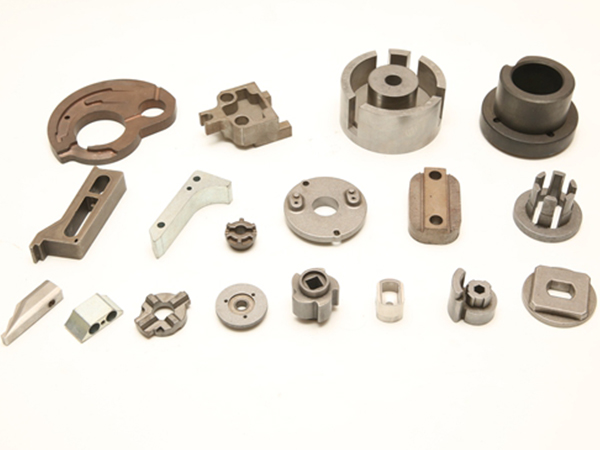
Unlike cast or machined iron components, these parts are built from the ground up. The iron powder, often mixed with alloying elements like copper, nickel, or carbon, is pressed into a precision die that forms the exact shape of the finished part. After sintering, the component achieves near-net-shape geometry, meaning it requires minimal secondary machining. This process delivers complex geometries, tight tolerances, and consistent quality at production volumes where traditional methods become uneconomical.
How to Find a Reliable Sintered Iron Structural Parts Company
Locating a trustworthy sintered iron structural parts company requires systematic research and careful evaluation. Follow these steps to identify a partner who can deliver consistent quality and reliable service.
Step 1: Define Your Technical Requirements Clearly
Before beginning your search, document every requirement for your parts. Specify the material grade, density target, tensile strength needed, and dimensional tolerances. Include the expected annual volume and any secondary operations like heat treatment, machining, or surface finishing. A clear specification package allows potential suppliers to assess their capability match accurately. This preparation also signals to a sintered iron structural parts company that you are a serious, knowledgeable buyer who values precision.
Step 2: Research Industry Directories and Trade Associations
Start your search with professional organizations like the Metal Powder Industries Federation. Their member directories list qualified manufacturers who adhere to industry standards. Trade publications and manufacturing databases also feature verified supplier listings. Online searches can identify candidates, but prioritize companies with professional websites that clearly describe their capabilities, certifications, and industry experience. A sintered iron structural parts company with an informative online presence demonstrates investment in their business and customer communication.
Step 3: Evaluate Equipment Capabilities and Capacity
Review the press tonnage range and furnace technology of each candidate. The press capacity determines the maximum part size and achievable density. A supplier with only small presses cannot produce large structural components. Examine their sintering furnace type, whether continuous mesh-belt, pusher, or vacuum. The furnace atmosphere control directly affects part quality and consistency. A capable sintered iron structural parts company will openly share equipment specifications and explain how their technology matches your part requirements.
Step 4: Verify Quality Certifications and Inspection Systems
Check for ISO 9001 certification as the minimum baseline. For automotive components, IATF 16949 certification demonstrates advanced quality management. Review their inspection capabilities, including coordinate measuring machines, optical comparators, and material testing equipment. Request a sample First Article Inspection Report to assess documentation quality. A reputable sintered iron structural parts company treats quality documentation as a core deliverable, not an afterthought.
Step 5: Request References and Case Studies
Ask for references from clients in your industry or with similar part complexity. Contact those references and inquire about on-time delivery rates, quality consistency, and responsiveness to issues. Review case studies on the company’s website to understand their problem-solving approach. A confident sintered iron structural parts company will gladly connect you with satisfied customers who can share their firsthand experiences.
Step 6: Conduct a Facility Audit or Virtual Tour
Visit the manufacturing facility if geography allows. Observe the cleanliness, organization, and maintenance of presses, furnaces, and quality labs. Well-maintained equipment and orderly workflows indicate management discipline. If travel is impractical, request a virtual tour. Pay attention to how employees interact with equipment and each other. The culture of a sintered iron structural parts company directly influences the consistency and quality of its output.
Step 7: Evaluate Communication and Engineering Support
Send a preliminary inquiry with your part drawing and observe the response quality. Does the company assign an engineer to review your design and offer suggestions for manufacturability? Do they identify potential issues with powder fill, ejection, or sintering distortion? The best sintered iron structural parts company acts as an engineering partner, providing design feedback that reduces cost and improves part performance before tooling is built.
Related: The Role of Alloying Elements in Iron Structural Parts
Pure iron powder produces parts with limited strength and hardenability. To meet demanding structural requirements, a sintered iron structural parts company blends alloying elements into the powder mix. Each element serves a specific purpose that enhances the final component’s performance in different ways.
Copper is one of the most common alloying additions. During sintering, copper melts and infiltrates the iron particle boundaries, strengthening the bonds between particles. Copper additions of 2 to 5 percent significantly increase tensile strength and hardness without requiring a separate heat treatment. This makes copper-iron alloys popular for medium-strength structural applications like brackets and housings.
Carbon, added as fine graphite powder, transforms iron into steel during sintering. The carbon dissolves into the iron matrix, enabling the formation of pearlite and martensite microstructures upon cooling. Carbon levels between 0.3 and 0.8 percent allow the sintered part to be heat-treated for high hardness and wear resistance. A skilled sintered iron structural parts company controls carbon content precisely, as too much carbon causes brittleness while too little sacrifices strength.
Nickel improves toughness and hardenability. Nickel additions of 1 to 4 percent refine the grain structure and enhance impact resistance at low temperatures. Nickel-iron alloys respond well to heat treatment and maintain good dimensional stability. These alloys suit gears, sprockets, and components that experience shock loading.
Molybdenum enhances high-temperature strength and creep resistance. Even small additions of 0.5 to 1 percent molybdenum significantly improve the performance of sintered iron structural parts in engines, turbochargers, and exhaust systems where temperatures exceed 400 degrees Celsius. The element also increases hardenability, allowing thicker sections to through-harden effectively.
Related: Heat Treatment Processes for Sintered Iron Components
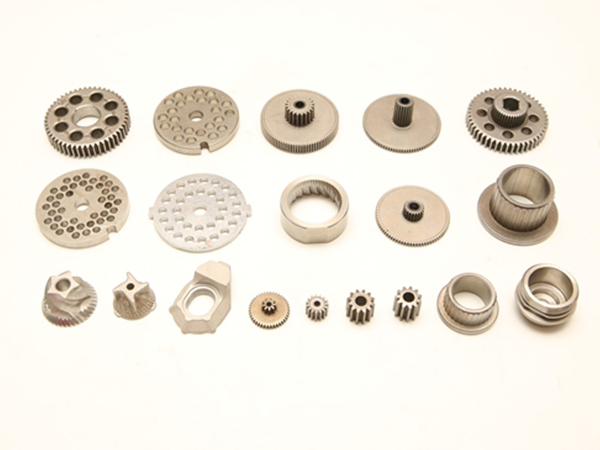
The as-sintered properties of iron components often fall short of demanding structural requirements. A sintered iron structural parts company applies various heat treatment processes to enhance mechanical properties after sintering. Understanding these treatments helps you specify the right finishing process for your application.
Carburizing is a case-hardening process where carbon diffuses into the surface layer of the part at high temperatures. The part is heated in a carbon-rich atmosphere, typically between 850 and 950 degrees Celsius, allowing carbon atoms to penetrate the outer surface. After quenching, the surface becomes hard martensite while the core remains tough and ductile. This creates a wear-resistant exterior with an impact-resistant interior, ideal for gears and cam followers.
Carbonitriding adds both carbon and nitrogen to the surface layer. This process operates at slightly lower temperatures than carburizing and produces a thinner but harder case. The nitrogen enhances the hardenability of the case layer, allowing less severe quenching and reducing distortion. Carbonitriding suits smaller components where a thin, hard surface provides adequate wear resistance.
Through-hardening involves heating the entire part to austenitizing temperature and then quenching in oil or water. This process requires sufficient carbon content in the base material, typically above 0.3 percent. Through-hardened parts achieve uniform hardness throughout, making them suitable for heavy static loads. However, the rapid quench can cause distortion, so a sintered iron structural parts company often performs sizing or grinding after heat treatment.
Steam treatment is a unique process specific to powder metallurgy. The sintered part is exposed to superheated steam at around 540 degrees Celsius. The steam reacts with the iron surface to form a layer of magnetite, a black iron oxide that fills surface porosity. This treatment increases hardness, improves wear resistance, and seals the surface against moisture. Steam-treated parts exhibit excellent corrosion resistance for mild environments.
Induction hardening uses electromagnetic induction to heat only the surface layer rapidly, followed by immediate quenching. This localized treatment hardens specific areas like gear teeth or bearing journals while leaving other regions unaffected. A sintered iron structural parts company uses induction hardening when precise control over the hardened zone is required, minimizing distortion in complex parts.
FAQ: Your Sintered Iron Structural Parts Company Questions Answered
1. How do I know if my part is suitable for powder metallurgy instead of casting or machining?
Powder metallurgy suits parts produced in medium to high volumes, typically above 5,000 pieces annually. The part should have a fairly uniform cross-section to allow proper powder compaction. Complex features like gears, splines, and cams can be pressed directly into the shape. Very large parts, those exceeding 150 millimeters in diameter, may be limited by press tonnage availability. A qualified sintered iron structural parts company will evaluate your drawing and provide an honest assessment of feasibility.
2. What density level should I specify for my structural parts?
The required density depends on the mechanical loads your part experiences. For lightly loaded brackets and spacers, a density of 6.6 to 6.8 grams per cubic centimeter is often sufficient. Gears and load-bearing components need 7.0 grams per cubic centimeter or higher for adequate fatigue strength. Parts experiencing high contact stresses or impact loads benefit from densities above 7.2 grams per cubic centimeter, achieved through double-pressing or copper infiltration. Your sintered iron structural parts company can recommend the appropriate density based on your application’s stress analysis.
3. How does the cost of sintered iron parts compare to machined or cast alternatives?
For production volumes above 10,000 pieces annually, sintered iron structural parts typically cost significantly less than machined equivalents. The near-net-shape process eliminates most machining operations, and material utilization exceeds 95 percent compared to 50 percent for machining from bar stock. Tooling costs are amortized over the production volume, making high-volume runs particularly economical. Cast iron may have lower per-pound material costs but requires more extensive machining. A sintered iron structural parts company can provide a detailed cost comparison based on your specific part geometry and volume.
Conclusion
Partnering with a qualified sintered iron structural parts company opens the door to efficient, cost-effective manufacturing of precision structural components. By understanding the role of alloying elements and heat treatment processes, you can specify parts that meet exact performance requirements. A systematic search process focusing on equipment capabilities, quality certifications, and engineering support ensures you find a supplier who delivers consistent quality and acts as a true manufacturing partner. The powder metallurgy process, with its material efficiency and design flexibility, continues to advance, offering ever-improving properties for demanding structural applications.
7 Benefits of Sintered Stainless Steel Parts for Demanding Applications