Introduction
Finding a reliable powder metallurgy company can make or break your manufacturing project. At sinteredmetals.com, we help businesses source high-quality sintered metal parts with precision, efficiency, and confidence. This guide covers everything you need to know before choosing a partner.
What Is a Powder Metallurgy Company?
A powder metallurgy company is a manufacturer that specializes in producing metal parts using the PM process. Instead of melting and casting metal, the manufacturer compresses fine metal powders into a mold and then heats them through a process called sintering. The heat bonds the particles together without fully melting them, forming a solid, strong, and precise part.
This production method is widely used across industries including automotive, aerospace, electronics, and medical devices. A professional sintering manufacturer can produce complex shapes, tight tolerances, and consistent quality at high volumes — all while reducing material waste compared to traditional machining.
Working with the right partner means gaining access to technical expertise, advanced equipment, and materials knowledge that most in-house teams simply cannot match.
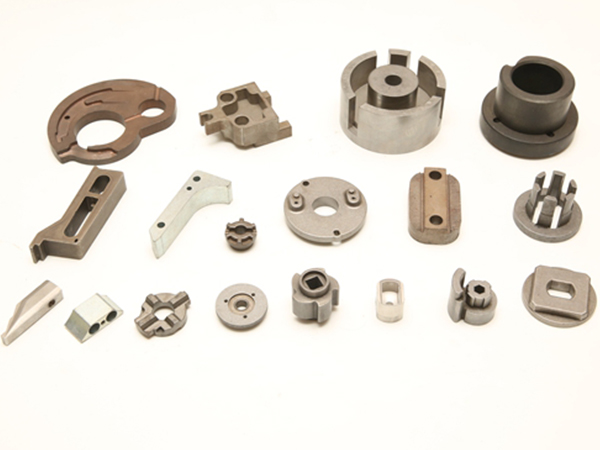
3 Key Specifications to Know
Before placing an order, you should understand these three core specifications that affect the quality of your parts:
1. Material Composition The metal powder blend determines the final part’s mechanical properties. Common materials include iron, copper, stainless steel, bronze, and nickel alloys. A reputable powder metallurgy company will guide you to the right composition based on your strength, corrosion resistance, and conductivity needs.
2. Density and Porosity Density is measured as a percentage of the theoretical maximum. Higher density means greater strength. Porosity — tiny internal voids — can be useful for self-lubricating bearings but harmful in structural components. A trusted supplier controls both to meet your exact requirements.
3. Dimensional Tolerance PM parts can be produced to very tight tolerances, often within ±0.05 mm. This is one of the biggest advantages of the PM process. Always confirm the tolerance capabilities of your chosen manufacturer before placing a production order.
How to Choose a Powder Metallurgy Company: Step by Step
Selecting the right partner is one of the most important decisions in your supply chain. Follow these steps to make a confident choice:
Step 1 — Define Your Requirements Start with your part’s function, load conditions, operating environment, and required material. Knowing what you need makes it much easier to evaluate whether a powder metallurgy company can deliver what you expect.
Step 2 — Check Certifications Look for ISO 9001 certification or industry-specific standards such as IATF 16949 for automotive. Certifications confirm that the supplier follows documented quality systems and consistent manufacturing processes.
Step 3 — Evaluate Technical Capabilities Ask about equipment, press tonnage, sintering furnace types, and secondary operations like sizing, heat treatment, and surface finishing. A full-service manufacturer reduces the need for multiple vendors.
Step 4 — Request Samples or Prototypes Before committing to mass production, request prototype parts. This lets you test dimensional accuracy, surface finish, and mechanical performance from the supplier firsthand.
Step 5 — Compare Lead Times and MOQs Understand the minimum order quantity (MOQ) and standard lead times. A reliable powder metallurgy company should give you clear timelines and be transparent about capacity constraints.
Step 6 — Review Their Track Record Look for case studies, client testimonials, and industry experience. A well-established manufacturer will have a proven history of solving real challenges for businesses like yours.
Important Notices
Keep these important points in mind when working with any PM supplier:
- Design for PM early. Parts designed specifically for the PM process will always outperform designs adapted from other manufacturing methods. Involve your powder metallurgy company at the design stage.
- Not all metals are suitable. Some alloys are difficult or impossible to process using PM. Always confirm material availability with your supplier.
- Surface finish may need secondary operations. As-sintered surfaces are functional but not always smooth. Ask about available finishing options if aesthetics or sealing surfaces matter.
- Volume affects pricing significantly. PM is most cost-effective at medium to high production volumes. Low-volume orders may be better served by other processes.
- Intellectual property protection matters. Share your design files only with a manufacturer that has a clear NDA and IP protection policy in place.
FAQ
Q1: What types of parts can a PM supplier produce? A powder metallurgy company can produce gears, bearings, bushings, structural brackets, filters, magnets, and many other complex components. This process is especially effective for parts with intricate internal shapes that would be difficult or expensive to machine from solid metal.
Q2: How does this process compare to a traditional machining shop? PM manufacturing offers lower per-part costs at volume, near-net-shape production with minimal waste, and the ability to create self-lubricating or porous parts. Traditional machining offers more flexibility for low volumes and materials that cannot be processed as powders. The best choice depends on your part design, volume, and budget.
Q3: Is sinteredmetals.com a sintered metals supplier I can work with directly?
Yes. sinteredmetals.com connects buyers with trusted sintered metal manufacturers and provides guidance on materials, specifications, and sourcing. Whether you need a single prototype or a full production run, our team is ready to help you find the right powder metallurgy company for your specific needs.
Conclusion
Choosing the right partner is a critical step toward building a reliable, cost-effective supply chain for precision metal parts. From understanding key specifications to evaluating suppliers step by step, the process becomes straightforward when you know what to look for. Visit sinteredmetals.com today to connect with experienced partners and get expert guidance on your next sintering project.