If you work in manufacturing or engineering, you’ve likely heard about powder metal parts. These components are transforming modern production lines with their precision, efficiency, and cost savings — making them one of the smartest choices in metal component manufacturing today.
What Are Powder Metal Parts?
Powder metal parts are metal components made through a process called powder metallurgy (PM). Instead of melting and casting metal, manufacturers start with fine metal powders — such as iron, copper, nickel, or stainless steel — and compress them into a mold before heating them to bond the particles together.
The result is a solid, near-net-shape component that requires little to no additional machining. This makes metal parts extremely cost-effective for high-volume production runs.
The technology has been around since the early 20th century but has advanced rapidly in recent decades. Today, powder metallurgy produces components used in automotive engines, household appliances, power tools, aerospace equipment, and medical devices. Any industry that needs precise, repeatable metal components at scale is a strong candidate for sintered metal parts.
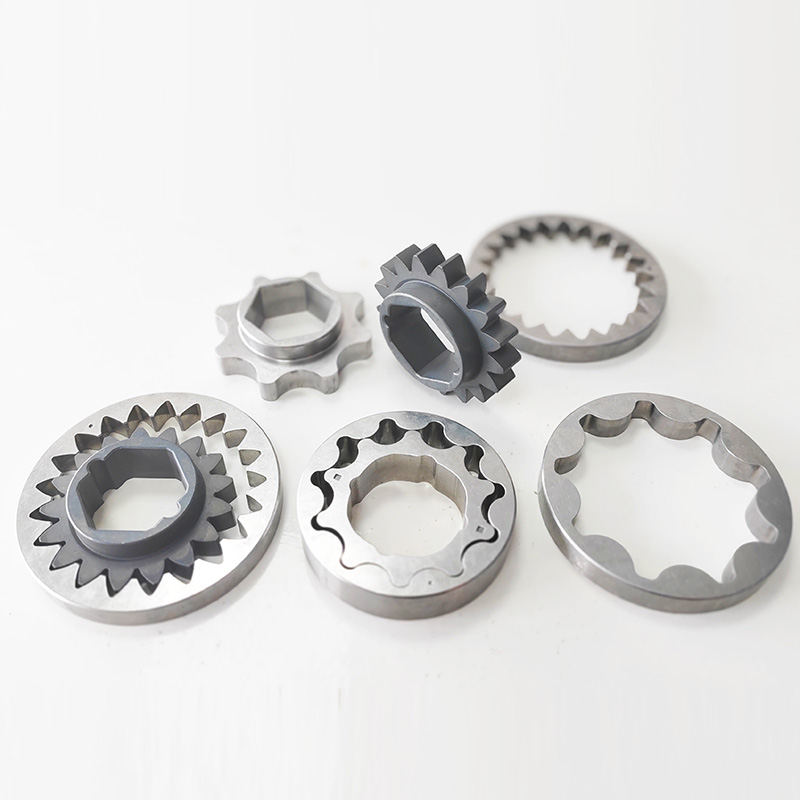
3 Key Specifications of Powder Metal Parts
Before selecting powdered metal parts for your application, it’s important to understand the three most critical specifications that define their performance.
1. Density and Porosity
Density is the most fundamental specification for sintered metal parts. It is measured as a percentage of the theoretical full density of the metal. Typical sintered parts reach 80–95% of full density.
The remaining percentage is made up of small pores distributed throughout the part. This natural porosity can actually be an advantage — it allows oil to be impregnated into the part for self-lubricating bearings. However, for structural applications requiring maximum strength, higher-density powder metal parts (above 90%) are recommended.
2. Mechanical Strength (Tensile Strength)
Tensile strength measures how much pulling force a part can withstand before breaking. For sintered metal parts, tensile strength depends on:
- The base metal material (e.g., iron-copper, iron-nickel)
- The sintering temperature and time
- The final density achieved after compaction
- Any secondary heat treatment applied
Typical tensile strength values range from 200 MPa to over 800 MPa, depending on the alloy and process. This makes many powdered parts comparable in strength to wrought or cast equivalents.
3. Dimensional Tolerance
One of the greatest advantages of powdered parts is their tight dimensional tolerance straight out of the mold. Standard tolerances of ±0.05 mm are achievable without secondary machining on most features.
For comparison, sand casting typically achieves ±1.0 mm, and die casting achieves ±0.1–0.3 mm. The ability to hold tight tolerances in high volumes is a major reason why engineers prefer powder metal parts for precision gears, bushings, and structural components.
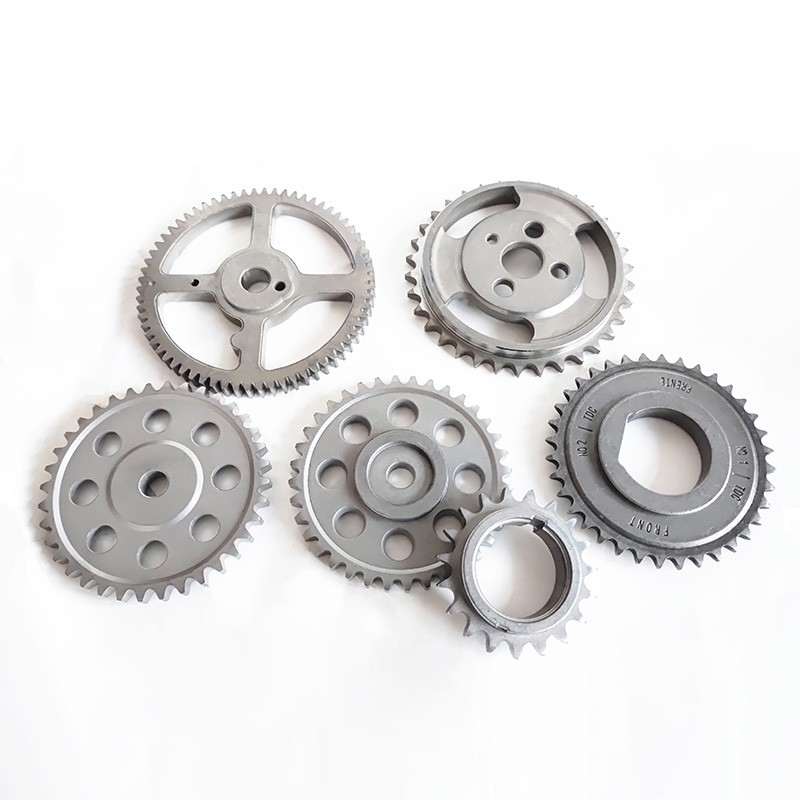
How to Produce Powder Metal Parts (Step by Step)
The production of sintered metal parts follows a reliable sequence of steps. Here’s how the process works from raw powder to finished component:
Step 1 — Powder Selection and Blending The process begins by selecting the correct metal powders for the application — commonly iron-based blends for structural parts or copper-based for electrical components. Lubricants and alloying additives are blended in to improve flow and compaction behavior.
Step 2 — Die Design and Tooling A precision die (mold) is designed to the exact shape of the finished part. The die is typically made from hardened tool steel and is engineered to apply pressure evenly across the part’s cross-section. Good die design is critical to producing consistent sintered metal parts at high volumes.
Step 3 — Compaction (Pressing) The blended powder is fed into the die cavity and compressed under high pressure — typically between 400 and 800 MPa — using a hydraulic or mechanical press. This produces a “green compact” that holds its shape but is still fragile. At this stage the part is already close to its final dimensions.
Step 4 — Sintering The green compact is placed in a continuous sintering furnace with a controlled atmosphere (often hydrogen or nitrogen) to prevent oxidation. The part is heated to just below its melting point — typically 1,100–1,300°C for iron-based parts — for a set period. The heat causes the powder particles to bond metallurgically, dramatically increasing strength and density.
Step 5 — Secondary Operations (If Required) After sintering, some metal parts undergo additional processing to meet tighter requirements, including:
- Sizing/coining — repressing to improve dimensional accuracy
- Machining — for features like threads or undercuts that cannot be pressed
- Heat treatment — case hardening or through-hardening for improved wear resistance
- Oil impregnation — for self-lubricating bearings
Step 6 — Quality Inspection and Finishing Finished parts are inspected for dimensional accuracy, density, and surface finish. Surface treatments such as plating, steam treating, or painting may be applied before shipment.
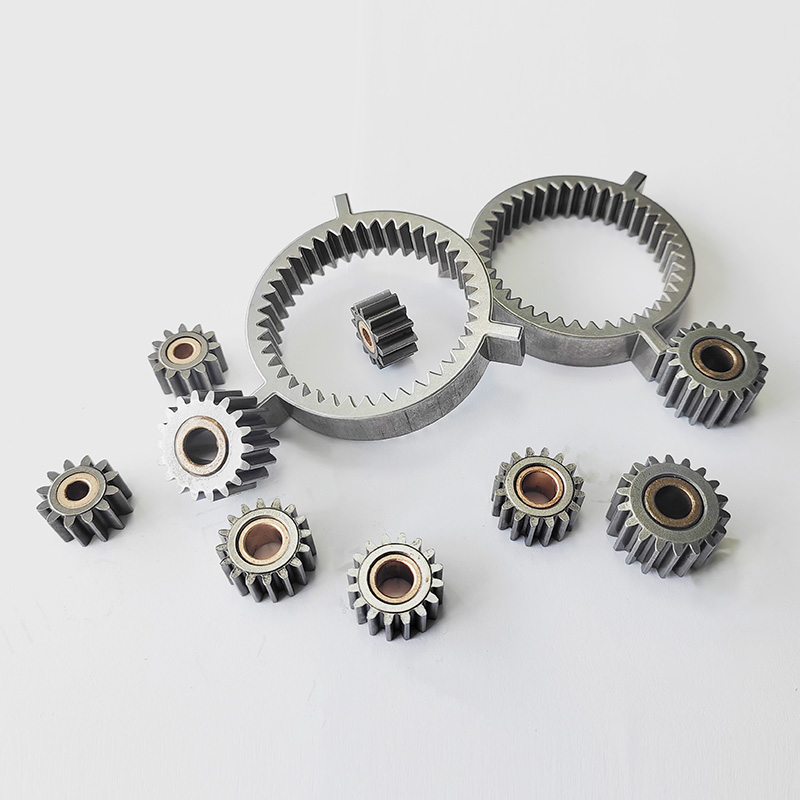
Important Notices When Working With Powder Metal Parts
Keep these practical points in mind when specifying or handling powder metals:
Design for the PM process early. Powder metal parts cannot have undercuts, re-entrant angles, or side holes directly from pressing. These features must be added in secondary machining. Involve your PM supplier during the design phase to avoid costly redesigns later.
Avoid thin walls and sharp corners. Minimum wall thickness for most metal parts is around 1.5 mm. Thinner walls are prone to cracking during ejection from the die. Sharp internal corners also concentrate stress and should be replaced with small radii.
Handle green compacts carefully. Before sintering, green compacts are fragile and can crack from minor impacts. Always transport and handle them with care during production.
Consider corrosion protection. Most iron-based sintered metal parts are susceptible to rust if left unprotected. Specify a surface treatment such as steam treating, zinc plating, or oil impregnation to ensure long service life in humid or wet environments.
Frequently Asked Questions About Powder Metal Parts
Q1: Are powder metal parts as strong as machined steel parts?
In many cases, yes. Modern sintered metal parts can achieve tensile strengths exceeding 800 MPa with proper alloy selection and heat treatment. While very high-density wrought steel still outperforms PM in extreme applications, the strength-to-cost advantage of powder metal makes it the preferred choice for the vast majority of structural components in automotive and industrial use.
Q2: What industries use powder metal parts most?
The automotive industry is by far the largest user, accounting for over 70% of all sintered metal parts produced globally. Common automotive applications include gears, connecting rods, valve seat inserts, and sprockets. Other major industries include appliances, power tools, hydraulics, and medical devices.
Q3: What is the minimum order quantity for powder metal parts?
Because tooling costs are significant, sintered metal parts become most economical at volumes of 10,000 pieces or more per year. For lower volumes, machining or casting may be more cost-effective. However, once the tooling investment is made, the per-part cost of powder metal drops dramatically compared to any alternative manufacturing method.
Conclusion
Sintered metal parts offer a compelling combination of precision, material efficiency, and cost-effectiveness that few other manufacturing processes can match. From understanding their key specifications — density, strength, and tolerance — to following a reliable production process, manufacturers who embrace powder metallurgy gain a significant competitive edge. Whether you’re designing automotive gears or industrial bushings, powder metal parts are a proven, smart solution worth considering for your next project.
7 Positive Steps to Find the Best Powdered Metal Suppliers for Your Business
7 Trusted Reasons to Choose the Best Powder Metallurgy Company for You