Introduction
Powdered metals are made from Metal powders. From automotive parts to medical devices, they offer precision, efficiency, and versatility that traditional metalworking cannot match. Whether you are new to the industry or simply curious, understanding this technology can open doors to smarter material choices. In this article, we break down everything beginners need to know — what these materials are, their key specifications, how they are made, and answers to the most common questions.
What Are Powdered Metals?
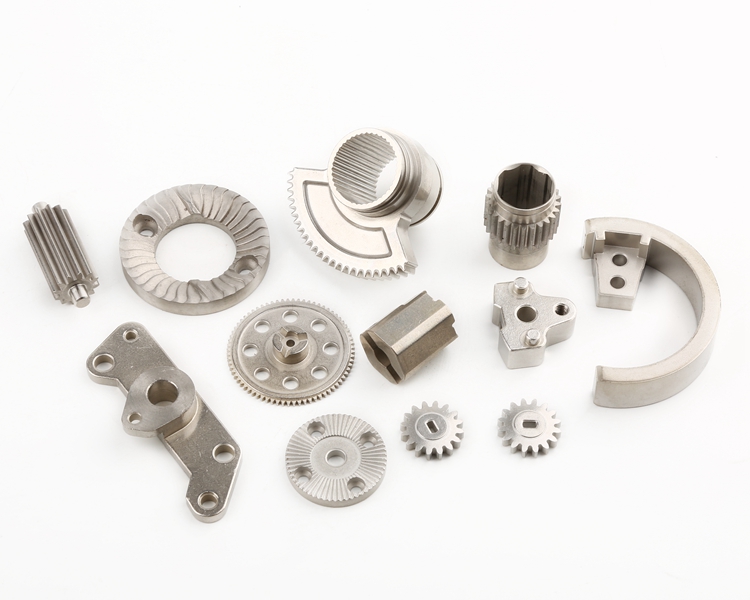
Powdered metals are fine metal particles produced by breaking down solid metals into granular or powder form. These particles are typically measured in microns and can be made from iron, copper, aluminum, nickel, titanium, and many other metals.
They are the foundation of a manufacturing process called powder metallurgy (PM). Instead of melting and casting, manufacturers compress the particles into a mold and then heat them — a process called sintering — to bond them together into a solid, functional part.
This method allows for highly accurate shapes, minimal material waste, and consistent quality across large production runs. Industries like aerospace, automotive, electronics, and medical equipment rely on this technology heavily today.
3 Key Specifications of Powdered Metals
When selecting metal powders for any application, three specifications matter most:
- Particle Size
Particle size is measured in microns (µm). Finer particles (under 45 µm) are used for high-precision applications, while coarser ones work well for structural parts. Controlling particle size directly affects the density and strength of the final product. - Apparent Density
Apparent density measures how much mass fits into a unit volume without compression. A higher apparent density often means better flowability and more predictable behavior during pressing — an important factor in consistent manufacturing. - Flowability
Flowability describes how easily particles move through equipment and fill molds. Good flowability ensures uniform die filling, which leads to parts with even density and fewer defects. It is typically measured in seconds per 50 grams using a Hall flowmeter.
How to Make Powdered Metals: Step by Step
Powder Metallurgy Process: A Great Guide to Sintered Metal Parts Manufacturing
Step 1 — Metal Selection
Choose the base metal or alloy based on the desired properties of the final part (strength, conductivity, corrosion resistance, etc.).
Step 2 — Powder Production
The most common methods include:
- Atomization — Molten metal is sprayed through a nozzle with high-pressure water or gas, forming fine droplets that solidify into powder.
- Reduction — Metal oxides are chemically reduced to produce pure particles.
- Electrolysis — An electric current deposits metal onto a surface, which is then scraped off and milled into powder.
Step 3 — Mixing and Blending
The particles are blended with lubricants or other additives to improve pressing behavior and achieve the desired alloy composition.
Step 4 — Compaction
The blended mixture is poured into a die and compressed under high pressure (typically 150–900 MPa) to form a “green compact” that holds its shape.
Step 5 — Sintering
The green compact is heated in a controlled furnace at temperatures below the melting point. The heat bonds the particles together, creating a solid, strong part.
Step 6 — Finishing
Optional post-processing steps like machining, plating, or heat treatment may be applied to improve dimensional accuracy or surface properties.
Important Notices
- Always store metal powders in dry, sealed containers. Moisture can cause oxidation, clumping, and reduced performance.
- Fine particles can be a fire or explosion hazard. Follow all safety regulations and use proper ventilation and grounding in work areas.
- Not all metal powders behave the same way. Always verify specifications with your supplier before production.
- Disposal should comply with local environmental regulations — never pour metal powders down drains.
FAQ
Q1: What industries use powdered metals the most?
They are widely used in automotive (gears, bearings, bushings), aerospace (structural components), electronics (contacts and magnets), and medical devices (implants and surgical tools). Their ability to produce complex shapes at low cost makes them valuable across many sectors.
Q2: Are powdered metals as strong as solid metal?
Yes, in many cases. With modern sintering techniques, finished parts can reach 90–99% of the density of wrought metal, resulting in comparable strength and durability. Some PM parts even outperform cast equivalents due to a more uniform microstructure.
Q3: How fine are the particles, exactly?
Most metal powders range from 1 to 300 microns in particle size. For context, a human hair is about 70 microns wide. The exact size depends on the production method and the intended application.
Conclusion
Metal powder technology is a cornerstone of modern precision manufacturing. From unique production methods to impressive mechanical properties, powdered metals offer unmatched flexibility for creating complex, high-quality parts at scale. Whether you are sourcing materials or just exploring the field, understanding the basics gives you a real advantage. Explore more expert guides at sinteredmetals.com to deepen your knowledge and find the right solutions for your needs.
Sintered Metal Suppliers: How to Choose a Right Partner easily in 1 week