Metal parts surround us everywhere. Powder metallurgy is the clever manufacturing process that creates many of them without melting anything. This guide explains how this fascinating technology works and why it matters to you.
What is Powder Metallurgy
Powder metallurgy is a manufacturing process that shapes fine metal powders into solid parts using intense pressure and controlled heat. Unlike traditional metalworking that melts metal and pours it into molds, powder metallurgy works by pressing tiny metal particles together and then heating them just below their melting point. The particles bond at their contact points through atomic diffusion, creating a fully dense solid part.
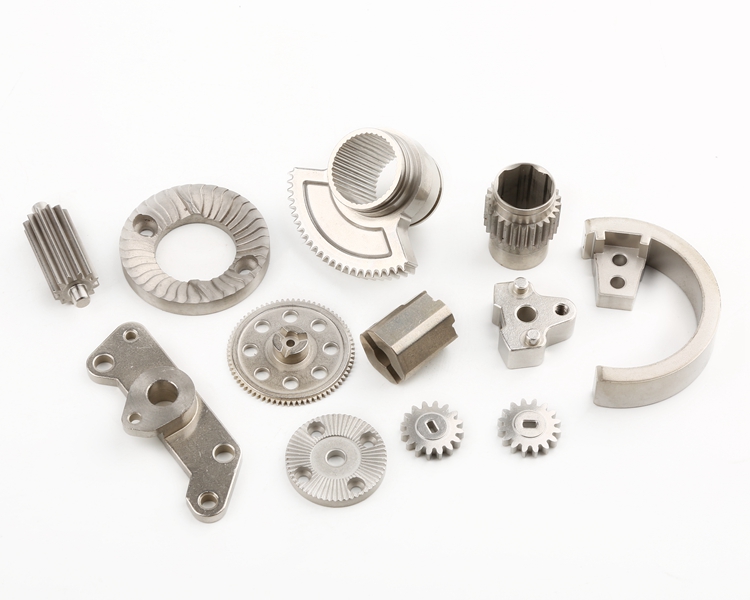
The process has been refined over more than a century. Modern powder metallurgy produces components with extremely tight dimensional tolerances and consistent material properties. Because the metal never reaches its full liquid state, the energy consumption stays much lower than traditional casting or forging. This makes powder metallurgy both an economical and an environmentally friendlier way to mass-produce precision metal components.
Why is Used
Manufacturers choose powder metallurgy because it solves several problems that plague traditional metalworking techniques. The biggest advantage is material efficiency. When you machine a part from a solid block of metal, you might cut away and waste over fifty percent of the original material. With powder metallurgy, you use almost exactly the amount of metal powder that ends up in the finished part. For expensive alloys and rare metals, this near-zero waste translates into massive cost savings over millions of units.
Another compelling reason powder metallurgy is used relates to material blending freedom. You can mix together metal powders that would never combine properly if you tried to melt them. Copper and steel, tungsten and silver, or magnetic alloys with precise cobalt contents are all possible through powder blending. This unique capability allows powder metal parts to create self-lubricating bearings by mixing bronze powder with graphite, producing parts that lubricate themselves during operation without any external oil supply.
Consistency and repeatability also drive the use of powder metallurgy. Once the tooling and process parameters are established, every part that comes out of the press is nearly identical. There is minimal variation from part to part compared to casting processes that suffer from cooling rate differences and mold wear issues. For industries like automotive manufacturing where millions of identical parts are required annually, powder metal delivers the reliable uniformity that automated assembly lines demand.
Products Made by It
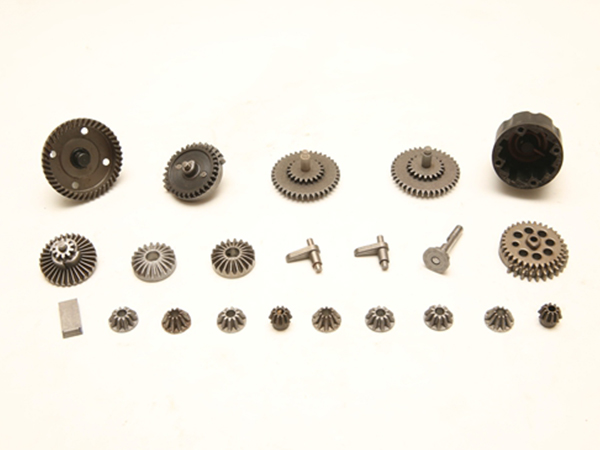
The range of everyday products made through powder metallurgy is astonishing. Your car likely contains dozens of components produced this way. The gears inside your transmission, the sprockets on your camshaft timing system, and the connecting rods inside your engine are all common powder metallurgy products. Even the shock absorber pistons that give you a smooth ride are often pressed from metal powder rather than machined from solid stock.
Home appliances also rely heavily on powder metal parts. The bearings inside your washing machine, the small gears in your kitchen mixer, and the lock mechanisms in your door handles are frequently made from pressed and sintered metal powders. Power tools contain powder metal gears that handle high torque loads while keeping manufacturing costs affordable. The electric toothbrush you use each morning probably has a tiny powder metal gear train inside its head.
Cutting tools and wear-resistant products represent another massive category made by powder metallurgy. The carbide inserts on machine tools that cut steel are made from tungsten carbide powder pressed and sintered into incredibly hard shapes. Diamond-impregnated saw blades for cutting concrete and stone use a powder metallurgy process to hold the diamond particles in a metal matrix. Even the magnetic materials inside electric motors and speakers are often produced through powder metallurgy techniques that align the magnetic particles before pressing.
Medical implants demonstrate the high-tech potential of powder metal products. Porous titanium hip replacements and dental implants rely on intentionally leaving controlled porosity in the metal structure. This allows natural bone tissue to grow into the implant surface, creating a biological bond that is far stronger than any mechanical screw or adhesive. The precise control over pore size and distribution makes powder metal uniquely suited for these life-changing medical devices.
How to Work for Sintered Gears
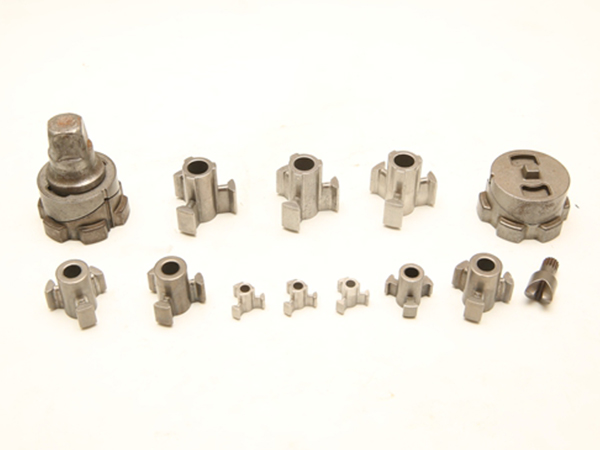
Sintered gears are among the most successful applications of powder metallurgy, and understanding how they are made reveals the full potential of this technology. The process begins with tooling design. A gear die set is precision-machined to the exact tooth profile required, but slightly oversized to account for the shrinkage that occurs during sintering. The die cavity has the gear shape plus a small percentage of extra material that will disappear predictably during heat treatment.
The metal powder for gears is typically an iron-based blend. Pure iron powder gets mixed with graphite powder, copper powder for strength, and a small amount of lubricant like zinc stearate that helps the powder flow smoothly into the die and release cleanly after pressing. This powder blend is critical because the final carbon content after sintering determines the gear’s hardness and wear resistance.
Pressing is where powder metallurgy really shows its precision. The powder fills the die cavity and upper and lower punches compress it from both directions at pressures reaching several hundred megapascals. For helical gears with angled teeth, the upper punch rotates as it descends, following the helix angle. The pressed gear blank, called a green compact, now has the exact tooth shape but is still fragile like pressed chalk. It must be handled gently to prevent edge chipping before the sintering step.
Sintering transforms the fragile compact into a strong metal gear. The green compacts travel through a controlled-atmosphere furnace on a mesh belt. Temperatures reach around 1120°C for iron-based gears, well below the melting point of iron. Inside the furnace, the graphite powder added to the mix diffuses into the iron particles, transforming the surface layers into hardenable steel. The individual powder particles bond together through neck formation, where material migrates to the contact points between particles. The gear shrinks to its final precise dimensions during this stage.
After sintering, many powder metal gears undergo sizing or calibration. They are pressed again in a precision die that irons the tooth surfaces to their exact final profile. This cold working step also densifies the surface, improving fatigue strength. Some gears then go through heat treatment like case hardening or induction hardening of the tooth flanks. The final product is a gear that is dimensionally accurate, metallurgically sound, and ready to install with little or no machining required.
Quality control for sintered gears made by powder metallurgy involves several checks. Density measurement confirms proper pressing and sintering. Tooth profile inspection on a gear checker verifies the geometry meets the required accuracy class. Some manufacturers perform a crush test on sample gears to confirm the radial crushing strength meets specifications. A well-made sintered gear is indistinguishable in performance from a machined gear but costs significantly less to produce in high volumes.
FAQ
1.Is powder metallurgy only for small parts?
No, but it does excel at small to medium components. The pressing force required increases dramatically with part size, so very large parts become impractical on standard presses. However, powder metallurgy routinely produces parts weighing several kilograms, such as automotive connecting rods and transmission carriers. Advancements in press technology continue expanding the maximum practical size limits each decade.
2.Can powder metallurgy parts be welded?
Yes, but density matters greatly. Fully dense powder metal parts with minimal porosity weld similarly to wrought metals. Low-density parts with significant internal pores cause problems because trapped gases expand during welding and create porosity in the weld bead. Sintered components intended for welding are typically designed with higher density and sometimes infiltrated with copper to seal surface pores before the welding operation.
3.How strong are powder metallurgy parts compared to forged steel?
Modern powder metallurgy with high-temperature sintering and subsequent forging can achieve strength levels approaching or matching wrought steel. Standard single-press single-sinter parts typically reach 85 to 95 percent of theoretical density and offer good strength for many applications. For maximum toughness, powder forging takes a sintered preform and hot-forges it to full density, producing connecting rods and other highly stressed components that meet rigorous fatigue life requirements.
Conclusion
Powder metallurgy quietly shapes the modern world by producing precise, durable metal parts with minimal waste and remarkable consistency. From the gears in your car to the bearings in your washing machine, this efficient technology delivers reliable performance at a lower cost and environmental impact than traditional metalworking. Understanding the basic steps of pressing, sintering, and finishing reveals why so many industries count on powder metallurgy for their most demanding component requirements.
6 Strategies to find a Reliable Sintered Iron Structural Parts Company