Making metal components without melting sounds impossible. Yet sintered powder metal parts are produced exactly this way every single day. This guide explains everything beginners need to know about this smart manufacturing method.
What is Sintered Powder Metal Parts
Sintered powder metal parts are solid metal components created by compacting fine metal powder under extreme pressure and then heating the pressed shape in a controlled furnace. The heating step, called sintering, happens below the metal’s melting point. Instead of turning liquid, the powder particles bond together at their contact surfaces through atomic diffusion, forming a strong, single piece.
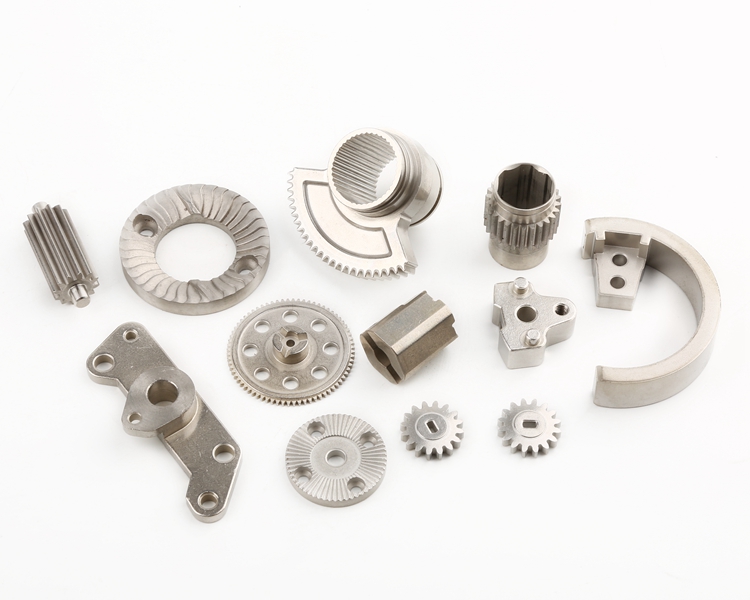
The beauty of sintered powder metal parts lies in their efficiency. Traditional machining cuts away material from a larger block, often wasting more than half of the original metal. Powder metal sintering uses almost exactly the amount of material needed for the finished component. This near-net-shape capability makes sintered powder metal parts both economical and environmentally responsible, especially when producing thousands or millions of identical pieces.
How Are Made
The journey of sintered powder metal parts begins with carefully selected metal powder. Manufacturers choose the powder type, particle size, and shape based on the final part requirements. Fine, irregularly shaped particles compact better because they interlock mechanically during pressing. The powder gets mixed with a small amount of lubricant, usually zinc stearate or a similar wax, which helps the powder flow evenly into the die and release smoothly after compaction.
The pressing stage transforms loose powder into a solid shape. A precision-machined die set contains a cavity matching the desired part geometry. Upper and lower punches enter the die from both directions, compressing the powder at pressures typically between 150 and 800 megapascals. This bilateral pressing ensures uniform density throughout the part. For complex shapes with multiple levels, the press uses several independently controlled punches that move in a programmed sequence.
The pressed part, called a green compact, has the exact shape of the finished component but remains fragile. It feels similar to pressed chalk and must be handled gently to prevent edge damage. Green compacts are transferred carefully onto ceramic plates or mesh belts and enter the sintering furnace. The controlled atmosphere inside the furnace, typically a mixture of nitrogen and hydrogen, prevents oxidation while the part heats up.
Sintering transforms the weak green compact into strong powder metal parts. Temperatures reach roughly 70 to 90 percent of the metal’s melting point. For iron-based parts, this means about 1120°C. At these temperatures, metal atoms become mobile at the particle surfaces. They migrate toward the contact points between adjacent particles, forming necks that grow over time. The part shrinks predictably as the pores between particles close up, and the mechanical strength increases dramatically.
Cooling happens slowly and under controlled conditions. Rapid cooling can cause distortion or internal stresses. Once the parts reach room temperature, many undergo a secondary sizing operation. They get pressed again in a precision die that calibrates critical dimensions to exact tolerances. Some sintered metal parts then receive additional treatments like oil impregnation for self-lubricating bearings, steam treatment for corrosion resistance, or heat treatment for increased hardness.
Quality inspection completes the process. Manufacturers check density using the Archimedes method, where the part is weighed in air and then in water to calculate its actual density versus theoretical full density. Dimensional checks with coordinate measuring machines verify that all critical features meet specifications. Crush tests on sample parts confirm the sintering process achieved proper bonding and strength throughout the entire batch.
What Materials Are Used to Make Sintered Powder Metal Parts
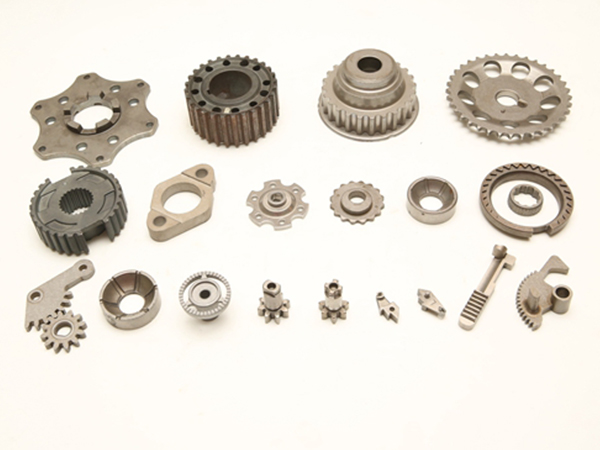
Iron and steel dominate the material landscape for sintered metal parts. Pure iron powder serves as the base for many applications, but adding graphite powder to the mix transforms the iron into steel during sintering. The carbon diffuses into the iron particles, creating a hardenable steel structure. Copper powder is frequently added at around two percent to improve strength and provide solid solution hardening. This iron-copper-carbon system covers a huge range of automotive and industrial components.
Stainless steel powders produce sintered metal parts with excellent corrosion resistance. Grades like 316L and 304L are commonly pressed and sintered for pump components, medical instruments, and food processing equipment. The chromium oxide layer that naturally forms on stainless steel protects these parts in wet and chemical environments. Sintered stainless parts typically reach slightly lower densities than carbon steel parts, so designers account for this when specifying mechanical requirements.
Copper and bronze powders create sintered metal parts with entirely different properties. Bronze bearings are the classic application. Manufacturers mix copper and tin powders, press them into bushings, and sinter them to bond the particles while deliberately leaving controlled porosity. The finished bearing is then vacuum-impregnated with oil, filling the internal pores with lubricant. During use, the oil slowly seeps out to lubricate the shaft, and when the equipment stops, capillary action draws the oil back into the pores.
Aluminum powder has gained popularity for powder metal parts in lightweight applications. The automotive industry pursues every gram of weight reduction for fuel efficiency, and sintered aluminum components help achieve this. Aluminum sintering requires tighter atmosphere control because aluminum oxidizes extremely easily. Special nitrogen atmospheres with very low dew points prevent the powder particles from developing oxide skins that would block bonding during sintering.
Specialty materials expand the capabilities of powder metal parts even further. Tungsten carbide powder mixed with cobalt binder creates extremely hard wear-resistant parts for cutting tools and mining equipment. Soft magnetic composites made from iron powder coated with insulating layers produce electromagnetic components with reduced eddy current losses. Titanium powders serve aerospace and medical implant applications where biocompatibility and high strength-to-weight ratio are essential.
How to Find Manufacturers
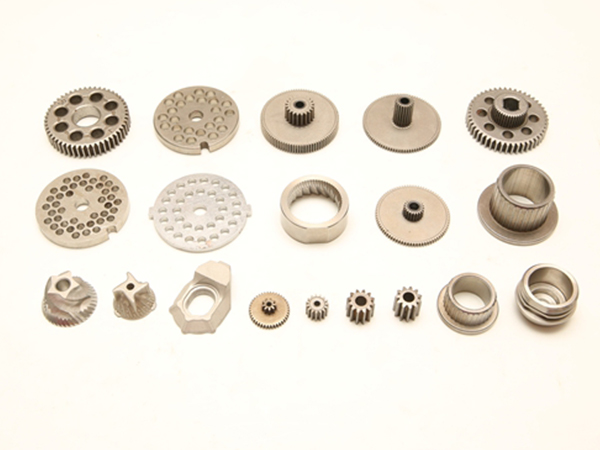
Finding a reliable manufacturer for powder metal parts starts with defining your requirements clearly. Write down the material, approximate dimensions, annual volume, and any critical tolerances before you contact anyone. A napkin sketch is fine for initial conversations. Knowing your basic requirements helps manufacturers quickly determine if your project fits their press capacity and material expertise.
Trade associations provide excellent starting points. The Metal Powder Industries Federation maintains directories of member companies that produce sintered powder metal parts. These members follow industry standards and stay current with technology developments. Online directories and industrial marketplaces also list manufacturers, but always verify their capabilities independently rather than trusting marketing claims alone.
Evaluate potential manufacturers by asking specific technical questions. Inquire about their press tonnage range, because this determines the maximum part size they can produce. Ask about their sintering furnace atmosphere capabilities, especially if you need stainless steel or aluminum parts. Request information about their quality certifications such as ISO 9001 or IATF 16949 for automotive work. A competent producer of sintered powder metal parts will answer these questions readily and provide examples of similar parts they currently manufacture.
Sample evaluation is essential before committing to production tooling. Most manufacturers of sintered powder metal parts can provide density coupons or similar test pieces made from the proposed material system. While these will not have your exact geometry, they demonstrate the achievable density and mechanical properties. For critical applications, invest in prototype tooling. Simple shapes can often be produced using existing die sets, giving you functional samples for testing and validation.
Finally, visit the facility if possible. Walking through a factory that produces sintered powder metal parts reveals cleanliness, equipment maintenance standards, and the general operational discipline that directly affect your part quality. Look at how they store metal powder, observe the condition of their pressing equipment, and ask about their quality control procedures. A transparent manufacturer welcomes these visits because they are proud of their operations and confident in their capabilities.
FAQ
Can sintered powder metal parts be heat treated after sintering?
Yes, most sintered powder metal parts respond well to heat treatment. Case hardening, through hardening, and induction hardening are all commonly applied. The key requirement is sufficient density. Parts with interconnected porosity can absorb quench oil or furnace atmosphere gases during treatment, potentially causing internal corrosion. Higher density parts above 7.2 grams per cubic centimeter for iron-based materials heat treat similarly to wrought steel.
What is the maximum size for sintered powder metal parts?
The practical size limit for sintered powder metal parts depends on available press tonnage. Most commercial presses range from 50 to 800 tons, producing parts with a projected area up to about 150 square centimeters. Weight limits typically reach around 2 to 3 kilograms for iron-based parts. Larger parts are possible on specialized high-tonnage presses exceeding 1000 tons, but the economics shift as press costs and tooling investment increase substantially.
Are sintered powder metal parts as strong as machined parts?
Modern sintered powder metal parts can achieve strength levels very close to wrought and machined equivalents. Standard single-press single-sinter parts typically reach 85 to 95 percent of theoretical density with corresponding mechanical properties. For maximum strength applications, powder forging takes a sintered preform and hot forges it to full density, producing connecting rods and gears that match or exceed the fatigue performance of conventionally manufactured components.
Conclusion
Sintered powder metal parts represent a manufacturing approach that saves material, reduces energy consumption, and delivers consistent quality across massive production volumes. By understanding the materials available, the pressing and sintering process, and how to evaluate manufacturers, you can confidently specify this technology for your next project. Whether you need self-lubricating bronze bearings or high-strength steel gears, sintered powder metal parts offer a proven path to reliable, cost-effective metal components.
6 Strategies to find a Reliable Sintered Iron Structural Parts Company