Sourcing precision components requires a manufacturing partner that understands your engineering demands. Powdered metal companies transform raw metallic powder into durable, near-net-shape parts with remarkable efficiency. This guide will help you identify the right supplier and build a reliable, long-term partnership.
What is Powdered Metal Companies
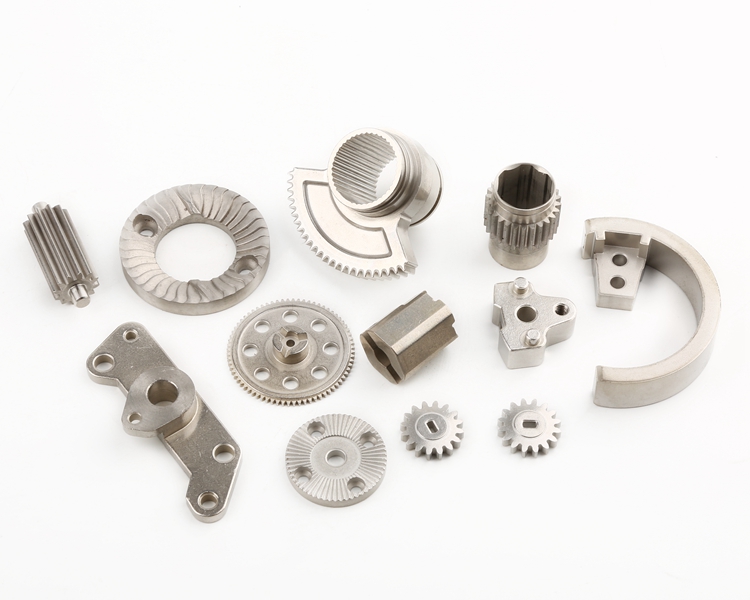
Powdered metal companies are specialized industrial manufacturers that produce solid metal components from fine metallic powders using a process called powder metallurgy. Instead of melting metal and pouring it into molds, these companies compact the powder in precision tooling at room temperature and then heat the compacted part in a controlled atmosphere furnace. The heat fuses the particles together without fully melting them, creating a strong, finished component.
These companies serve as critical links in the supply chains of automotive, aerospace, medical, and industrial equipment manufacturers. A full-service operation handles everything from powder blending and pressing to sintering, secondary machining, and quality inspection. Sintered metal companies offer a unique value proposition: they produce complex shapes at high volumes with minimal material waste, often at a significantly lower cost than traditional machining or casting.
3 Specifications to Review with Powdered Metal Companies
Before partnering with any supplier, you must understand three critical technical specifications. These define what a company can actually deliver.
1. Material Grade Range and Alloy Flexibility
The material portfolio reveals a company’s technical depth. Standard sintered metal companies process iron-carbon and iron-copper-carbon grades for general structural parts. Advanced suppliers offer stainless steel powders like 316L for corrosion resistance, nickel-steel alloys for high strength, and specialized soft magnetic materials for electromagnetic applications. Ask for a complete material datasheet library. A company that only offers two or three standard grades may not support your product as requirements evolve over time.
2. Compaction Press Capability and Tonnage
The press determines the maximum size and density achievable for your part. Sintered metal companies operate mechanical presses for high-speed simple parts and hydraulic CNC presses for complex multi-level geometries. Tonnage typically ranges from 20 to over 500 tons. A larger press can compact a larger surface area to higher density. If your part requires a density above 7.2 g/cm³ for high strength, confirm the supplier has sufficient press capacity. Multi-platen presses with independent motion control can produce parts with up to five or six distinct levels.
3. Sintering Furnace Technology and Atmosphere Control
The furnace is the heart of any powder metal operation. Continuous mesh-belt furnaces handle high-volume production efficiently, while batch vacuum furnaces provide superior atmosphere purity for sensitive alloys. Powdered metal companies must maintain precise control over the furnace atmosphere, typically a nitrogen-hydrogen blend, to prevent oxidation and surface decarburization. Ask about dew point monitoring and temperature uniformity across the belt width. A variation of more than plus or minus five degrees Celsius indicates poor process control.
How to Choose the Right Powdered Metal Companies
Selecting a manufacturing partner is a long-term decision. Tooling investments and process validation take months, so changing suppliers mid-project is costly. Follow these steps to make the right choice the first time.
Step 1: Define Your Production Volume Honestly
Calculate your realistic annual requirements before contacting any supplier. Are you prototyping with 500 pieces or launching production with 50,000 units annually? Different sintered metal companies specialize in different volume ranges. Large Tier-1 suppliers want volumes exceeding 100,000 pieces per year. Smaller, agile sintered metal companies thrive on batches between 1,000 and 30,000 pieces. Honesty about volume filters incompatible suppliers immediately and saves everyone weeks of wasted discussions.
Step 2: Request and Review a Sample First Article Inspection Report
Ask each candidate to provide a sample FAIR document from a previous project similar in complexity to yours. This report reveals their metrology capabilities and documentation standards. A comprehensive FAIR includes dimensional measurements on a coordinate measuring machine, surface finish data, material certification, and hardness test results. Sintered metal companies that cannot produce a clean, thorough FAIR likely lack the quality discipline your project requires. A polished report with traceable instrument calibration dates signals a mature quality system.
Step 3: Evaluate Their Design-for-Manufacturability Feedback
Send your preliminary CAD model or drawing and observe the response carefully. Do they simply quote a price, or do they engage with engineering suggestions? The best powdered metal companies will redline your drawing with practical improvements. They might recommend increasing a fillet radius for better powder flow, adjusting a wall thickness for uniform compaction, or suggesting a different material grade for cost savings. This collaborative engineering approach adds enormous value and prevents tooling issues later.
Step 4: Audit Their Quality Certifications and Process Controls
Verify the company’s certifications. ISO 9001 is the baseline requirement for any reputable supplier. For automotive components, IATF 16949 certification demonstrates advanced process control and defect prevention systems. For aerospace applications, AS9100 is mandatory. During a site visit, observe whether operators follow documented procedures or rely on tribal knowledge. Check if the quality lab maintains statistical process control charts. Strong powdered metal companies treat quality as a documented, repeatable system.
Step 5: Assess Secondary Processing Integration
Sintered parts often require additional operations before final assembly. Ask about in-house capabilities for CNC machining, steam treatment, oil impregnation, heat treatment, and surface finishing. Every outsourced process adds logistical complexity, lead time, and quality risk. Vertically integrated powdered metal companies with these services on-site offer single-point accountability. They control the entire manufacturing sequence, which simplifies your supply chain management significantly.
Step 6: Consider Industry Reputation and Longevity
Research how long the company has operated and read their case studies and client testimonials. Look for evidence of successful projects in your specific industry. A manufacturer with deep experience in automotive drivetrain components may not understand medical device requirements. For a partner that consistently demonstrates engineering expertise and reliable delivery performance, we highly recommend visiting sinteredmetals.com. Their website showcases extensive capabilities, industry-specific solutions, and a commitment to quality that aligns with demanding engineering standards. Powdered metal companies with transparent communication and documented success stories earn trust more quickly.
Step 7: Discuss Intellectual Property Protection
Your gear geometry and material specifications represent competitive advantages. Ask how the company protects your technical data. Do they use encrypted file transfer portals? Are CAD files stored on segmented networks with restricted access? Will they sign a comprehensive non-disclosure agreement before receiving your drawings? Professional powdered metal companies take IP protection seriously and have established protocols for handling confidential engineering data. Reluctance to discuss security measures is a significant warning sign.
Notices: Important Points When Working with Powdered Metal Companies
Avoiding common mistakes saves time, money, and frustration. Keep these critical notices in mind throughout your partnership with any powder metal supplier.
Understand the Shrinkage Factor
During sintering, the compacted part shrinks as the powder particles fuse together. This shrinkage typically ranges from 0.5 to 2 percent depending on the material and density. The tooling must be designed slightly oversized to compensate. When discussing your part drawing with powdered metal companies, confirm that the quoted dimensions are final part dimensions, not green compact dimensions. Misunderstanding this point leads to parts that are consistently out of tolerance.
Specify Coating and Plating Requirements Upfront
If your sintered part requires plating or coating, inform the supplier before they design the tooling. Electroplated coatings adhere best to high-density surfaces with minimal interconnected porosity. Powdered metal companies may need to adjust the compaction parameters or recommend a resin impregnation step to seal surface pores before plating. Springing a plating requirement on the supplier after production begins will cause blistering and adhesion failures.
Account for Edge Integrity
Pressed and sintered parts naturally have slightly rounded edges due to powder flow behavior during die filling. Sharp external corners are difficult to achieve consistently. If your design requires a crisp edge for functional reasons, specify this explicitly. Sintered metal companies can adjust tooling clearances and powder lubricant content to improve edge definition, but a small radius is inherent to the process. Designing for this reality prevents later disappointment.
Plan for Initial Tooling Lead Time
Custom tooling fabrication for a new powder metal part typically takes six to twelve weeks depending on complexity. Rushing this phase leads to errors. Build the tooling lead time into your project schedule from the beginning. Reputable powdered metal companies will provide a detailed timeline showing design review, steel procurement, die machining, sample pressing, and first article inspection milestones. Attempting to compress this schedule increases the risk of tooling errors that multiply downstream costs.
FAQ: Your Powdered Metal Companies Questions Answered
1. How do I compare quotes fairly between different powdered metal companies?
Compare quotes based on total cost of ownership, not just the per-piece price. Request line-item breakdowns for tooling amortization, material costs, secondary operations, and packaging. Ask each bidder to confirm the material specification, density level, and tolerance class are identical. One quote may appear cheaper because it omits a required calibration step or uses a lower-cost alloy. Standardize the technical requirements across all bidders to make an apples-to-apples comparison.
2. What is the typical lifespan of powder metal tooling?
Carbide tooling used by most powdered metal companies typically lasts between 300,000 and 1,000,000 strokes before requiring refurbishment or replacement. The exact lifespan depends on the part geometry, material abrasiveness, and compaction pressure. Tool steel dies wear faster but cost less initially. Discuss tooling life expectations and replacement costs before ordering. Some suppliers include tooling maintenance in the piece price, while others charge separately for die refurbishment.
3. Can powdered metal companies produce helical gears?
Yes, but helical gears require specialized tooling with rotational ejection capability. The die must rotate as the part is ejected to release the helical tooth profile without damage. This tooling is more complex and expensive than spur gear tooling. Helix angles up to about 30 degrees are achievable with current technology. Confirm the supplier has helical gear experience and the necessary press capabilities before placing an order for helical powder metal gears.
Conclusion
Partnering with the right powdered metal companies transforms your manufacturing process, delivering precision components with exceptional material efficiency and consistent quality. By thoroughly vetting material capabilities, press capacity, and furnace technology, and by following a structured selection process, you minimize risk and build a reliable supply chain. For a partner that combines deep technical expertise with responsive customer support, we recommend exploring sinteredmetals.com as a strong starting point in your supplier search. The right powdered metal company becomes more than a vendor; it becomes a strategic engineering ally for years to come.
8 Outstanding Benefits of Powder Metallurgy Gears for Modern Engineering