Manufacturing metal parts without melting or machining sounds almost impossible at first. To define powder metallurgy simply, it is a process that turns fine metal powder into solid, precision components through pressure and heat. This guide explains the technology, its benefits, and why it matters.
What is Powder Metallurgy
To define powder metallurgy properly, we must understand it as a manufacturing process that compacts metal powder in a precision die and then heats the compact in a controlled furnace. The metal never fully melts. Instead, the particles bond together at temperatures just below the melting point through atomic diffusion. This solid-state bonding creates a durable component with precise dimensions and useful mechanical properties.
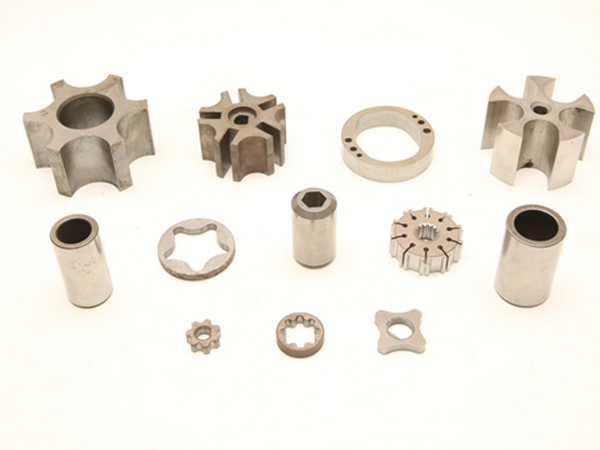
The process begins with blending metal powder with alloying elements and lubricants. This mixture flows into a die where punches apply enormous pressure to form a green compact. The compact then passes through a sintering furnace where heat fuses the particles permanently. The result is a near-net-shape part requiring minimal finishing. Engineers define powder metallurgy as one of the most material-efficient manufacturing methods available. It uses over 95 percent of the raw material, compared to roughly 50 percent for traditional machining.
Related: The Step-by-Step Process to Define Powder Metallurgy
Understanding each stage helps engineers define powder metallurgy in practical terms. The process transforms loose powder into finished components through several distinct operations.
Powder production is the first critical stage. Metal powder is manufactured through atomization, where molten metal is sprayed through a nozzle and broken into tiny droplets by high-pressure gas or water. The droplets solidify into powder particles with controlled size distribution. Other methods include chemical reduction, electrolytic deposition, and mechanical milling. The powder characteristics directly affect the final part quality. When we define powder metallurgy, we must include the importance of starting material quality.
Blending mixes the base powder with alloying additions. Copper, nickel, graphite, and molybdenum are common alloying elements that enhance strength, hardenability, and wear resistance. A solid lubricant, typically zinc stearate or synthetic wax, coats the particles. This lubricant reduces friction during compaction and helps the powder flow uniformly into the die. Thorough blending ensures every part has consistent composition and properties.
Compaction transforms the loose powder into a green compact. The prepared powder fills a precision die cavity shaped like the finished part. Upper and lower punches apply pressure ranging from 400 to 800 megapascals for ferrous materials. The powder particles deform plastically at their contact points and mechanically interlock. Complex multi-level parts require sophisticated tooling with independently controlled punch movements. To define powder metallurgy accurately, compaction is the shaping step that gives the part its geometry.
Sintering creates permanent metallurgical bonds. Green compacts travel through a continuous furnace under a protective nitrogen-hydrogen atmosphere. The first zone removes the pressing lubricant at moderate temperatures. The high-heat zone reaches 1100 to 1150 degrees Celsius where atomic diffusion welds the particles together. Copper additions melt and flow through the iron skeleton, strengthening the structure. Many engineers define powder metallurgy by this unique solid-state bonding process.
Sizing achieves final dimensional precision. The sintered part is repressed in a finishing die to correct thermal distortion. This step also burnishes surfaces, improving smoothness and appearance. For gear teeth, sizing achieves the required quality class. For bearing bores, sizing produces the specified roundness and diameter tolerance. Secondary operations like heat treatment, oil impregnation, and machining complete the manufacturing sequence.
Related: Key Materials Used When We Define Powder Metallurgy
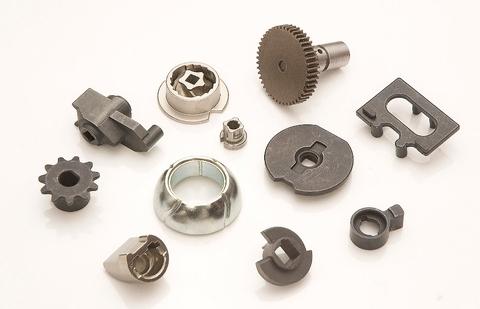
Material selection critically affects the performance of powder metal components. When we define powder metallurgy, we must include the range of materials this process can handle.
Iron-based alloys dominate production volume. Pure iron powder produces parts with moderate strength and good magnetic properties. Adding carbon transforms iron into steel during sintering, increasing hardness and tensile strength. Iron-copper-carbon alloys offer improved strength without requiring heat treatment because copper melts and infiltrates the iron structure. These materials suit automotive brackets, housings, and general structural components.
Stainless steel powders provide corrosion resistance for demanding environments. Grade 316L offers the best protection against chlorides and harsh chemicals. Grade 304L provides good general corrosion resistance at lower cost. Sintering stainless steel requires precise atmosphere control to prevent chromium oxidation that would compromise corrosion resistance. When engineers define powder metallurgy for medical or marine applications, stainless grades are essential.
Nickel-steel alloys provide excellent toughness and fatigue resistance. Nickel contents of 1 to 4 percent refine the microstructure and improve impact properties. These alloys respond well to heat treatment, achieving high surface hardness while maintaining a ductile core. Gears, sprockets, and components subject to cyclic loading benefit from nickel additions.
Soft magnetic materials serve electromagnetic applications. Iron-phosphorus and iron-silicon alloys provide high magnetic permeability and low core losses. These materials appear in sensors, actuators, and solenoid cores. The ability to form complex three-dimensional magnetic circuit shapes distinguishes powder metallurgy from laminated electrical steel.
Copper and bronze powders create components with good electrical conductivity and natural lubricity. Porous bronze bearings absorb oil and release it during operation, providing maintenance-free lubrication. Copper-infiltrated iron parts combine the strength of steel with the conductivity and sealability of copper.
Related: Major Industrial Applications That Define Powder Metallurgy
The versatility of this technology makes it essential across diverse industries. Understanding these applications helps fully define powder metallurgy and its economic importance.
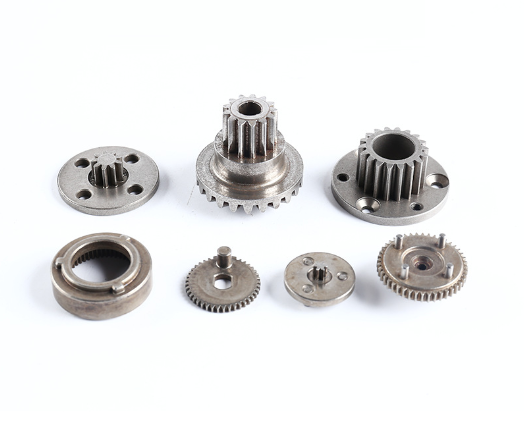
The automotive industry consumes more powder metal components than any other sector. A typical passenger vehicle contains dozens of sintered parts. Engine oil pump gears, camshaft sprockets, and crankshaft timing pulleys are produced in millions annually. Transmission components including synchronizer hubs and clutch plates rely on this process for integrated splines and teeth. Electric power steering systems use sintered gears and sensor rings.
Power tools depend heavily on powder metal gears. Cordless drills, angle grinders, and circular saws contain gear sets that transmit high torque in compact housings. These gears experience shock loading when a drill bit binds or a saw blade stalls. Self-lubrication through oil impregnation eliminates maintenance requirements in sealed assemblies.
Medical devices require biocompatible, corrosion-resistant components. Surgical instruments, dental brackets, and implantable device housings use stainless steel powders. The near-net-shape capability produces complex geometries without machining. When we define powder metallurgy for medical applications, biocompatibility and precision are paramount.
Aerospace applications demand the highest quality standards. Lightweight aluminum and titanium alloys serve in bracket assemblies and sensor housings. High-temperature nickel alloys appear in turbine components. Every part undergoes rigorous inspection and full material traceability.
Industrial machinery uses sintered components extensively. Hydraulic pump parts, pneumatic cylinder components, and conveyor bearings all benefit from this technology. Self-lubricating bearings operate for years without external lubrication. Lock mechanisms and ratchet gears provide reliable service in demanding factory environments.
FAQ: Your Questions to Define Powder Metallurgy Answered
1. How do engineers define powder metallurgy compared to traditional machining?
Engineers define powder metallurgy as an additive-style process that builds parts from powder rather than cutting material away. Machining removes material from solid bar stock, wasting up to 50 percent as chips. Powder metallurgy uses over 95 percent of the starting material. It forms complex shapes in a single pressing operation rather than multiple machining setups. Production rates are much higher for medium to high volumes.
2. What part sizes can powder metallurgy produce?
Most powder metal parts range from a few grams to several kilograms. Maximum diameter is typically around 150 millimeters, limited by press tonnage. Wall thickness should be at least 1.5 millimeters. Part height is limited by powder fill depth and compaction uniformity, usually up to 50 millimeters. When we define powder metallurgy capabilities, size constraints are important design considerations.
3. How does sintering temperature define powder metallurgy outcomes?
Sintering temperature directly determines the quality of metallurgical bonds between particles. Ferrous materials typically sinter at 1100 to 1150 degrees Celsius. Higher temperatures promote faster diffusion and better bonding but increase energy cost and furnace wear. Lower temperatures may leave incomplete bonds and reduce strength. The optimal temperature depends on the specific alloy composition and desired properties.
Conclusion
To define powder metallurgy is to describe one of the most efficient and versatile metal manufacturing processes available today. It transforms fine powder into precision components through compaction and controlled heating, achieving near-net shapes with minimal waste. The process handles diverse materials from economical iron alloys to corrosion-resistant stainless steels and high-performance nickel steels. Automotive, medical, aerospace, and industrial applications all benefit from this technology. By understanding the complete process from powder production through final sizing, engineers can fully leverage the advantages that define powder metallurgy as an essential modern manufacturing method.