Off-the-shelf components rarely fit every unique engineering challenge perfectly. Custom powder metal suppliers solve this problem by manufacturing precision parts tailored to your exact specifications. This guide will help you find the right partner and understand the full potential of this versatile technology.
What is Powder Metal
Powder metal is a manufacturing technology that transforms fine metallic powder into solid, precision components through compaction and sintering. The process begins with blending metal powder with alloying elements and lubricants. This mixture flows into a precision die where enormous pressure forms a green compact. The compact then passes through a controlled atmosphere furnace where heat bonds the particles together without melting them completely.
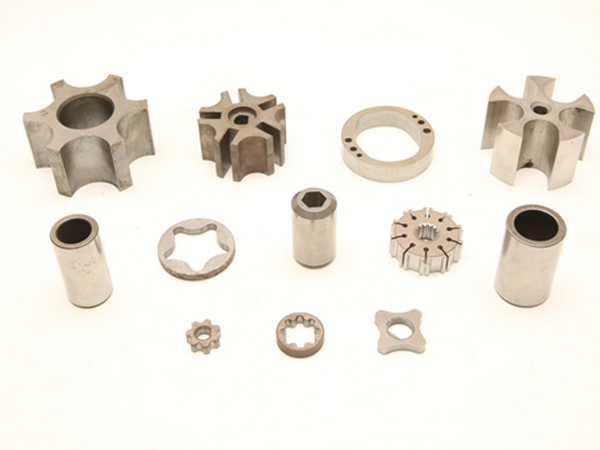
The result is a near-net-shape part with precise dimensions and excellent mechanical properties. Powder metal achieves over 95 percent material utilization, dramatically reducing waste compared to machining. The process produces complex geometries with integrated features like gears, splines, and cams that would be costly to machine conventionally. Custom powder metal suppliers use this technology to create components ranging from tiny medical instruments to large automotive brackets. The flexibility to tailor material composition, density, and geometry makes powder metal ideal for custom applications.
How to Find Reliable Custom Powder Metal Suppliers
Selecting the right manufacturing partner requires systematic evaluation of technical capabilities and quality systems. Follow these steps to identify custom powder metal suppliers who deliver consistent quality.
Step 1: Define Your Part Requirements Completely
Document every specification before contacting any supplier. Provide detailed dimensional drawings with tolerances. Specify the material grade, required density, and mechanical properties. Note your expected annual volume honestly. Include any secondary operations such as heat treatment, plating, or machining. Complete documentation enables accurate quoting. Reputable custom powder metal suppliers appreciate well-prepared buyers with clear requirements.
Step 2: Verify Equipment Capability and Capacity
Ask about the press tonnage range and type available. Hydraulic presses with multiple independent platens handle complex multi-level geometries. Mechanical presses excel at high-speed production of simpler shapes. The press capacity determines the maximum part size and achievable density. Inquire about sintering furnace technology. Continuous mesh-belt furnaces suit high volumes. Vacuum furnaces provide superior atmosphere control for stainless steels and specialty alloys.
Step 3: Evaluate Tooling Design and Manufacturing Expertise
Tooling quality directly determines part quality. Ask whether the supplier designs and builds tooling in-house. In-house toolmaking enables faster development and responsive troubleshooting. The tooling must compensate precisely for sintering shrinkage while achieving required dimensional tolerances. Review their experience with tooling similar to your part geometry. Skilled custom powder metal suppliers solve tooling challenges before production begins.
Step 4: Assess Material and Alloy Flexibility
Confirm the supplier processes the materials your part requires. Standard iron-carbon and iron-copper-carbon alloys suit general structural applications. Stainless steel powders like 316L provide corrosion resistance. Nickel-steel grades offer superior toughness. Soft magnetic materials serve in electromagnetic applications. Versatile custom powder metal suppliers offer multiple material families and can recommend the optimal alloy for your operating conditions.
Step 5: Review Quality Systems and Certifications
Verify relevant certifications thoroughly. ISO 9001 is the minimum baseline expectation. IATF 16949 certification demonstrates automotive-grade quality management with stringent defect prevention. ISO 13485 covers medical device manufacturing requirements. Inspect their metrology equipment including coordinate measuring machines and optical comparators. Request a sample First Article Inspection Report.
Step 6: Evaluate Secondary Processing Capabilities
Sintered parts often require finishing operations. Ask which services the supplier handles in-house. Heat treatment hardens surfaces for wear resistance. Steam treatment creates a protective magnetite layer that seals pores. Oil impregnation provides self-lubrication for bearings. CNC machining refines critical features. Resin impregnation seals porosity for pressure-tight applications. Vertically integrated custom powder metal suppliers provide single-source accountability.
Step 7: Request Prototype Samples and Test Thoroughly
Order prototype parts before committing to full production tooling. Test dimensional accuracy and mechanical properties in your actual assembly. Run durability tests if the application demands it. Verify corrosion resistance and surface finish quality. Prototype testing reveals issues that drawings and specifications cannot predict. Confident custom powder metal suppliers welcome prototype orders and support your validation process.
Step 8: Check References and Long-Term Reliability
Request references from clients with similar part requirements. Contact those references and ask about quality consistency, on-time delivery performance, and responsiveness to issues. Review case studies demonstrating success with comparable components. Custom powder metal suppliers with long-standing customer relationships demonstrate reliability and deep industry expertise.
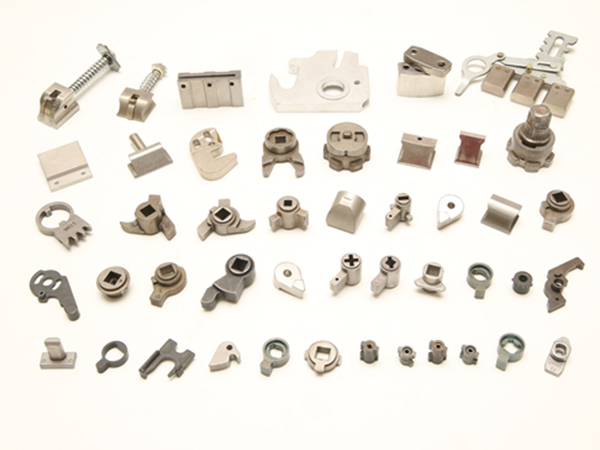
Related: The Custom Powder Metal Manufacturing Process
Understanding how custom components are manufactured helps you design parts that fully leverage the technology’s capabilities.
The process begins with powder selection and blending. Base iron powder mixes with precisely measured alloying additions such as copper, nickel, graphite, and molybdenum. A solid lubricant, typically zinc stearate or synthetic wax, coats the particles to reduce friction during compaction. Thorough blending ensures uniform distribution of all constituents. Custom powder metal suppliers adjust this blend based on your specific mechanical and physical property requirements.
Compaction transforms the loose powder blend into a green compact with the exact part shape. The prepared powder flows into a precision die cavity. Upper and lower punches enter the die and apply pressure ranging from 400 to 800 megapascals for ferrous materials. The powder particles deform plastically at their contact points and mechanically interlock. Complex multi-level parts require sophisticated tooling with independently controlled punch movements.
Sintering creates permanent metallurgical bonds. Green compacts travel through a continuous furnace under a protective nitrogen-hydrogen atmosphere. The first zone gently removes the pressing lubricant at moderate temperatures. The high-heat zone reaches 1100 to 1150 degrees Celsius where atomic diffusion welds the particles together. Copper additions melt and flow through the iron skeleton, significantly strengthening the structure.
Sizing achieves final dimensional precision. The sintered part is repressed in a finishing die to correct any thermal distortion from the sintering cycle. This step also burnishes surfaces, improving smoothness and appearance. For gear teeth, sizing achieves the required quality class. For bearing bores, sizing produces the specified roundness and diameter tolerance. Quality-focused custom powder metal suppliers consider sizing an essential step for achieving tight tolerances.
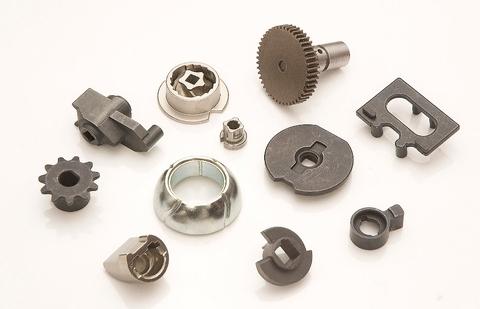
Related: Design Considerations When Working with Custom Powder Metal Suppliers
Effective collaboration with custom powder metal suppliers starts with smart design choices. Understanding the process constraints helps you create parts that manufacture successfully.
Uniform wall thickness promotes consistent density throughout the part. Thick sections compact differently than thin sections, creating density gradients that cause distortion during sintering. Aim for wall thickness between 1.5 and 10 millimeters. If thicker sections are structurally necessary, consider adding material-saving holes or ribs to uniformize the cross-section.
Draft angles enable clean ejection from the die. Vertical walls without draft create excessive friction during ejection, potentially cracking the green compact. Include at least 5 to 7 degrees of draft on all surfaces parallel to the pressing direction. Custom powder metal suppliers can advise on the minimum draft angles for your specific geometry and material.
Undercuts and cross-holes perpendicular to the pressing direction cannot be formed directly. These features require secondary machining after sintering. Minimize such features to reduce cost. If a cross-hole is essential, design it in a location accessible to standard drilling operations.
Sharp corners concentrate stress and impede powder flow during die filling. Generous radii improve both manufacturability and part strength. Custom powder metal suppliers recommend minimum radii of 0.25 millimeters for internal corners and 0.5 millimeters for external corners.
Tolerance specification should reflect functional needs only. As-sintered tolerances of plus or minus 0.05 millimeters suit most applications. Tighter tolerances require sizing or machining, adding cost. Specify precision only where the part’s function demands it. Over-tolerancing non-critical features unnecessarily increases the per-part cost.
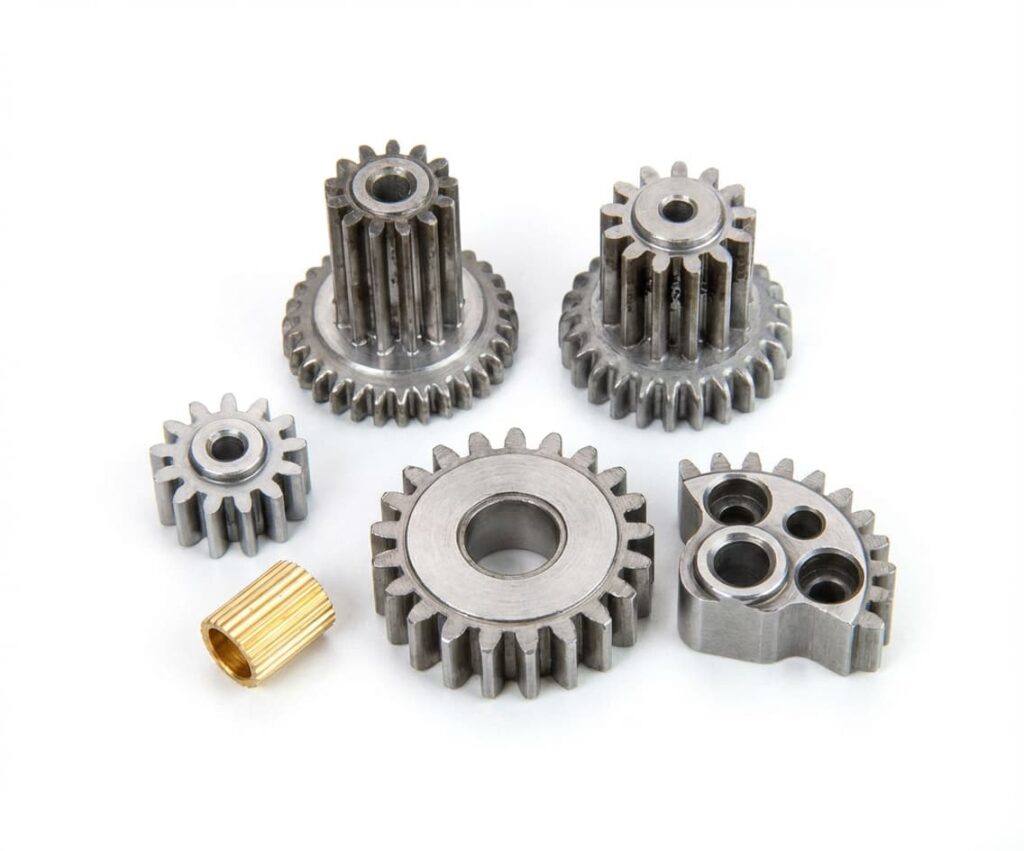
FAQ: Your Custom Powder Metal Suppliers Questions Answered
1. How do custom powder metal parts compare in cost to machined alternatives?
For production volumes above 5,000 pieces annually, custom powder metal parts typically cost 30 to 50 percent less than equivalent machined components. The near-net-shape process eliminates most machining operations. Material utilization exceeds 95 percent compared to roughly 50 percent for machining from solid bar stock. Tooling costs amortize favorably over production volumes. Custom powder metal suppliers can provide detailed cost comparisons for your specific geometry.
2. What is the typical lead time from custom powder metal suppliers?
Tooling design and fabrication requires six to ten weeks for the initial die set. Prototype sample production adds two to three weeks. After prototype approval, production quantities ship within three to five weeks. Complex multi-level parts with secondary operations require additional time. Discuss lead times early with custom powder metal suppliers and include buffer in your project schedule.
3. Can custom powder metal suppliers help with material selection for my application?
Yes, material selection support is a key service offered by experienced custom powder metal suppliers. They can recommend the optimal alloy based on your mechanical requirements, operating environment, and cost targets. They provide test data showing how different materials perform under your specific conditions. This engineering guidance helps you avoid costly material selection mistakes and achieve the best balance of performance and cost.
Conclusion
Partnering with capable custom powder metal suppliers opens the door to efficient, cost-effective production of precision metal components tailored to your exact needs. By understanding the manufacturing process and following a structured supplier selection approach, you can find a partner who delivers consistent quality and acts as a true engineering collaborator. Pay careful attention to design guidelines and material selection to ensure manufacturing success. Whether you need automotive powertrain components, medical instrument parts, or industrial machinery bearings, the right custom powder metal suppliers provide reliable, high-performance solutions.
7 Benefits of Great Powder Metallurgy Parts for Modern Manufacturing