Corrosion-resistant parts are essential for medical, marine, and food processing applications. A sintered stainless steel components supplier transforms fine metal powder into durable, precision parts through advanced powder metallurgy. This guide will help you understand the technology and find the perfect manufacturing partner.
What is Sintered Stainless Steel Components
Sintered stainless steel components are precision parts manufactured by compacting stainless steel powder under high pressure and then heating the compact in a controlled atmosphere furnace. The powder does not melt completely. Instead, the individual particles bond together at temperatures just below the melting point through atomic diffusion. This creates a solid, corrosion-resistant component with precise dimensions and excellent mechanical properties.
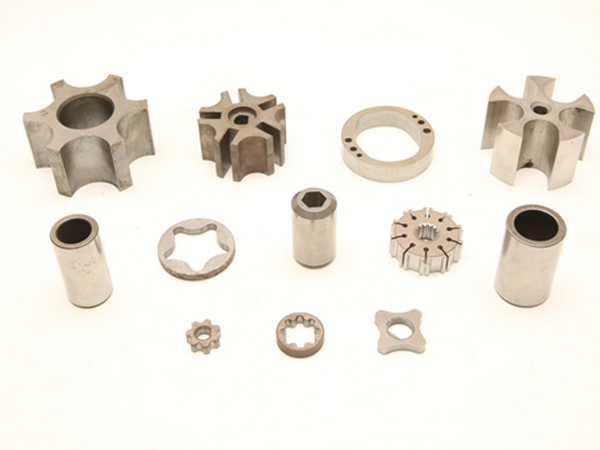
The process begins with blending stainless steel powder with lubricants. This mixture flows into a precision die where punches apply enormous pressure to form a green compact. The compact then passes through a sintering furnace with a carefully controlled atmosphere to prevent oxidation. The result is a near-net-shape part requiring minimal finishing. A sintered stainless steel components supplier produces parts ranging from tiny medical instruments to marine hardware and industrial valve components. The technology combines the corrosion resistance of stainless steel with the cost efficiency of powder metallurgy.
Types Available from a Sintered Stainless Steel Components Supplier
Understanding the different stainless steel grades helps you communicate your requirements clearly to a sintered stainless steel components supplier. Each grade offers specific properties for different environments.
Austenitic Stainless Steel Components
Austenitic grades, primarily 304L and 316L, are the most common materials produced by a sintered stainless steel components supplier. Grade 304L offers excellent general corrosion resistance at moderate cost. It is non-magnetic and suitable for food processing equipment, architectural hardware, and chemical industry components. Grade 316L contains molybdenum for superior resistance to chlorides and saltwater exposure. It serves in marine hardware, surgical instruments, and pharmaceutical equipment where pitting corrosion resistance is critical.
Ferritic Stainless Steel Components
Ferritic grades like 430 and 434 provide good corrosion resistance at lower cost than austenitic grades. A sintered stainless steel components supplier produces these for automotive exhaust components, appliance parts, and decorative trim. They are magnetic, which suits sensor applications. Their thermal expansion coefficient matches carbon steel more closely, making them suitable for assemblies with dissimilar metals.
Martensitic Stainless Steel Components
Martensitic grades like 410 and 440C can be hardened by heat treatment. A sintered stainless steel components supplier produces these for wear-resistant applications including cutlery, valve seats, and pump components. They offer moderate corrosion resistance with high hardness and strength. The sintering process must carefully control the cooling rate to achieve the desired martensitic microstructure.
Precipitation Hardening Stainless Steel Components
Grade 17-4PH combines high strength with good corrosion resistance. A sintered stainless steel components supplier produces these for aerospace fasteners, turbine blades, and high-performance medical instruments. Heat treatment after sintering precipitates fine particles that strengthen the material without compromising ductility. This grade offers excellent mechanical properties for demanding structural applications.
Duplex Stainless Steel Components
Duplex grades combine austenitic and ferritic microstructures for high strength and excellent corrosion resistance. A specialized sintered stainless steel components supplier produces these for oil and gas equipment, chemical processing, and marine engineering. Their higher yield strength allows thinner wall sections, reducing weight and material cost.
Custom Alloy Components
Beyond standard grades, some suppliers produce custom alloy formulations. A sintered stainless steel components supplier can adjust the composition to optimize specific properties like magnetic response, thermal expansion, or resistance to particular chemicals. Custom alloys suit specialized applications where standard grades do not fully meet requirements.
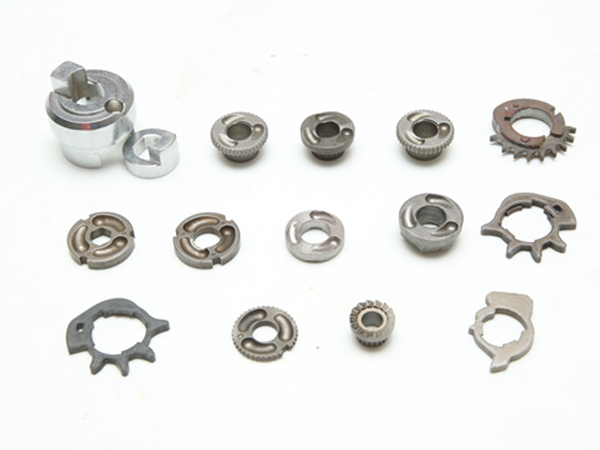
How to Find a Sintered Stainless Steel Components Supplier
Selecting the right manufacturing partner requires systematic evaluation of technical capabilities and quality systems. Follow these steps to identify a sintered stainless steel components supplier who delivers consistent quality.
Step 1: Define Your Part Requirements Completely
Document every specification before contacting any supplier. Provide detailed dimensional drawings with tolerances. Specify the stainless steel grade required. Define the density target and mechanical properties needed. Note your expected annual volume honestly. Include any secondary operations such as passivation, machining, or electropolishing. Complete documentation enables accurate quoting.
Step 2: Verify Stainless Steel Processing Experience
Sintering stainless steel is fundamentally more demanding than processing carbon steel. Ask potential suppliers specifically about their experience with stainless alloys. How many years have they been producing these components? What grades do they regularly process? A sintered stainless steel components supplier with extensive stainless experience understands atmosphere control, temperature profiling, and post-sintering treatment nuances.
Step 3: Examine Sintering Furnace Capabilities
The furnace is the most critical equipment for stainless steel sintering. Ask whether they use continuous mesh-belt furnaces, pusher furnaces, or vacuum furnaces. Vacuum sintering provides the cleanest environment and best corrosion resistance. Inquire about atmosphere generation and monitoring systems. Can they control the dew point to below minus 40 degrees Celsius to prevent chromium oxidation? The furnace technology directly determines the corrosion resistance of the finished parts.
Step 4: Assess Material Handling and Powder Storage
Stainless steel powder is sensitive to contamination and oxidation. Visit the facility or request a virtual tour focusing on powder handling areas. Clean, climate-controlled storage prevents moisture pickup that degrades powder flow. Segregated storage prevents cross-contamination with carbon steel powders that would compromise corrosion resistance. A quality sintered stainless steel components supplier has documented powder handling procedures.
Step 5: Review Quality Systems and Certifications
Verify relevant certifications. ISO 9001 is the minimum baseline. ISO 13485 certification demonstrates medical device quality management compliance. IATF 16949 certification applies to automotive supply chains. Inspect their metrology equipment including coordinate measuring machines and surface finish testers. Request a sample First Article Inspection Report.
Step 6: Evaluate Secondary Processing Capabilities
Sintered stainless steel components often require post-sintering treatments. Passivation removes free iron from the surface and enhances natural corrosion resistance. Resin impregnation seals interconnected porosity for pressure-tight applications. Electropolishing improves surface finish and cleanability. Some parts need CNC machining for critical tolerances. A sintered stainless steel components supplier with integrated passivation and finishing provides single-source accountability.
Step 7: Request Prototype Samples and Test Thoroughly
Order prototype parts before committing to full production tooling. Test them in your actual application environment. Measure corrosion resistance through salt spray testing or immersion testing. Verify dimensional stability and mechanical properties. Confirm magnetic properties if relevant. Prototype testing validates that the supplier’s process meets your specific requirements.
Step 8: Check References and Long-Term Reliability
Request references from clients with similar component requirements. Contact those references and ask about quality consistency, delivery performance, and responsiveness to issues. A sintered stainless steel components supplier with long-standing customer relationships demonstrates proven reliability.
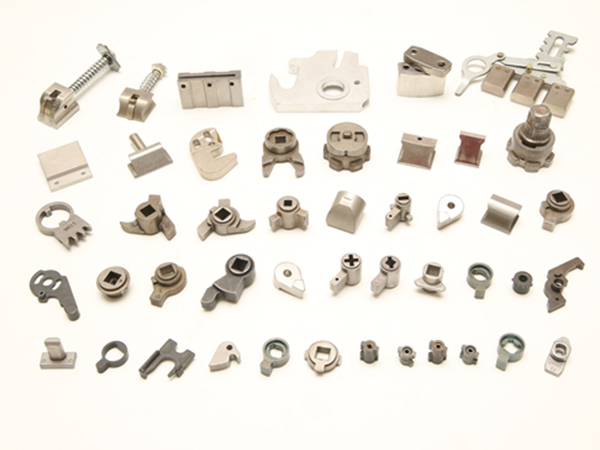
Related: The Manufacturing Process at a Sintered Stainless Steel Components Supplier
Understanding how these components are manufactured helps you design parts that fully leverage the technology’s capabilities.
The process begins with powder selection. Stainless steel powder, typically produced by water or gas atomization, must have precise particle size distribution and low oxygen content. A sintered stainless steel components supplier carefully controls incoming powder quality because any contamination or oxidation in the raw material will compromise the final part’s corrosion resistance.
Powder mixing adds a solid lubricant, typically a synthetic wax or zinc stearate. This lubricant reduces friction during compaction and helps the powder flow uniformly into the die cavity. The mixing process must be thorough to ensure uniform lubricant distribution without damaging the powder particles.
Compaction presses the powder blend into the part shape. The prepared powder fills a precision die cavity. Punches apply pressure ranging from 400 to 800 megapascals. The powder particles deform and mechanically interlock. The green compact has sufficient strength for handling but remains fragile. Tooling design must account for the lower compressibility of stainless steel powder compared to iron powder.
Sintering creates permanent metallurgical bonds. This step is critical for stainless steel. The furnace atmosphere must be extremely clean and dry to prevent chromium oxidation. Many sintered stainless steel components supplier facilities use vacuum sintering for the highest quality results. The high temperature causes atomic diffusion that welds the particles together. Precise temperature control ensures proper densification without melting.
FAQ: Your Sintered Stainless Steel Components Supplier Questions Answered
1. Are sintered stainless steel components as corrosion-resistant as wrought stainless steel?
At equal density and with proper sintering atmosphere control, sintered components can approach the corrosion resistance of wrought material. However, residual internal porosity increases the total surface area exposed to corrosive media. High-density processing above 92 percent of theoretical density, combined with proper passivation, significantly closes the performance gap. For the most demanding environments, specify high-density processing and validate through testing.
2. Can sintered stainless steel components be welded?
Welding porous sintered stainless steel is challenging but possible with proper preparation. Internal pores contain trapped gases that expand during welding, causing porosity in the weld bead. To achieve sound welds, specify high-density processing with minimal interconnected porosity. Alternatively, the weld zone can be infiltrated with a compatible filler material before welding. Discuss welding requirements with your sintered stainless steel components supplier early in the design process.
3. What surface finish can I expect from sintered stainless steel components?
As-sintered surfaces have a matte appearance with roughness typically around 0.8 to 1.6 micrometers Ra. Sizing or calibration burnishes surfaces to a smoother finish. Electropolishing achieves mirror-like finishes below 0.2 micrometers Ra for cosmetic or sanitary applications. Bead blasting creates a uniform satin appearance. Specify your surface finish requirements clearly when working with a sintered stainless steel components supplier.
Conclusion
Partnering with a qualified sintered stainless steel components supplier opens the door to cost-effective production of corrosion-resistant precision parts. By understanding the different stainless steel grades and their properties, you can select the right material for your application environment. Following a structured supplier selection process ensures you find a partner with the technical expertise and quality systems to deliver consistent results. Whether you need medical instruments, marine hardware, or food processing equipment components, the right sintered stainless steel components supplier provides reliable, high-performance solutions.
7 Advantages When You Buy Sintered Metal Gears for Your Project