Manufacturing complex metal parts efficiently challenges engineers across every industry today. The advantages of powder metallurgy include exceptional material savings, precision, and design flexibility. This guide explores why this technology has become essential for high-volume production.
What is Powder Metallurgy
Powder metallurgy is a manufacturing process that transforms fine metallic powder into solid, precision components without melting the metal completely. The process begins with blending metal powder with alloying elements and lubricants. This mixture flows into a precision die where punches apply enormous pressure to form a green compact. The compact then passes through a controlled atmosphere furnace where heat bonds the particles together through atomic diffusion.
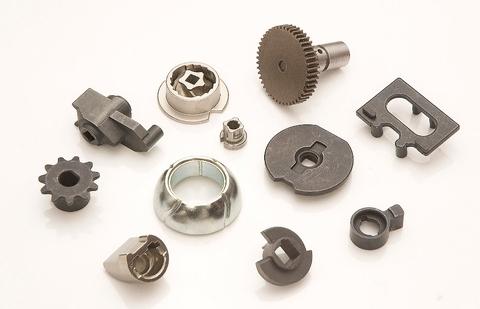
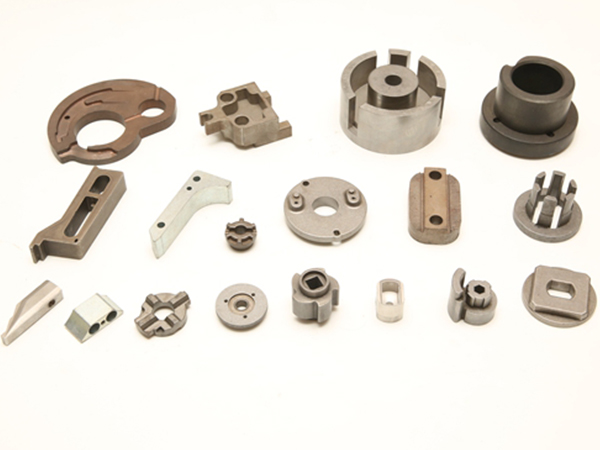
The result is a near-net-shape part with precise dimensions and excellent mechanical properties. The process achieves over 95 percent material utilization, dramatically reducing waste compared to traditional machining. Components range from tiny gears weighing a few grams to large structural brackets exceeding several kilograms. Industries including automotive, aerospace, medical devices, and consumer products depend on this technology. The advantages of powder metallurgy make it increasingly attractive for manufacturers seeking efficiency and sustainability.
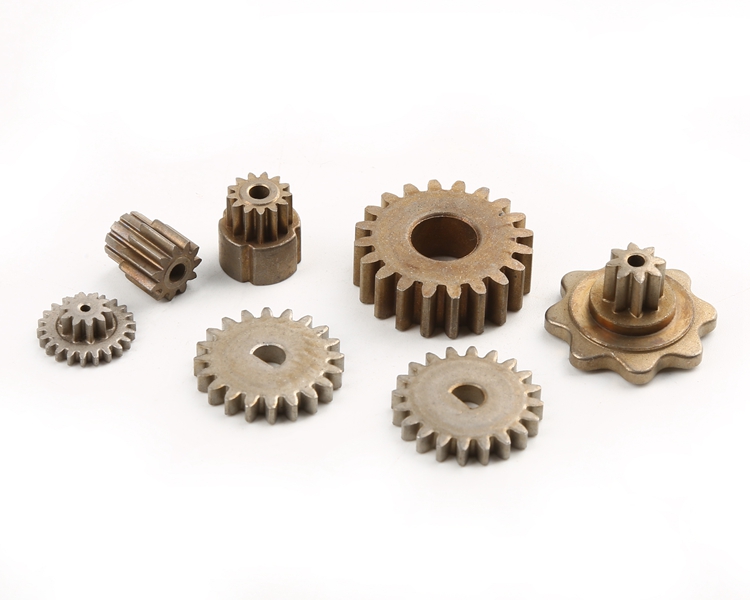
Related: Material Efficiency and Cost Savings Benefits
One of the most significant advantages of powder metallurgy is extraordinary material utilization. Traditional machining starts with a solid block of metal and cuts away material to create the final shape. This subtractive approach wastes up to 50 percent of the starting material as chips and scrap. Powder metallurgy reverses this paradigm. The process uses over 95 percent of the raw powder, turning nearly every gram into finished product. This efficiency reduces raw material costs substantially.
The near-net-shape capability eliminates most secondary machining operations. Gears emerge from the pressing die with teeth already formed. Bushings come out with the bore already sized. Brackets include mounting holes and reinforcing ribs pressed directly into the green compact. These integrated features eliminate multiple machining setups, cutting tools, and labor hours. The advantages of powder metallurgy in reducing processing steps translate directly to lower per-part costs.
Energy consumption favors powder metallurgy over alternative processes. Melting metal for casting requires enormous energy to reach temperatures above 1500 degrees Celsius. Sintering occurs at lower temperatures, typically around 1100 degrees Celsius for ferrous materials. The solid-state process avoids the latent heat of fusion, saving significant energy per kilogram of finished product. Lower energy consumption reduces both cost and environmental impact.
High-volume production economics strongly favor this technology. Once the pressing tooling is fabricated, parts are produced rapidly with consistent quality. Mechanical presses cycle at rates of 10 to 30 strokes per minute. A single press can produce thousands of parts per hour. The tooling lasts for hundreds of thousands of cycles before requiring refurbishment. When amortized over high volumes, the per-part tooling cost becomes negligible. The advantages of powder metallurgy for mass production are unmatched by alternative methods.
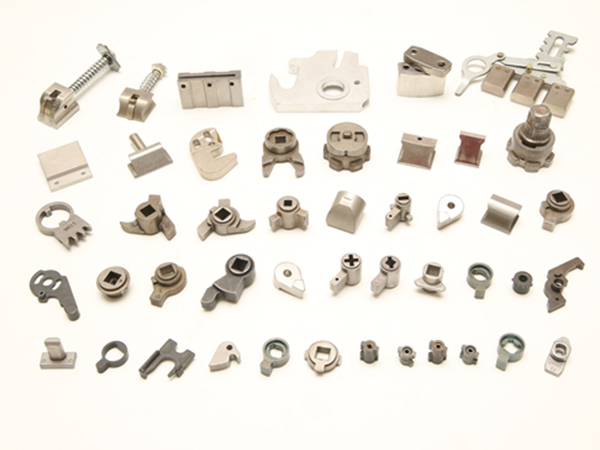
Powder metallurgy process
Powder metallurgy is a manufacturing process that transforms fine metal powder into solid, precision components without fully melting the metal. The process begins with blending the powder with alloying elements and a solid lubricant. This mixture flows into a precision die, where powerful presses apply extreme pressure to form a green compact. The compact holds its shape but remains fragile at this stage.
Next comes sintering, the most critical step. The green compact travels through a controlled atmosphere furnace at temperatures just below the metal’s melting point. The powder particles bond together through atomic diffusion, creating permanent metallurgical bonds. The part shrinks slightly during this process, and the tooling is designed to compensate for this dimensional change. After sintering, the component achieves its full strength and durability.
The result is a near-net-shape part requiring minimal secondary finishing. Powder metallurgy achieves over 95 percent material utilization, dramatically reducing waste compared to traditional machining, which can waste half the starting material. This efficiency, combined with the ability to produce complex geometries with integrated features like gears, splines, and cams, makes the technology ideal for high-volume production. Industries including automotive, medical devices, power tools, and aerospace depend on powder metal components for reliable, cost-effective performance.
Related: Design Flexibility and Performance Capabilities
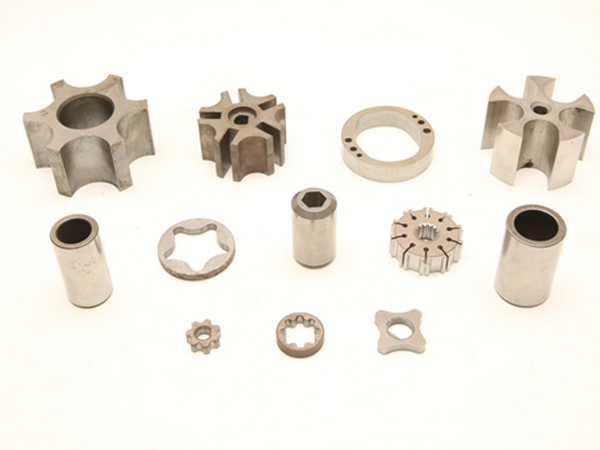
Design freedom represents another key advantage of powder metallurgy. Engineers can create complex geometries with integrated features that would be costly or impossible to machine. Gears with involute tooth profiles, cams with complex lift curves, and sprockets with specialized tooth forms all emerge directly from the pressing operation. Multiple levels, hubs, flanges, and bosses can be incorporated into a single compact.
Material composition can be tailored precisely to meet specific requirements. The powder blend can include various alloying elements in exact proportions. Copper additions improve strength and conductivity. Nickel enhances toughness and fatigue resistance. Molybdenum increases high-temperature strength. Graphite controls carbon content for hardenability. This metallurgical flexibility allows optimization of mechanical properties without the constraints of standard wrought alloy compositions.
Controlled porosity offers unique functional capabilities. The interconnected pore network can be impregnated with lubricating oil to create self-lubricating bearings. Under operating temperature and centrifugal force, the oil migrates to the bearing surface, providing continuous lubrication throughout the component’s service life. This eliminates the need for external lubrication systems and reduces maintenance requirements. The advantages of powder metallurgy in producing self-lubricating components are particularly valuable for sealed assemblies and hard-to-reach locations.
Magnetic properties can be engineered for electromagnetic applications. Soft magnetic materials produced through this process offer high permeability and low core losses. Iron-phosphorus and iron-silicon alloys achieve magnetic performance comparable to laminated electrical steels. The process allows complex three-dimensional magnetic circuit shapes impossible with stacked laminations. Sensors, actuators, and solenoid cores benefit from this capability.
Isotropic mechanical properties result from the random particle orientation during compaction. Unlike wrought metals, which have directional grain structure from rolling or forging, powder metal parts exhibit uniform properties in all directions. This isotropy simplifies design calculations and ensures consistent performance regardless of loading direction. The uniform structure also contributes to predictable fatigue behavior.
Surface densification extends performance into traditionally wrought-only applications. By rolling or pressing the surface layer of sintered components, manufacturers close the residual porosity on gear flanks and bearing journals. This creates a fully dense surface layer with contact fatigue resistance approaching wrought steel. The core retains controlled porosity for weight reduction and vibration damping. These hybrid components combine the advantages of powder metallurgy with the surface durability of wrought materials.
Related: Environmental Sustainability and Process Control
Environmental responsibility increasingly drives manufacturing decisions. The advantages of powder metallurgy include significant sustainability benefits that align with modern environmental goals. Material waste is minimal compared to machining. The sintering process consumes less energy than melting metal for casting. Many powder metal parts are produced from recycled steel powder, further reducing environmental footprint.
Process control and repeatability represent another critical advantage. Once the tooling is validated and process parameters are established, powder metallurgy produces identical parts across millions of cycles. There is no tool wear in the traditional cutting sense because the powder is pressed, not cut. Dimensional consistency exceeds that of many competing processes. Statistical process control data from powder metal production consistently demonstrates high capability indices.
Quality documentation supports demanding industry requirements. Material certifications trace each powder lot to its source. Mechanical testing verifies tensile strength, hardness, and density for every production batch. Dimensional inspection using coordinate measuring machines validates critical features. This comprehensive documentation satisfies automotive, medical, and aerospace quality standards. The advantages of powder metallurgy in quality assurance make it suitable for safety-critical applications.
8 Tips for Partnering with Reliable Powder Metal Parts Manufacturers
FAQ: Your Powder Metallurgy Questions Answered
1. What are the main advantages of powder metallurgy compared to machining?
Material utilization exceeds 95 percent compared to roughly 50 percent for machining. Near-net-shape production eliminates most secondary operations. Complex features like gears and splines form directly during pressing. Production rates are much higher for medium to high volumes. Per-part cost typically decreases by 30 to 50 percent compared to machined equivalents for quantities above 5,000 pieces annually.
2. Can powder metallurgy parts achieve the same strength as wrought steel?
Modern high-density processing with density above 92 percent of theoretical, combined with appropriate heat treatment, can match the tensile and fatigue strength of many wrought steels. Surface densification techniques close residual porosity on critical surfaces, achieving contact fatigue resistance comparable to wrought materials. The isotropic grain structure provides uniform properties in all directions, unlike the directional properties of rolled or forged steel.
3. What shapes and sizes are possible with powder metallurgy?
The process produces shapes that can be ejected from a rigid die in the pressing direction. Spur gears, cams, sprockets, brackets, and bushings are common. Features like blind holes, bosses, splines, and keyways integrate directly. Maximum part size is limited by press tonnage, typically around 150 millimeters in diameter. Wall thickness should be at least 1.5 millimeters. Complex multi-level parts are achievable with sophisticated tooling.
Conclusion
The advantages of powder metallurgy position this technology as a cornerstone of modern manufacturing. Exceptional material efficiency, near-net-shape production, and metallurgical flexibility combine to deliver precision components at competitive costs. Self-lubrication capability, engineered magnetic properties, and surface densification extend performance into demanding applications. Environmental sustainability and rigorous process control satisfy contemporary manufacturing requirements. Whether for automotive powertrain components, medical instruments, or industrial machinery, the advantages of powder metallurgy continue to drive adoption across diverse industries.