Large factories often prioritize high-volume contracts, leaving smaller buyers struggling for attention and flexibility. Small powder metal suppliers fill this critical gap by offering personalized service, lower minimum orders, and specialized expertise. This guide will help you find the right partner for your unique project needs.
What is Small Powder Metal Suppliers
Small powder metal suppliers are specialized manufacturing firms that produce sintered metal components but operate on a smaller scale than massive Tier-1 automotive contractors. They focus on flexibility, serving clients who need batches ranging from a few hundred to tens of thousands of parts annually. These suppliers typically run smaller presses and batch furnaces rather than continuous high-speed production lines.
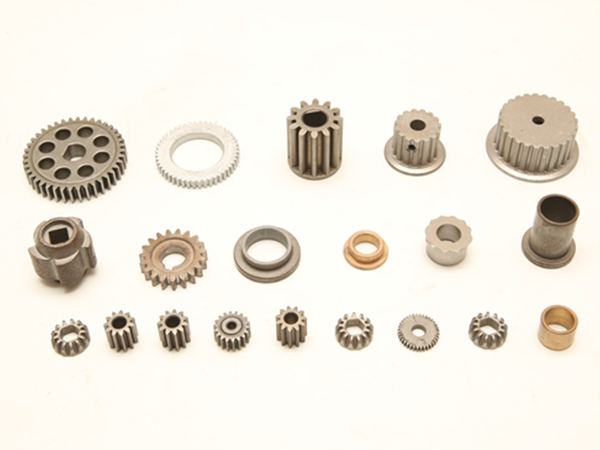
The key advantage is their agility. A small powder metal supplier can switch tooling quickly, run experimental alloys, and provide hands-on engineering support that giant corporations often reserve only for their largest accounts. They serve prototyping projects, specialized industrial equipment manufacturers, and niche markets where customized attention matters more than sheer production speed.
3 Specifications to Verify with Small Powder Metal Suppliers
When evaluating small powder metal suppliers, you must confirm three critical technical specifications. These ensure the supplier can actually deliver parts that function, not just parts that look correct.
1. Press Tonnage and Part Size Capability
The press tonnage determines the maximum projected area of the part. Powder metal suppliers typically operate presses ranging from 20 to 200 tons. This limits the part size they can produce at high density. Ask for the maximum compacting pressure they can achieve. For ferrous parts, achieving a density of 7.0 g/cm³ requires roughly 600 MPa of pressure. If your part has a large cross-section, confirm the supplier’s press can deliver sufficient force. A supplier with only a 50-ton press cannot produce a dense, large-diameter gear.
2. Sintering Atmosphere Control
Batch furnaces are common among powder metal suppliers, unlike the continuous mesh-belt furnaces used in mass production. Batch sintering requires rigorous atmosphere control throughout the entire heating and cooling cycle. Ask about the furnace atmosphere composition, typically a mixture of nitrogen and hydrogen. Verify they monitor the dew point continuously. A poorly controlled atmosphere causes surface decarburization, leaving a soft skin on your part that wears quickly. The supplier must demonstrate consistent temperature uniformity and gas flow within their batch vessel.
3. Secondary Processing Capabilities
A sintered part rarely exits the furnace as a finished product. Powder metal suppliers must either offer in-house secondary services or have reliable, vetted partners. Common secondary needs include CNC machining for tight bores, steam treatment for corrosion resistance, oil impregnation for self-lubrication, and vibro-deburring for smooth edges. Ask for a complete list of in-house versus outsourced secondary operations. Every outsourced step adds logistical risk and potential quality gaps, so a supplier with more in-house capabilities provides stronger value.
How to Choose the Right Small Powder Metal Suppliers
Selecting from the pool of powder metal suppliers requires a focus on communication, quality systems, and cultural fit. Follow these steps to find a partner that truly supports your project.
Step 1: Define Your Volume and Tolerance Expectations
Before contacting any supplier, calculate your annual volume honestly. If you need 500 parts per year, a high-volume factory will not serve you well. Powder metal suppliers thrive on these exact batch sizes. Also, define your dimensional tolerances clearly. Can you accept as-sintered tolerances of ±0.05 mm, or do you require calibrated precision of ±0.01 mm? Being upfront about volume and precision filters out suppliers who cannot match your needs and saves everyone valuable time.
Step 2: Evaluate Communication and Engineering Support
Send a preliminary inquiry with your part drawing and ask technical questions. How quickly do they respond? Does a real engineer review your print and offer design-for-manufacturability feedback? The best powder metal suppliers act as engineering partners, not just parts vendors. They will suggest adjusting a fillet radius for better powder flow or recommend a material grade that balances cost and strength. If the response is a generic quote with no technical commentary, consider it a red flag.
Step 3: Visit the Facility or Request a Virtual Tour
A physical visit reveals what marketing materials hide. Look at the condition of the presses and furnaces. Is the shop floor organized and clean, or chaotic and dusty? Check the metrology lab. Do they have a CMM and a gear rolling tester, or only basic hand tools? For powder metal suppliers, a well-organized small shop often beats a messy large one. Ask to see a sample First Article Inspection Report. The documentation quality reflects the supplier’s overall commitment to precision.
Step 4: Confirm Material and Alloy Flexibility
Ask what materials they regularly process. Standard iron-carbon and iron-copper-carbon grades are common. But can they handle stainless steel powders like 316L for corrosion resistance? Can they blend custom alloys with nickel or molybdenum for high-strength applications? The top powder metal suppliers maintain relationships with powder manufacturers and can source specialized materials. If a supplier only offers one or two standard grades, they may not support your future projects as your needs evolve.
Applications Served by Small Powder Metal Suppliers
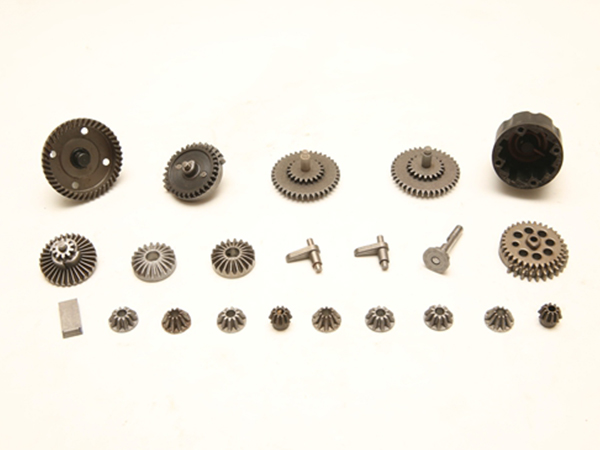
Powder metal suppliers support a diverse range of industries that require precision components in moderate volumes. Their flexibility makes them indispensable for several key application areas.
Prototyping and research institutions rely heavily on powder metal suppliers. A university engineering lab developing a new actuator needs fifty gear samples, not fifty thousand. The small supplier can produce these samples affordably, using manual or semi-automatic processes that large factories cannot justify economically.
Agricultural equipment manufacturers use sintered components in seed drills, fertilizer spreaders, and harvesting machines. These parts, such as bushings, sprockets, and cam followers, need good wear resistance but are produced in moderate volumes. Small powder metal suppliers offer the perfect balance of quality and cost, often providing oil-impregnated bearings that require no field lubrication.
Power tool companies, particularly those producing professional-grade tools, need strong, impact-resistant gears and locking mechanisms. A small supplier can produce the required thousands of gears per year with tight quality control, often matching the performance of machined gears at a lower cost.
The firearms and defense industry uses sintered metal parts for triggers, safety levers, and sight mounts. These applications demand consistent quality and material traceability. Small powder metal suppliers with strong quality systems and ITAR compliance can serve this sector effectively, providing the documentation and lot control that government contracts require.
Medical device manufacturers need biocompatible, corrosion-resistant components like surgical instrument handles and implant tools. Small powder metal suppliers with experience in processing 316L stainless steel can deliver these parts with the necessary surface finish and cleanliness standards.
FAQ: Your Small Powder Metal Suppliers Questions Answered
1. How do small powder metal suppliers differ from large factories?
The primary differences are scale, flexibility, and service. Large factories run high-speed mechanical presses and continuous furnaces optimized for millions of identical parts. Small powder metal suppliers use smaller batch equipment that can change over quickly. They accept lower minimum order quantities and provide more direct engineering interaction. The per-part price may be slightly higher, but the tooling cost is often lower, making small suppliers more economical for volumes under 50,000 pieces annually.
2. Can small powder metal suppliers produce prototypes before full production?
Yes, this is one of their greatest strengths. Many small powder metal suppliers maintain standard tooling sets that allow them to produce small prototype batches economically. They can press green parts, sinter them, and deliver functional samples for testing within weeks. Some even offer design iteration support, adjusting the tooling based on test feedback before finalizing the production die. This prototyping capability saves significant time and money compared to committing to full production tooling upfront.
3. What certifications should I look for when choosing a supplier?
ISO 9001 is the baseline certification for any reputable supplier. It demonstrates a functioning quality management system. If your parts go into automotive assemblies, look for IATF 16949 certification, which adds stringent process control and defect prevention requirements. For medical or aerospace applications, seek ISO 13485 or AS9100 respectively. Even if a supplier lacks these advanced certifications, ask about their quality processes, inspection equipment, and defect tracking systems. Good small powder metal suppliers operate professionally regardless of formal certification status.
Conclusion
Partnering with small powder metal suppliers opens doors to flexible, personalized manufacturing that giant corporations simply cannot match. By verifying press capabilities, furnace atmosphere control, and secondary processing options, you ensure your chosen partner can deliver parts that meet every specification. Whether you need prototype gears, agricultural components, or medical device parts, the right small powder metal supplier becomes a true engineering ally, supporting your success with expertise and responsive service.
7 Essential Qualities of a Trusted Sintered Metal Company for Your Supply Chain