Producing tiny metal components with precision challenges even experienced engineers. Small metal parts manufacturing solves this problem through specialized processes that create intricate shapes efficiently. This guide covers everything you need to know about this essential industrial capability.
What is Small Metal Parts Manufacturing
Small metal parts manufacturing refers to the industrial production of metal components that are typically measured in millimeters rather than centimeters. These parts range from tiny gears and connectors to miniature brackets, springs, and sensor housings. The processes used include powder metallurgy, precision stamping, CNC micro-machining, metal injection molding, and photochemical etching.
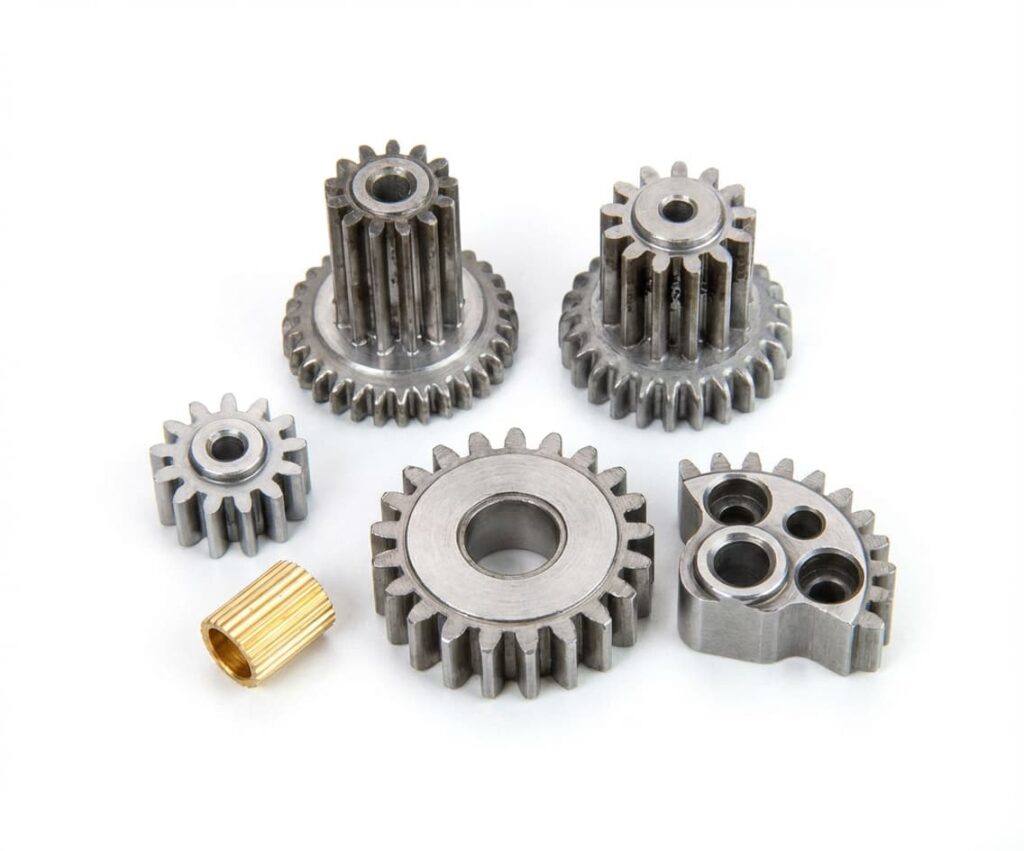
Each method suits different requirements for volume, complexity, and material. Powder metallurgy excels at producing small, complex shapes in high volumes with excellent material efficiency. Precision stamping rapidly produces flat or shallow-drawn parts from sheet metal. CNC micro-machining handles low volumes and extremely tight tolerances. Small metal parts manufacturing serves industries including medical devices, electronics, automotive sensors, aerospace instruments, and consumer products where miniaturization demands ever-smaller components.
3 Specifications Critical to Small Metal Parts Manufacturing
Understanding these three specifications ensures your small parts meet functional requirements while remaining manufacturable at a reasonable cost.
1. Dimensional Tolerance and Precision
Tolerance defines how much a dimension can deviate from the nominal value. Small metal parts manufacturing routinely achieves tolerances of plus or minus 0.05 millimeters. High-precision processes push this to plus or minus 0.01 millimeters or better. However, tighter tolerances increase manufacturing cost significantly. Specify only the precision your design actually needs. Critical features like bearing bores or gear tooth profiles warrant tight control. Non-functional surfaces can use looser tolerances that reduce production costs.
2. Material Selection and Properties
The material choice determines the part’s strength, corrosion resistance, conductivity, and cost. Common materials in small metal parts manufacturing include stainless steel for corrosion resistance, brass and copper for electrical conductivity, aluminum for lightweight applications, and various steel alloys for strength. Exotic alloys like titanium or Inconel serve demanding aerospace and medical applications. The material also affects which manufacturing processes are viable. Some alloys compact poorly in powder metallurgy. Others machine poorly due to hardness or toughness.
3. Surface Finish and Edge Quality
Small parts often interact with other components at their surfaces. Surface finish affects friction, wear, sealing performance, and appearance. Small metal parts manufacturing processes produce different as-made surface finishes. Machined surfaces can achieve very smooth finishes. As-sintered powder metal parts have a matte texture. Secondary operations like tumbling, electropolishing, or passivation improve surface quality. Edge quality matters equally. Sharp burrs interfere with assembly and pose safety risks. Deburring and edge rounding are essential finishing steps.
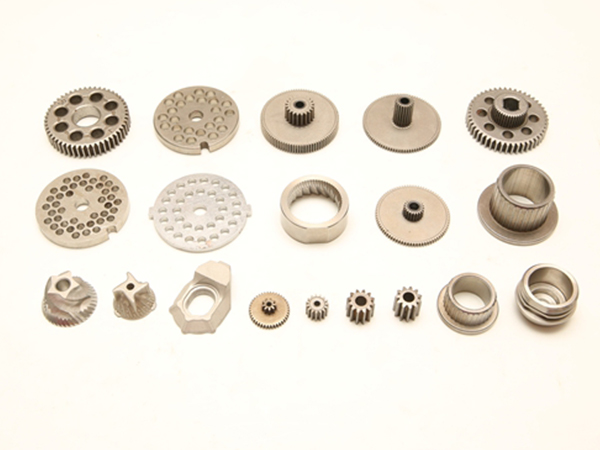
How to Find Supplier of Small Metal Parts
Selecting the right manufacturing partner determines project success. Follow these steps to identify a supplier who delivers quality small metal parts consistently.
Step 1: Define Your Part Requirements Completely
Create a detailed specification package before contacting suppliers. Include dimensioned drawings with tolerances. Specify the material grade and any required heat treatment. Note the required surface finish and critical quality characteristics. State your expected annual volume and desired lead times. Complete documentation enables suppliers to quote accurately and demonstrates your professionalism. This preparation also helps you compare quotes on an equal basis.
Step 2: Identify the Optimal Manufacturing Process
Different processes suit different part geometries and volumes. Powder metallurgy excels at small, complex shapes produced in thousands or millions. Stamping suits flat or shallow parts made from sheet metal. CNC machining handles prototypes and low volumes with excellent precision. Metal injection molding produces tiny, intricate three-dimensional shapes. Research which process matches your part before approaching suppliers. Many companies specialize in specific processes within small metal parts manufacturing.
Step 3: Verify Equipment and Capability Match
Ask potential suppliers about their equipment and capacity. For powder metallurgy, inquire about press tonnage and furnace type. For stamping, ask about press speed and bed size. For machining, verify their CNC equipment can hold the tolerances you require. A supplier with equipment appropriately sized for small parts produces better results than one tooled for large components. Small metal parts manufacturing requires different setups and expertise than large-part production.
Step 4: Evaluate Quality Systems and Inspection
Review the supplier’s quality certifications. ISO 9001 is the baseline. IATF 16949 applies to automotive parts. ISO 13485 covers medical devices. Ask about their inspection equipment. Coordinate measuring machines, optical comparators, and vision systems are essential for inspecting small features. Request a sample inspection report to evaluate documentation quality. A supplier with robust quality systems catches problems before parts ship to your assembly line.
Step 5: Review Secondary Processing Capabilities
Most small metal parts need finishing operations. Ask which services the supplier handles in-house. Heat treatment, plating, deburring, and passivation are common needs. Packaging for small parts also matters. Parts that tangle or damage each other during shipping create problems. A supplier who manages the complete manufacturing and finishing sequence provides single-source accountability. This simplifies your supply chain significantly.
Step 6: Request Prototype Samples and Test
Order prototype parts before committing to full production. Test them in your actual assembly. Verify dimensional accuracy and functional performance. Run durability tests if the application demands it. Prototype testing reveals issues that drawings and specifications miss. A reliable supplier welcomes prototype orders and supports your validation process. This step prevents costly production problems discovered too late.
Step 7: Assess Communication and Long-Term Fit
Observe how the supplier communicates during the inquiry and quotation process. Do they ask clarifying questions? Do they suggest design improvements for manufacturability? The best partners in small metal parts manufacturing act as engineering collaborators. They identify potential issues and propose solutions. Good communication during the evaluation phase predicts a smoother production relationship.
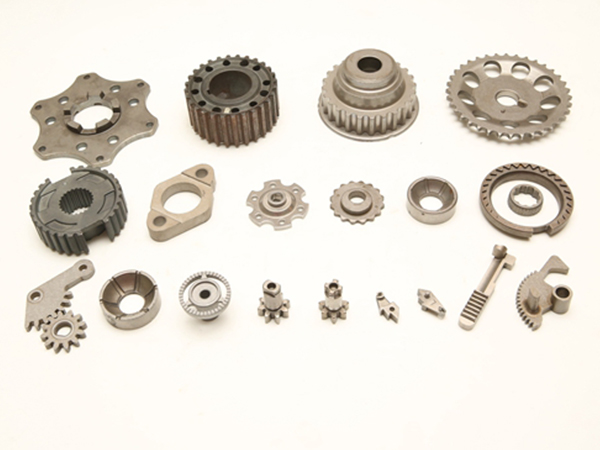
Related: Overview of Manufacturing Processes for Small Metal Parts
Understanding the available manufacturing methods helps you choose the right approach for your specific component.
Powder metallurgy compacts metal powder in a precision die and then sinters the compact in a controlled furnace. This process suits small, complex shapes produced in medium to high volumes. It integrates features like gears, splines, and cams directly. Material utilization exceeds 95 percent, making powder metallurgy one of the most efficient small metal parts manufacturing methods.
Precision stamping uses hardened tooling to cut and form sheet metal at high speed. Progressive dies perform multiple operations in sequence as the strip feeds through the press. This process produces flat springs, connectors, shields, and brackets economically in huge volumes. Small metal parts manufacturing through stamping achieves excellent repeatability once tooling is validated.
CNC micro-machining uses computer-controlled cutting tools to shape metal from bar stock or near-net blanks. This process handles prototypes and low to medium volumes with excellent precision. Multi-axis machines produce complex geometries without dedicated tooling. However, material waste is higher than net-shape processes, and per-part cost rises with complexity.
Metal injection molding mixes fine metal powder with a plastic binder, injects the mixture into a mold, removes the binder, and sinters the part. This process produces very small, intricate three-dimensional shapes that cannot be pressed or stamped. Small metal parts manufacturing through MIM suits complex geometries in moderate to high volumes.
Photochemical etching uses chemical dissolution to remove metal selectively from thin sheet stock. This process produces flat, burr-free parts with extremely fine features. It requires no hard tooling, making it cost-effective for prototypes and low volumes. Etching suits springs, screens, filters, and precision apertures.
FAQ: Your Small Metal Parts Manufacturing Questions Answered
1. How do I choose between powder metallurgy and machining for my small parts?
Consider your volume, geometry, and material requirements. Powder metallurgy becomes cost-effective above 5,000 pieces annually and produces complex shapes with integrated features. Machining suits lower volumes and offers maximum material flexibility without tooling investment. For volumes under 1,000 pieces, machining usually costs less. Above 20,000 pieces, powder metallurgy typically provides significant savings in small metal parts manufacturing.
2. What is the typical lead time for custom small metal parts?
Lead times vary by process and complexity. Machined prototypes can ship in one to two weeks. Stamping tooling requires four to eight weeks before production begins. Powder metallurgy tooling takes six to ten weeks. Once tooling is complete, production quantities typically ship within three to five weeks. Complex secondary operations add time. Discuss lead times early and build buffer into your project schedule.
3. How can I reduce the cost of my small metal parts?
Several strategies reduce cost without sacrificing quality. Relax tolerances on non-critical dimensions. Choose standard material grades rather than exotic alloys. Design features that can be formed without secondary operations. Increase order quantity to amortize tooling costs over more pieces. Consult your supplier early in the design phase for manufacturability feedback. Experienced small metal parts manufacturing partners often suggest simple design changes that dramatically reduce production cost.
Conclusion
Small metal parts manufacturing combines precision engineering with efficient production processes to create the tiny components powering modern technology. By understanding critical specifications like tolerance, material selection, and surface finish, you can design parts that perform reliably while remaining economical to produce. Finding the right manufacturing partner through systematic evaluation of process capabilities, quality systems, and communication ensures your project moves smoothly from concept to production. Whether you need thousands of sintered gears or hundreds of machined brackets, the right approach to small metal parts manufacturing delivers quality results.
Powder Metallurgy Quote: 5 Simple Steps to Get the Best Price