Introduction
If you need precision components that are strong, consistent, and cost-effective, sintered metal parts are worth understanding. Used in everything from car engines to medical devices, they are one of modern manufacturing’s most reliable and versatile solutions.
What Are Sintered Metal Parts?
Sintered metal parts are components made by compressing fine metal powders into a mold and then heating them in a controlled furnace. The heat bonds the powder particles together without fully melting the metal — a process called sintering. The result is a solid, dense part with precise dimensions and good mechanical properties.
Unlike parts made by casting or machining from solid bar stock, these components are built from the ground up — starting with powder, not liquid metal. This gives manufacturers far greater control over material composition, porosity, and shape complexity.
Because little to no material is wasted during production, they are also an environmentally responsible choice. Scrap rates are typically below 5%, compared to 40–50% for traditional machining operations. This efficiency makes them popular in high-volume manufacturing environments where cost control matters.
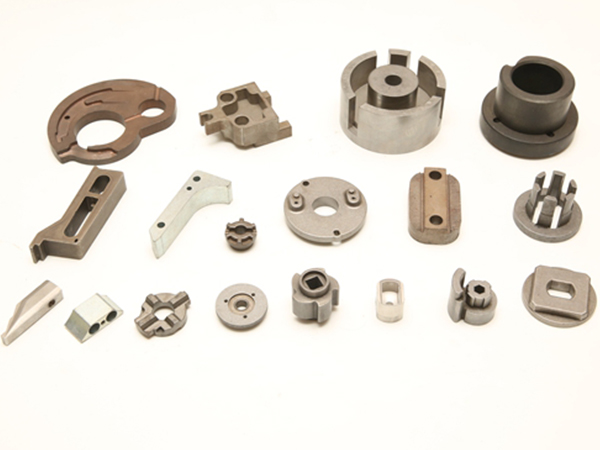
3 Key Specifications of Sintered Metal Parts
Choosing the right specification is essential for getting the performance you need. Here are the three most important parameters to understand:
1. Density and Porosity
Density is one of the most critical specs for these PM components. It is expressed as a percentage of the theoretical full density of the material. Standard PM (powder metallurgy) parts reach 85–92% density. Higher-density parts — up to 99% — are achievable through re-pressing or hot isostatic pressing (HIP). Controlled porosity is sometimes intentional, as in self-lubricating bearings where the pores hold oil.
2. Dimensional Tolerance
One of the biggest advantages of this manufacturing method is dimensional accuracy. Tolerances of ±0.05 mm are routinely achieved straight from the sinter furnace, often eliminating the need for secondary machining. For critical applications, re-sizing (a light re-pressing step) can bring tolerances down to ±0.01 mm. This level of precision is especially valuable for gears, bushings, and bearing housings.
3. Tensile Strength
Tensile strength depends on the material, density, and any post-sintering heat treatments applied. Iron-based components typically achieve tensile strengths between 200 MPa and 800 MPa. With alloying additions such as nickel, copper, or molybdenum, and with proper heat treatment, strengths above 1,000 MPa are possible — comparable to many wrought and forged steel grades.
How to Produce Sintered Metal Parts
This manufacturing method follows a well-defined sequence of steps. Each stage must be carefully controlled to achieve consistent quality.
7 Great Stages of the Powder Metallurgy Process Every Engineer Should Know
Step 1 — Powder Selection and Blending
The process begins with selecting the right metal powder — commonly iron, copper, aluminum, stainless steel, or tungsten. Lubricants and alloying elements are blended in precisely measured amounts to achieve the target composition and ensure good powder flow during pressing.
Step 2 — Die Compaction
The blended powder is fed into a hardened steel die and compressed under pressures of 150 to 900 MPa using a hydraulic or mechanical press. This forms a “green compact” — a part that holds its shape but is still fragile and must be handled carefully before sintering.
Step 3 — Sintering
The green compact is placed on a mesh belt or tray and passed through a continuous sintering furnace. Temperatures range from 1,000°C to 1,300°C for iron-based materials. The controlled atmosphere — typically a mix of hydrogen and nitrogen — prevents oxidation and promotes strong inter-particle bonding.
Step 4 — Cooling
After sintering, parts are slowly cooled in a controlled zone within the furnace. The cooling rate affects the final microstructure and hardness. Rapid cooling can be used to achieve a martensitic structure for higher hardness, similar to conventional heat treatment of steel.
Step 5 — Secondary Operations
Depending on the application, finished components may undergo additional steps such as sizing (re-pressing for tighter tolerances), oil impregnation (for self-lubricating bearings), plating, machining, or case hardening. These finishing operations tailor the final properties to meet exact customer requirements.
Applications of Sintered Metal Parts
These precision components are used across a wide range of industries due to their accuracy, repeatability, and cost-effectiveness at high volumes.
Automotive
The automotive industry is the single largest consumer. Connecting rods, valve seat inserts, camshaft sprockets, oil pump gears, and transmission components are all commonly produced this way. A modern passenger vehicle can contain 15–20 kg of these components.
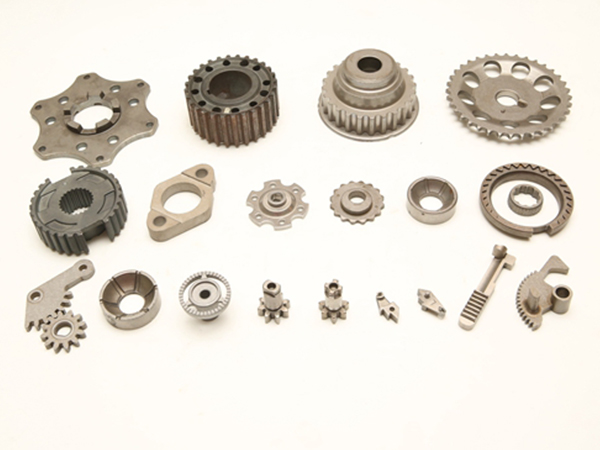
Industrial Machinery
Bushings, sprockets, cams, and wear plates in industrial equipment benefit from the consistent density and self-lubricating properties that PM components can provide. They reduce maintenance intervals and extend equipment life.
Electronics and Electrical Engineering
Soft magnetic cores for motors and transformers, electrical contacts, and heat-dissipating components are routinely manufactured using powder metallurgy. The ability to tailor electrical and magnetic properties through alloying is a key advantage here.
Medical and Dental
Porous bone scaffolds, surgical instrument components, and dental implant structures use controlled porosity levels achievable only through powder metallurgy. Biocompatible titanium and cobalt-chrome alloys are common material choices.
Consumer Products and Power Tools
Gears, clutch plates, and structural inserts in power tools, kitchen appliances, and garden equipment rely on the wear resistance and tight tolerances that these precision components consistently deliver at scale.
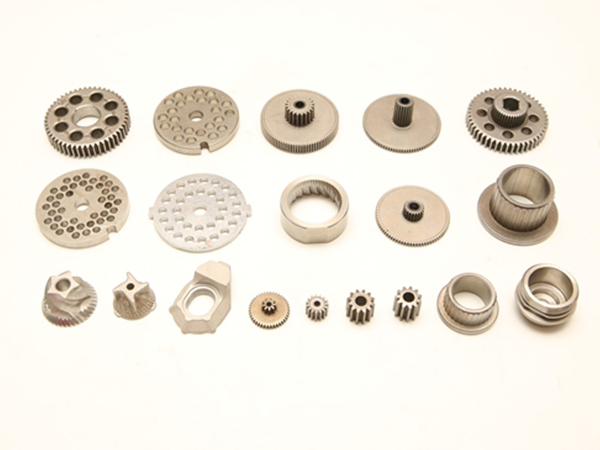
3 Differences between sintered and fabricated metal parts:
1. Manufacturing Method
Sintered metal parts are made by compressing and heating metal powder, while fabricated metal parts are shaped through cutting, welding, bending, or stamping solid metal stock.
2. Material Waste
Sintering uses nearly 95–97% of its raw material with minimal scrap. Fabrication typically removes or discards significant amounts of material, resulting in waste rates of 30–50%.
3. Shape Complexity
Sintered metal parts can form complex internal geometries — such as controlled porosity or intricate profiles — in a single press cycle. Fabricated parts often require multiple operations and assembly steps to achieve similar complexity.
FAQ
Q1: How long do sintered metal parts last?
With proper design and material selection, they can last as long as — or longer than — equivalent machined or cast parts. Self-lubricating sintered bearings, for example, are widely used in appliances and automotive cooling fans because of their exceptional service life with zero maintenance.
Q2: Can sintered metal parts be welded or machined after sintering?
Yes, but with some limitations. The porosity in standard PM parts can trap gases during welding, so special techniques or higher-density parts are recommended. Machining is possible but may require carbide tooling due to the abrasive nature of the sintered structure. Most designs aim to minimize machining by building the final shape directly into the die.
Q3: Are sintered metal parts suitable for high-temperature applications?
It depends on the material. Iron and steel parts are stable up to around 300–400°C in service. For higher temperatures, nickel superalloys, molybdenum, or tungsten-based sintered materials are used. These are common in turbine components, heating elements, and high-temperature industrial furnace parts.
Conclusion
From automotive engines to surgical instruments, sintered metal parts play a critical role in modern manufacturing. Their combination of dimensional precision, material efficiency, and design flexibility makes them a preferred choice across dozens of industries.
Whether you are an engineer evaluating manufacturing methods or a procurement specialist comparing suppliers, understanding sintered metal parts helps you make better, more informed decisions. As demand for lightweight, high-strength, and sustainable components grows, their importance will only continue to rise.