Small, complex metal parts are challenging to produce economically at high volumes. MIM metal technology solves this problem by combining plastic injection molding flexibility with metal material performance. This guide explains the process and how to source quality components effectively.
What is MIM Metal
MIM metal stands for Metal Injection Molding, a manufacturing process that produces small, intricate metal parts in high volumes. The process mixes fine metal powder with a plastic binder material to create a feedstock. This feedstock is heated and injected into a mold cavity just like plastic injection molding. The molded part, called a green part, contains metal powder held together by the solidified binder.
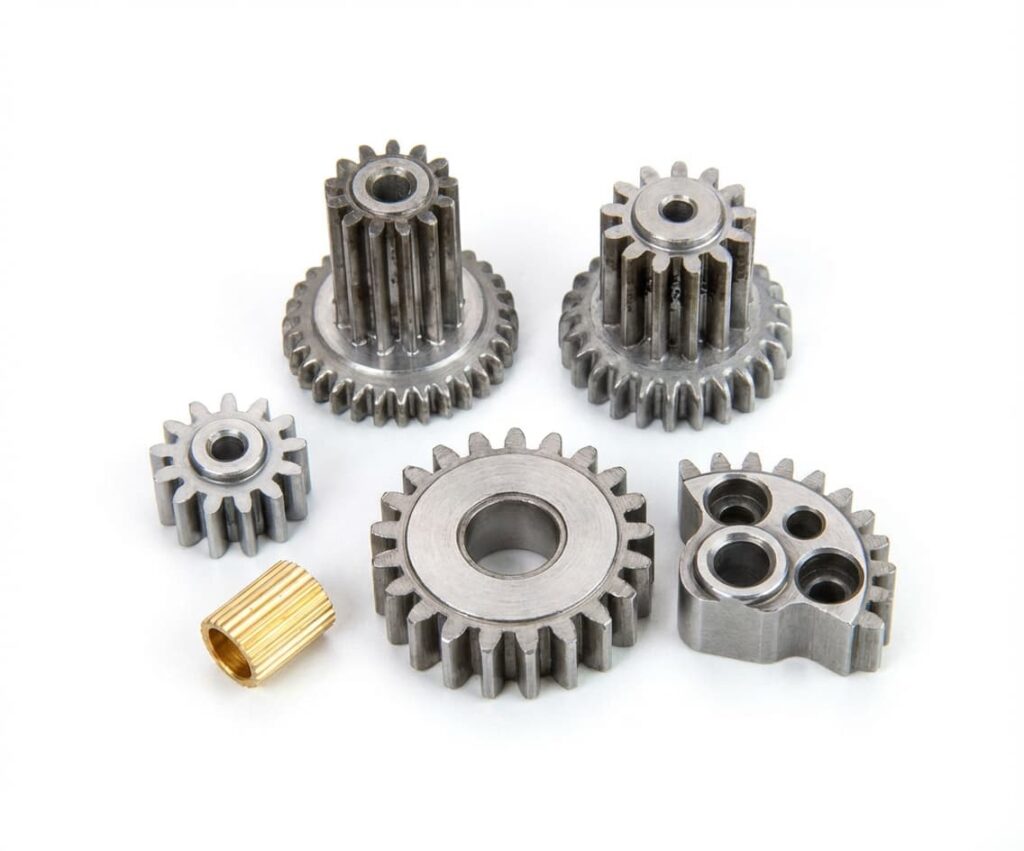
The green part undergoes a debinding process that removes most of the binder material. The remaining MIM metal powder skeleton is then sintered in a controlled atmosphere furnace at temperatures near the metal’s melting point. The metal particles fuse together, and the part shrinks to its final dimensions. The result is a fully dense metal component with mechanical properties approaching wrought materials. This technology combines the design freedom of plastic molding with the strength and durability of metal.
How to Find a Supplier for MIM Metal Parts
Finding a reliable supplier requires careful evaluation of technical capabilities and quality systems. Follow these steps to identify the right manufacturing partner.
Step 1: Define Your Part Requirements Completely
Document every specification before contacting suppliers. Provide detailed CAD models or dimensioned drawings. Specify the MIM metal alloy required, such as 316L stainless steel, 17-4PH, or titanium. Define mechanical properties including tensile strength and hardness. State your expected annual volume. The metal injection molding approach becomes cost-effective above 10,000 pieces annually due to tooling investment. Clear specifications enable accurate quoting.
Step 2: Verify the Supplier’s Experience
Ask how long the company has specialized in this production method. Review their portfolio of past projects. Look for parts similar in size and complexity to yours. A supplier with deep process knowledge understands the nuances of mold design, feedstock formulation, and sintering cycle optimization. General plastic injection molders who recently added metal molding capability may lack the specialized knowledge required for consistent quality.
Step 3: Evaluate Mold Design and Tooling Capability
Mold design for this process differs significantly from plastic injection molds. The tooling must account for the substantial shrinkage during sintering, typically 15 to 20 percent. Gates, runners, and ejection systems must handle the unique flow characteristics of metal feedstock. Ask whether the supplier designs and builds molds in-house. In-house toolmaking enables faster development and responsive troubleshooting when issues arise.
Step 4: Assess Debinding and Sintering Equipment
Debinding removes the plastic binder from the molded part. Several methods exist including solvent debinding, catalytic debinding, and thermal debinding. Each method suits different part sizes and geometries. Sintering requires precise temperature control and protective atmosphere to prevent oxidation. Ask about the supplier’s furnace capacity and atmosphere control systems. The sintering process largely determines the final part quality.
Step 5: Review Quality Systems and Inspection
Verify relevant certifications. ISO 9001 is the baseline. IATF 16949 certification applies to automotive components. ISO 13485 covers medical device manufacturing. Ask about dimensional inspection equipment. Coordinate measuring machines and optical inspection systems are essential for verifying complex geometries. Request a sample First Article Inspection Report to evaluate documentation quality.
Step 6: Request Material Certifications and Test Data
Insist on material certifications for each production batch. Tensile test bars produced alongside your parts verify mechanical properties. Density measurements confirm full densification. Metallographic analysis reveals internal microstructure quality. For medical or aerospace applications, full material traceability is mandatory. A quality supplier provides this documentation as standard practice.
Step 7: Order Prototype Samples and Test Thoroughly
Order prototype parts before authorizing full production. Test them in your actual assembly under real operating conditions. Verify dimensional accuracy, mechanical performance, and surface finish. Run durability or life cycle testing if the application demands it. Prototype evaluation identifies design issues before investing in production tooling.
Step 8: Evaluate Communication and Long-Term Partnership Fit
Observe how the supplier communicates during the evaluation process. Do they ask insightful technical questions? Do they suggest design modifications that improve manufacturability or reduce cost? The best manufacturers act as engineering partners. Good communication during evaluation predicts a smoother ongoing relationship.
Notices When Working with MIM Metal
Important design and process considerations apply when using this technology. Keep these notices in mind throughout your project.
Design for Manufacturability
MIM metal parts require uniform wall thickness to ensure consistent shrinkage during sintering. Thick sections cause internal voids and dimensional distortion. Thin sections may not fill completely during molding. Maintain wall thickness between 0.5 and 10 millimeters for best results. Avoid sharp corners that create stress concentrations. Include adequate draft angles for part ejection from the mold. A well-designed part accounts for these requirements from the start.
Shrinkage Compensation is Critical
Parts produced through this process shrink 15 to 20 percent linearly during sintering. The mold cavity must be oversized accordingly. Shrinkage is not perfectly uniform in all directions. Flow direction during molding, part geometry, and wall thickness variations all affect local shrinkage. Experienced suppliers use simulation software to predict and compensate for non-uniform shrinkage. Discuss shrinkage compensation strategy with your supplier during mold design.
Material Selection Limitations
Not all metal alloys are suitable for injection molding with powder. Common materials include stainless steels like 316L and 17-4PH, low alloy steels, tool steels, titanium, and copper alloys. Some high-performance superalloys are also available. However, the feedstock formulation must balance powder loading, flow properties, and sinterability. Consult your supplier early about material options for your specific application.
Surface Finish Expectations
As-sintered surfaces have a matte appearance with roughness typically around 0.8 micrometers Ra. This finish is smoother than conventional powder metallurgy parts but not as smooth as polished surfaces. Secondary operations like electropolishing, bead blasting, or passivation improve surface quality. For cosmetic applications, discuss surface finish requirements with your supplier before finalizing the design.
Part Size Limitations
This manufacturing method is best suited for small parts weighing less than 100 grams. The process can produce larger parts, but debinding and sintering become more challenging as wall thickness and overall size increase. Very large parts require extended debinding cycles to remove binder from the center without causing defects. Discuss size limitations with potential suppliers early in the design process.
Related: Comparing MIM Metal to Alternative Manufacturing Processes
Understanding how this technology compares to other processes helps you choose the right manufacturing method for your project.
Metal Injection Molding versus CNC Machining
CNC machining removes material from solid bar stock. It offers excellent precision and flexibility for low volumes without tooling investment. However, machining complex geometries is slow and wastes material. The MIM metal approach produces complex shapes in high volumes at lower per-part cost. For production above 10,000 pieces annually with intricate geometry, it typically costs significantly less than machining.
Metal Injection Molding versus Powder Metallurgy
Conventional powder metallurgy presses powder in a rigid die and sinters the compact. This process produces simple to moderate complexity shapes economically in high volumes. However, it cannot create undercuts, cross-holes, or complex three-dimensional contours. MIM metal produces more complex geometries similar to plastic parts. The trade-off is higher cost due to more expensive feedstock and additional debinding steps.
Metal Injection Molding versus Investment Casting
Investment casting pours molten metal into ceramic molds. It produces large, complex parts in various alloys. However, casting produces rougher surfaces and lower dimensional accuracy. Cast parts often require extensive machining of functional surfaces. The MIM metal approach achieves better surface finish and tighter tolerances without secondary operations. For small, precise parts, it often proves more economical.
Metal Injection Molding versus Die Casting
Die casting forces molten metal into steel molds at high speed. It produces large quantities of parts rapidly. However, die casting is limited to lower-melting alloys like zinc and aluminum. The MIM metal process handles higher-performance alloys including stainless steels and titanium. Die cast parts have lower mechanical properties due to inherent porosity from the casting process.
FAQ: Your MIM Metal Questions Answered
1. What is the typical lead time for custom MIM metal parts?
Mold design and fabrication typically requires six to ten weeks. Prototype sample production adds three to four weeks including debinding and sintering. After prototype approval, production quantities ship within four to six weeks. Complex multi-cavity molds or parts requiring extensive secondary finishing take longer. Discuss lead times early with your supplier and include buffer time in your project schedule.
2. How do mechanical properties compare to wrought materials?
Properly processed parts achieve 95 to 99 percent of theoretical density. This produces mechanical properties approaching wrought materials of the same alloy. Tensile strength, yield strength, and fatigue resistance can match wrought specifications. Elongation and impact toughness may be slightly lower due to fine residual porosity. For most applications, properties exceed requirements while offering significant cost advantages over machined wrought parts.
3. Can MIM metal parts be welded, plated, or heat treated?
Yes, parts produced through this process accept all standard metal finishing processes. High density allows welding similar to wrought materials. Electroplating, passivation, and painting all work well on these surfaces. Heat treatment including quenching, tempering, and case hardening modifies mechanical properties as needed. Discuss your finishing requirements with the supplier during the design phase to ensure compatibility with their specific manufacturing process.
Conclusion
MIM metal technology offers an exceptional combination of design flexibility and material performance for small, complex components. By understanding the process fundamentals and following a structured supplier selection approach, you can source high-quality parts that meet demanding specifications. Pay attention to design guidelines, material selection, and shrinkage compensation to ensure manufacturing success. Whether you need intricate medical instruments, durable firearm components, or lightweight aerospace parts, this proven manufacturing solution delivers precision and value.
9 Strategies for Corperating with Great Precision Powder Metal Suppliers