A reliable supply chain starts with selecting the right manufacturing partner for your precision components. A professional sintered metal company uses advanced powder metallurgy to create durable, complex parts while dramatically reducing material waste. This guide will help you identify the perfect partner and understand the full scope of services available to you.
What is a Sintered Metal Company
A sintered metal company is an industrial manufacturer that specializes in transforming fine metallic powders into solid, functional engineering components through controlled heat and pressure. Instead of melting metal completely and pouring it into a mold, these companies compress the powder in a precision die and then heat it just below its melting point. The particles fuse together at an atomic level, creating a strong, porous-free component.
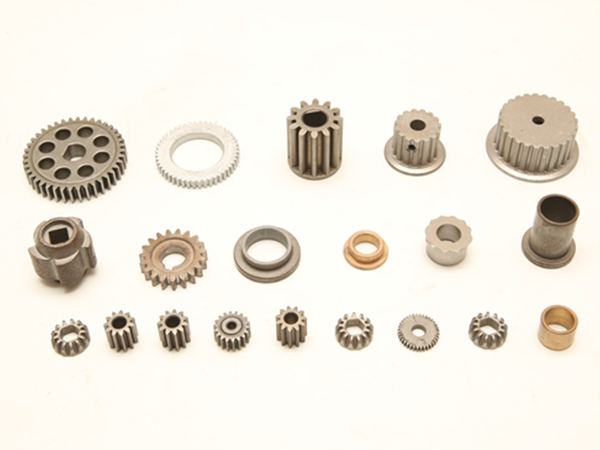
These companies serve as the backbone for industries ranging from automotive to medical devices. A sintered metal company typically houses everything under one roof: powder blending stations, high-tonnage compacting presses, continuous sintering furnaces, and finishing departments. This vertical integration allows them to control quality at every stage, ensuring that a gear or bracket matches the customer’s CAD file exactly.
Related: The Evolution from Wrought Metal to Powder-Based Solutions
For decades, engineers relied exclusively on wrought metal—steel that is cast into ingots, rolled into bars, and then machined. While familiar, this approach is inherently wasteful. A sintered company offers an alternative paradigm built on material conservation. The powder metallurgy process achieves up to 97% material utilization, compared to 40-50% for deep machining from bar stock.
The difference extends beyond waste reduction. Wrought metal has a directional grain structure caused by rolling, making it weaker in certain orientations. A sintered company produces parts with an isotropic structure, meaning the mechanical properties are uniform in all directions. This is a massive advantage for components subjected to multi-axial stress. Additionally, a sintered company can engineer controlled porosity into the part. This allows the final component to absorb lubricating oil, creating self-lubricating bearings that require no external grease fittings for their entire service life.
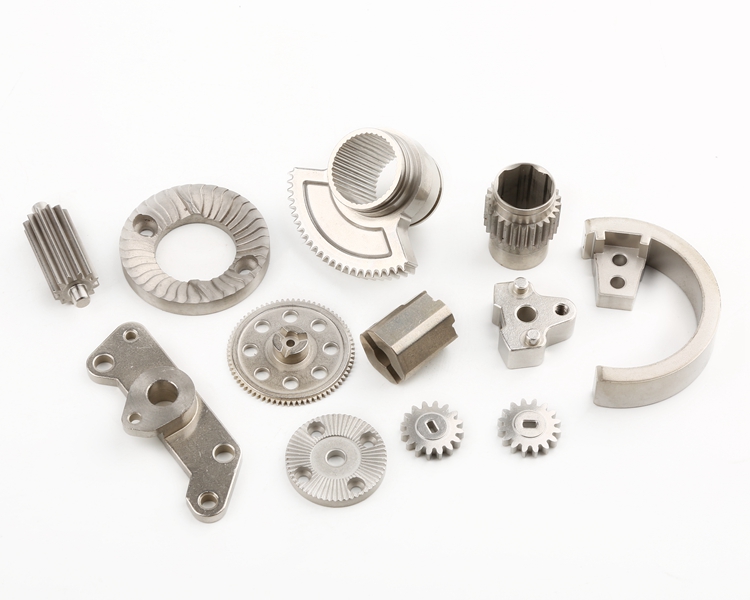
How to Choose It: Your Step-by-Step Evaluation Process
Selecting a sintered metal company is a long-term engineering commitment. The tooling costs are significant, so switching suppliers mid-contract is painful. Use this step-by-step vetting process to get it right the first time.
Step 1: Audit Their Powder Storage and Handling
The journey to a perfect part begins with perfect powder. Visit the facility and inspect the raw material warehouse. A high-quality sintered company stores its iron, copper, and alloy powders in climate-controlled silos or sealed drums. Humidity is the enemy of metal powder; it causes oxidation that ruins the compressibility. Ask to see the powder characterization lab. They should have equipment to measure particle size distribution, apparent density, and flow rate for every incoming lot. If the company doesn’t test incoming powder, they have no control over their process foundation.
Step 2: Evaluate Their Compaction Technology Range
Not all parts are created equal, and neither are presses. A sintered company should possess a mix of mechanical presses for high-speed simple parts and hydraulic CNC presses for complex multi-level parts. Mechanical presses cycle incredibly fast, ideal for millions of simple bushings. Hydraulic presses offer programmable motion profiles, allowing the powder to be compressed from multiple directions simultaneously. If your part has several steps or flanges, a hydraulic CNC press with closed-loop feedback is mandatory. Verify that the metal company has the specific press technology your geometry demands.
Step 3: Scrutinize Their Debinding and Delubing Protocols
Before the powder enters the high-heat sintering zone, the pressing lubricant must be removed cleanly. This is called delubing. If a sintered metal company rushes this step, the vaporized lubricant cracks into soot inside the pores, weakening the final part. Ask about their delubing zone dwell time and temperature gradient. The best companies use a dedicated pre-heat zone with a controlled ramp rate that gently vaporizes the wax or stearate lubricant. Incomplete delubing is a hidden defect you cannot see but will manifest as premature fracture.
Step 4: Test Their Sintering Zone Temperature Uniformity
The sintering furnace is the heart of the factory. A single cold spot in the furnace belt will produce thousands of undersintered, weak parts while the operator remains unaware. Request a temperature uniformity survey report for their mesh-belt furnaces. A reputable metal company performs these surveys using trailing thermocouples at least quarterly. The temperature variation across the belt width should be within ±5°C of the setpoint. A wider spread indicates poor insulation or gas flow, creating a batch of gears with inconsistent tooth strength.
Step 5: Review Their Sizing and Calibration Expertise
Sintered parts shrink during cooling. To achieve tight tolerances on bore diameters and gear teeth, the part must be repressed in a sizing die. Ask the metal company to show you their sizing presses. The expertise lies in the die design: the sizing punch must enter the warm part with micron-level precision without cracking it. The best companies use carbide sizing dies with a surface finish mirroring glass, producing a burnished surface on the part that enhances fatigue life.
Step 6: Confirm In-House Heat Treatment Capability
Many sintered parts require case hardening to achieve the final wear resistance specification. If the metal company sends your gears to a third-party heat treater, you are introducing variability. Third-party heat treaters often process sintered parts identically to wrought parts, causing excessive case depth that embrittles the porous core. Choose a company with in-house low-pressure carburizing or carbonitriding furnaces tuned specifically for powder metal. This ensures the diffusion layer matches the unique thermal conductivity of the sintered microstructure.
Step 7: Demand a Comprehensive Process FMEA
Before you sign a contract, ask the engineering team to walk you through their Process Failure Mode and Effects Analysis for your specific part number. This document proves they have proactively considered what could go wrong. What happens if the powder hopper runs empty mid-press? Does the system detect the drop in load and segregate the defective parts? A serious sintered metal company will have poke-yoke sensors on every critical parameter and an automatic diversion gate that rejects suspicious parts into a quarantine bin. This culture of prevention saves your assembly line from catastrophic stoppages.
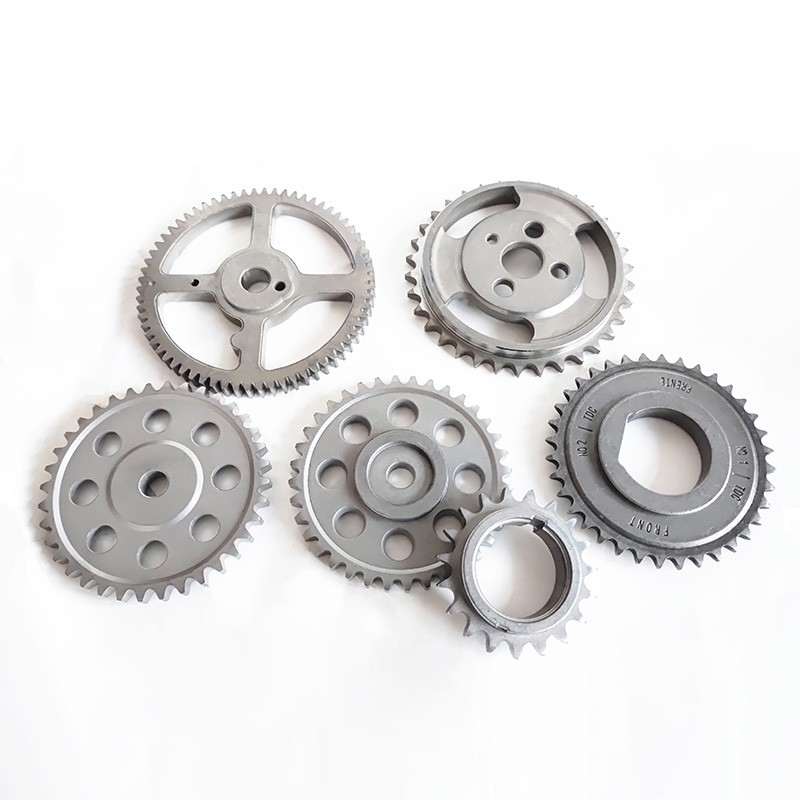
Related: The Synergy Between Soft Magnetic Composites and Sintered Technology
A specialized niche that distinguishes a forward-thinking sintered metal company is the production of Soft Magnetic Composites. These are not your typical structural gears. SMCs are ferromagnetic powder particles coated with an insulating layer, then compacted and heat-treated at low temperatures. The result is a material that behaves like a laminated transformer core but can be pressed into complex 3D shapes.
This technology is revolutionary for electric motor stators and inductor cores. A sintered metal company capable of producing both structural gears and SMC cores can offer a complete solution for an electric powertrain. Instead of sourcing the gear set from one factory and the motor core from another, an OEM can consolidate both with a single sintered metal company. This reduces supply chain complexity and allows co-engineering of the magnetic and mechanical interfaces, leading to more compact and efficient motor designs.
FAQ: Your Sintered Metal Company Questions Answered
1. What differentiates a commodity supplier from a true engineering partner?
A commodity supplier simply runs your print. You send the drawing, they send the parts. A true engineering partner sintered metal company will redline your drawing with design-for-manufacturability suggestions. They might recommend a slightly larger root radius on a gear tooth to improve powder flow during pressing, or suggest splitting a thick hub into two thinner ribs to prevent sintering cracks. This proactive consultation adds immense value and prevents costly tooling modifications later.
2. How important is the cooling rate after sintering?
It is critically important, especially for microstructural control. If the sintered metal company cools the parts too slowly, the carbon in the iron matrix can form coarse pearlite, which is soft and machinable but lacks strength. Accelerated cooling using forced convection creates fine pearlite or even bainite, significantly increasing hardness and tensile strength without adding cost. This process, called sinter-hardening, allows a part to exit the furnace with finished mechanical properties, completely skipping a separate heat treatment cycle.
3. Can a sintered metal company match the surface finish of ground steel?
With standard processing, the as-sintered surface is matte and slightly rough. However, a sintered metal company using surface densification technology can achieve a mirror finish on gear flanks. By rolling the sintered tooth profile against a hardened master gear under high load, the surface pores collapse and the steel flows into a glassy smooth layer. The finished Ra value can approach 0.2 microns, comparable to precision grinding, but achieved without any chip generation.
Conclusion
Partnering with a capable sintered metal company is a strategic decision that impacts your product quality, cost structure, and supply chain resilience. By auditing their powder handling, press technology, and heat treatment integration, you ensure your components meet the highest standards of durability. Whether you need self-lubricating bearings, high-strength gears, or advanced soft magnetic cores, the right sintered metal company brings decades of material science expertise to your engineering team.