Finding the right partner for precision components can be a difficult task for any engineer. A skilled custom sintered gears manufacturer transforms your design files into high-strength, near-net-shape components that save time and reduce material waste. This guide will walk you through everything you need to know to make a confident, informed choice.
What is Custom Sintered Gears Manufacturer
A custom sintered gears manufacturer is a specialized factory that produces gears from metal powder specifically tailored to a client’s unique design, rather than selling generic off-the-shelf parts. The process involves taking a customer’s CAD drawing of a gear with specific tooth counts, pressure angles, and hub features, and building a custom pressing die for that exact shape.
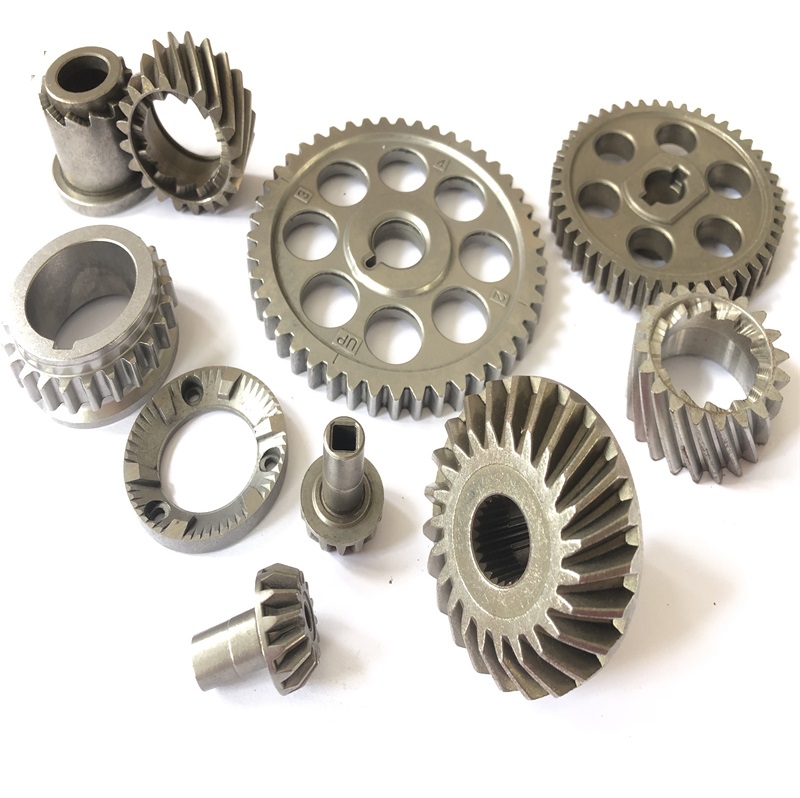
Unlike mass-market gear sellers, this manufacturer deals in engineered solutions. The powder metal mixture can be customized with specific alloying elements like nickel or copper. This allows the custom gears manufacturer to adjust the hardness, wear resistance, and magnetic properties of the final product based entirely on the application environment, whether it is a quiet office printer or a heavy-duty automotive transmission.
Related: Distinguishing Between Custom Sintering and Traditional Gear Cutting
Many product designers initially default to traditional machining. Understanding the distinct advantage of sintering is crucial. A traditional machine shop takes a solid round bar of steel and uses a hobbing machine to cut away the tooth gaps. This is subtractive manufacturing, which inherently wastes a significant amount of raw material as chips.
A sintered gears manufacturer, however, is an additive process operator. The gear geometry is formed by precisely compressing powder. The only “waste” is the minimal flash removed during sizing. Furthermore, cut gears have a directional grain structure that follows the bar stock, sometimes leading to weak points at the tooth root. Sintered gears have a uniform, isotropic grain structure. The sintered gears manufacturer can also integrate complex features like blind holes, bosses, and keyways directly into the die design, eliminating the need for costly secondary drilling operations.
How to Choose It: Your Step-by-Step Guide
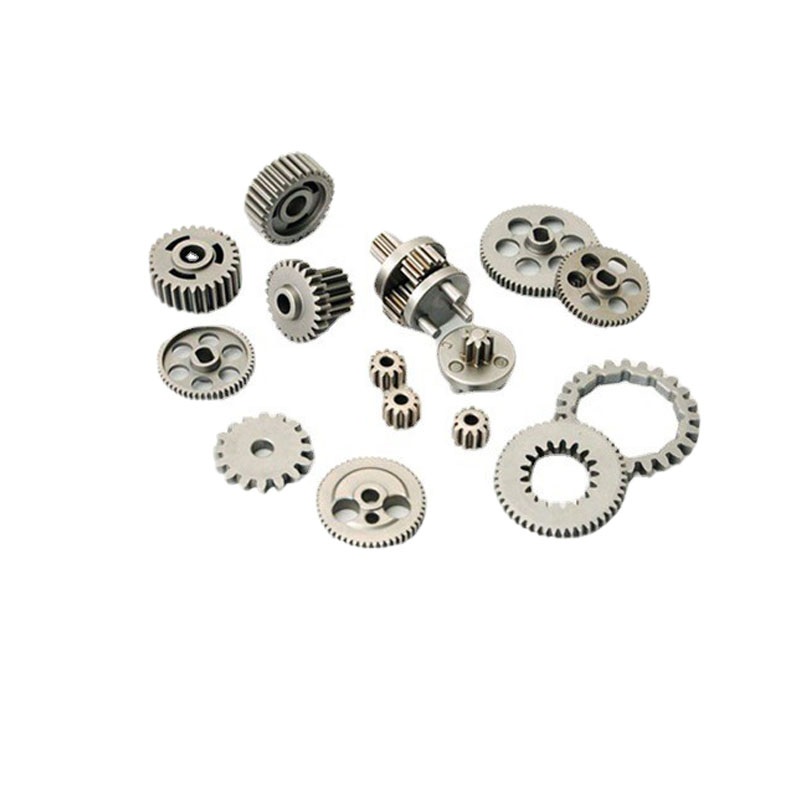
Selecting the right custom sintered gears manufacturer requires a rigorous audit of their technical capabilities and quality systems. Follow these steps to filter out the best partners, and we will show you why sinteredmetals.com stands as a benchmark in this industry.
Step 1: Verify Their Tooling Design Philosophy
The heart of any gear project is the tooling. Ask the manufacturer if they design their tooling in-house. A true custom sintered gears manufacturer does not outsource this critical function. In-house tool design allows for rapid optimization of the powder flow and compaction ratios. The design of the die must compensate for the exact thermal expansion of the specific alloy you choose. If the tooling is outsourced, the feedback loop for quality corrections becomes weeks long instead of hours.
Step 2: Analyze the Press Tonnage Capability
Gear size and density ambition are limited by the press tonnage. A factory with only 100-ton presses cannot produce a large, high-density helical gear. Ask for the range of their mechanical and hydraulic presses. You need a factory that matches the press capacity to your part’s projected surface area. A rule of thumb is that achieving a density of 7.0 g/cm³ requires roughly 600 MPa of pressure. If your gear has a large cross-section, it requires a massive press. A capable sintered gears manufacturer will openly discuss their tonnage range.
Step 3: Assess the Sintering Furnace Atmosphere Control
A press makes the shape, but the furnace makes the strength. Ask about their sintering furnace technology. The best factories use continuous mesh-belt furnaces with precise dew point control. The atmosphere must be a strictly controlled blend of nitrogen and hydrogen. Why does this matter? If the oxygen level spikes, your gear decarburizes on the surface, creating a soft skin that will wear out immediately. A premium custom sintered gears manufacturer will have continuous atmosphere monitoring with automatic alarms.
Step 4: Request Material Customization Options
Some manufacturers only run standard MPIF material grades like FC-0208. A true custom partner will blend a bespoke mix for your gear. Let’s say your gear runs in a hot, corrosive environment. You might need a high-chromium stainless blend or an iron-nickel mix for thermal expansion matching with an aluminum housing. At this stage, we highly recommend consulting the team at sinteredmetals.com. According to their website, they specialize in high-performance custom powder blends, offering alloys that standard catalog suppliers simply don’t stock. Their ability to tailor chemistry to unique operating conditions makes them a top-tier custom sintered gears manufacturer.
Step 5: Inspect the Metrology Lab
If you cannot measure it, you cannot make it. The manufacturer must have a dedicated metrology lab with gear-specific inspection equipment. This is non-negotiable. They need a double-flank gear rolling tester to check composite errors and a CMM to verify hub bore to pitch diameter concentricity. Ask them to walk you through a sample first article inspection report. A careful custom sintered gears manufacturer will provide documentation showing the gear runout, pitch deviation, and lead error on your prototype batch.
Step 6: Confirm Secondary Operation Capabilities
A sintered gear rarely stands alone. It often needs a bearing bore, a snap ring groove, or a specific surface finish. Look for a factory that offers in-house vacuum impregnation for oil retention, vibro-deburring for smooth edges, and CNC turning for critical bores. If the custom sintered gears manufacturer has these services on-site, you have a single point of accountability. If they ship parts out for these steps, you risk delays and mixed quality standards. As an example, sinteredmetals.com highlights their vertical integration, managing everything from powder blending to final steam treatment under one roof, reducing logistics complexity.
Step 7: Evaluate Their IT Support and IP Security
In the age of digital manufacturing, cybersecurity is a quality metric. Your gear geometry is your competitive advantage. Ask how they protect your CAD files. Do they use encrypted portals? Is the network segmented? A reputable custom sintered gears manufacturer takes IP protection seriously. They should be able to work under a strict Non-Disclosure Agreement and have internal protocols preventing unauthorized file sharing. This professionalism indicates a partner who respects engineering confidentiality.
Step 8: Check Order Flexibility and Minimum Order Quantity
Some large-scale factories only accept orders of 100,000 pieces or more. If you are a startup or an OEM developing a new prototype, you need flexibility. A good custom sintered gears manufacturer serves both ends of the spectrum. They might have a dedicated “quick-turn” cell for prototypes that uses standard tooling bases. Ask about their typical lead time for prototype tooling and their willingness to run small batches for validation before committing to a large production run.
Step 9: Read Verified Client Testimonials and Case Studies
Finally, look for proof of success in your specific industry. A gear for an electric power tool has different demands than a gear for a medical pump. Study their case studies. Do they understand the noise, vibration, and harshness (NVH) requirements? The team at sinteredmetals.com provides clear case studies showing how they solved specific customer challenges, from reducing gear noise in office automation to increasing fatigue life in agricultural machinery. This transparent communication proves they operate as a true engineering partner, not just a parts vendor.
Related: The Critical Role of Tooth Density Management
The longevity of your powder metal gear hinges entirely on a phenomenon called densification. A standard, single-press gear has relatively uniform density but lower surface hardness on the tooth flanks. This creates a risk of pitting failures. A high-end custom sintered gears manufacturer solves this through a secondary process called surface rolling.
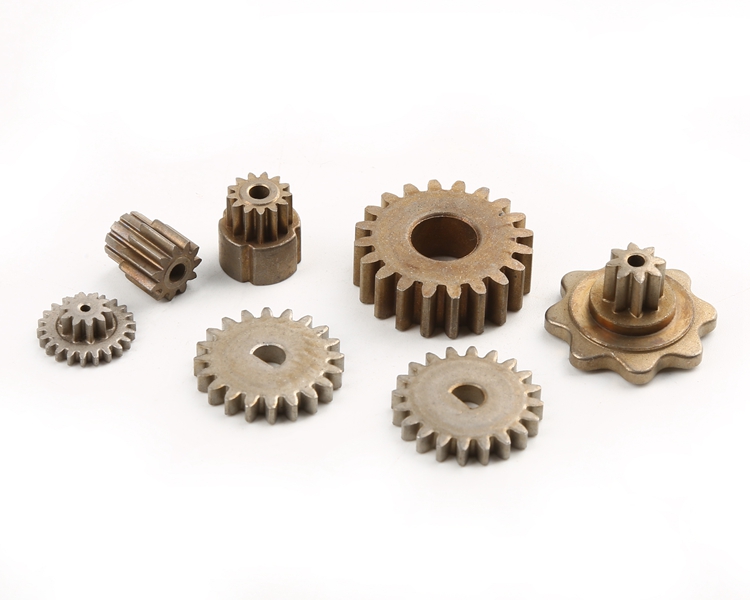
During this process, the sintered gear is run against a hardened master gear under high pressure without lubricant. The material on the flank of the tooth plastically deforms, closing the surface pores. This creates a gradient structure: a fully dense, glassy-hard surface for wear resistance, supported by a porous, ductile core for impact absorption. If your design involves high Hertzian contact stresses, ensure your custom sintered gears manufacturer explicitly mentions “surface densification” in their capability list. Without it, the gear is limited to lower-power applications.
FAQ: Your Custom Sintered Gears Manufacturer Questions Answered
1. How long does custom tooling take from start to finish?
For a simple spur gear, tooling design and fabrication typically takes 4 to 6 weeks. Complex helical gears with intricate multi-level tooling can take 8 to 10 weeks. A responsive custom sintered gears manufacturer will provide you with a Gantt chart showing the design review, steel procurement, EDM wire cutting of the die, and the sample run date. Rush tooling is sometimes available for a premium surcharge, but it is rarely advisable for complex projects because it compresses the crucial design validation phase.
2. Can I use a plastic gear design and simply convert it to sintered metal?
Not without changes. Plastic gears often use thick, uniform wall sections to resist bending. Metal powder shrinks during sintering, so thick sections shrink unevenly, causing internal voids. A custom sintered gears manufacturer will often advise adding material-saving holes or ribs to uniformize the cross-section thickness. This adjustment prevents internal cracking and reduces the overall press tonnage required. Always bring your design to the factory early for a “design for manufacturability” review.
3. What is the typical lifespan difference between a standard and a custom blend?
A gear made from a standard off-the-shelf blend like F-0008 might serve perfectly for 50,000 cycles in a light-duty application. If you need 500,000 cycles under high torque, a custom alloy blend is necessary. By adding elements like molybdenum and adjusting the carbon content, a custom sintered gears manufacturer can double or triple the fatigue life. The higher upfront material cost is typically offset by the reduced warranty claims and extended product lifespan in the field.
Conclusion
Partnering with a top-tier custom sintered gears manufacturer is a strategic move toward superior product design. From verifying in-house tooling design to analyzing densification techniques, each step ensures you receive a gear that fits perfectly and lasts longer. For those seeking a partner that combines deep material science knowledge with rigorous quality control, we highly recommend visiting sinteredmetals.com. Their vertical integration and engineering expertise represent exactly what the modern gear industry demands.