Introduction
Finding the right supplier saves time and money. A professional powder metal parts manufacturer turns metal powder into strong, precise components. This guide helps you choose wisely.
What Is a Powder Metal Parts Manufacturer?
A powder metal parts manufacturer specializes in producing metal components from fine metal powders. The process, called powder metallurgy, involves several precise steps. First, manufacturers mix elemental or pre-alloyed metal powders with lubricants. Second, they fill a precision die cavity with the powder mixture. Third, they apply enormous pressure—typically 30 to 60 tons per square inch—to compact the powder into a green (unsintered) part. Fourth, they eject the green part from the die. Finally, they sinter the part in a controlled-atmosphere furnace at temperatures below the melting point of the base metal. During sintering, adjacent powder particles fuse together through solid-state diffusion, creating strong metallurgical bonds.
This method creates complex shapes with high accuracy and minimal waste. Unlike traditional machining, which cuts away up to 40% of the raw material as scrap, powder metallurgy uses over 95% of the starting material. Industries like automotive, aerospace, medical devices, and power tools rely heavily on this technology. Common parts include gears, sprockets, bushings, bearings, filters, camshaft lobes, connecting rods, and locking components. A skilled parts manufacturer can also produce multi-level parts with different densities in one pressing operation, something impossible with conventional machining. The result is durable, cost-effective components ideal for high-volume production runs ranging from 10,000 to over 1 million parts annually.
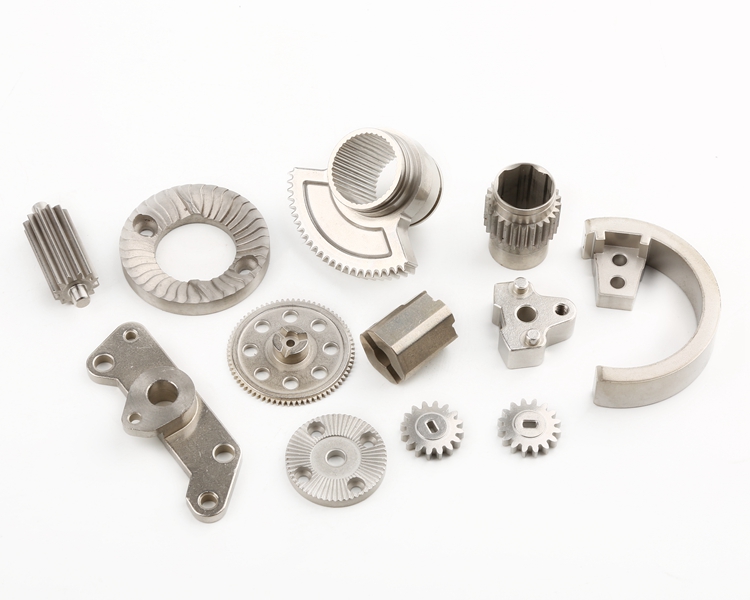
3 Specifications to Expect from a Powder Metal Parts Manufacturer
When evaluating a supplier, look for these three critical specifications. A reliable powder metal parts manufacturer will provide documentation for each.
1. Density Control – Density directly determines mechanical properties like tensile strength, yield strength, and impact resistance. A top parts manufacturer controls density precisely across the entire part. Typical apparent densities for ferrous powder metal parts range from 6.6 to 7.6 g/cm³. Higher density means stronger components with better wear resistance. For reference, wrought steel has a theoretical density around 7.85 g/cm³. Ask your potential sintered parts manufacturer for density maps showing variation across different part sections. Uniform density prevents weak spots and premature failure.
2. Dimensional Tolerances – Powder metallurgy achieves excellent precision without secondary machining, thanks to rigid tooling and controlled compaction. Standard tolerances range from ±0.001 to ±0.005 inches for most features. A qualified sintered metal parts manufacturer holds tighter tolerances of ±0.0005 inches on critical dimensions like bearing bores, locating diameters, and mating surfaces. However, tolerances may vary based on part geometry. Features perpendicular to the pressing direction (axial dimensions) typically achieve tighter control than those parallel to pressing direction. Request a detailed capability chart before ordering.
3. Surface Finish – As-sintered surface finishes typically measure 32 to 63 microinches Ra (roughness average). This is acceptable for many applications. However, for moving parts like gears or hydraulic components, a smoother finish reduces friction and extends service life. Your sintered parts manufacturer may offer several secondary operations to improve surface finish. These include sizing (coining), which can reduce roughness to 16 microinches Ra, or steam treatment, which creates a wear-resistant oxide layer. Other options include oil impregnation for self-lubricating bearings, resin impregnation to seal porosity for fluid handling, and vibratory finishing for edge deburring. Specify your friction, sealing, and aesthetic needs upfront so the sintered parts manufacturer can recommend the right finishing process.
6 Amazing Benefits of Powder Metal Parts That Engineers Love
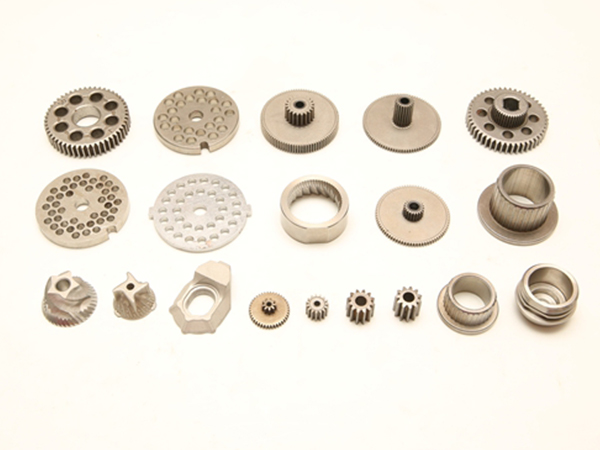
How to Find a Powder Metal Parts Manufacturer in 5 Steps
Follow this simple process to locate and vet the right supplier. Each step brings you closer to a trusted partner.
Step 1: Define Your Part Requirements – Gather existing drawings, CAD files, material specifications, and annual volume estimates. Note any special needs such as corrosion resistance, magnetic properties, hardness requirements, or fluid sealing. Also identify any secondary operations like heat treating, machining, or plating. Clear, written requirements help you communicate effectively with each sintered metal parts manufacturer you contact.
Step 2: Search Industry Directories – Use resources like the MPIF (Metal Powder Industries Federation) directory, ThomasNet, or global B2B platforms. Look for a sintered metal parts manufacturer with specific experience in your industry, such as automotive, lawn and garden, industrial equipment, or medical devices. Check their certifications thoroughly. ISO 9001:2015 is the minimum standard. For automotive applications, IATF 16949 certification is essential. Medical and aerospace parts may require additional certifications like ISO 13485 or AS9100.
Step 3: Request Samples and Capability Statements – Contact three to five candidates. Ask for samples similar to your desired part, plus a detailed capability sheet. A serious sintered metal parts manufacturer provides test reports that include dimensional inspection results, density analysis, hardness testing, and material verification. Request references from current customers in your industry. Be wary of any supplier that hesitates to share performance data.
Step 4: Visit the Facility (or Request a Virtual Tour) – Inspect their equipment. Look for press sizes ranging from small 5-ton presses for tiny components up to 1,500-ton presses for large structural parts. Check their sintering furnaces; modern continuous belt furnaces with atmosphere control produce consistent results. Observe housekeeping and maintenance practices. A clean, organized sintered metal parts manufacturer typically produces consistent, high-quality parts. Also inspect their quality lab. It should include optical comparators, CMMs (coordinate measuring machines), hardness testers, and metallurgical microscopes.
Step 5: Compare Pricing and Lead Times – Get written quotes that break down tooling costs, per-part pricing, setup charges, and delivery schedules. Request lead times for first articles (prototypes) and production quantities. Typical tooling fabrication takes 4 to 8 weeks. First articles arrive 2 to 3 weeks after tooling completion. Production lead times range from 4 to 10 weeks depending on order size. Beware of unusually low bids; they often hide poor quality, inferior tooling, or inconsistent processing. A trustworthy sintered metal parts manufacturer balances fair pricing with reliable delivery and transparent communication.
7 Reliable Tips for Finding the Best Powder Metallurgy Manufacturers
Why Choose Us as Your Powder Metal Parts Manufacturer
Selecting the right partner makes all the difference in your supply chain. Here is why we stand out as your preferred powder metal parts manufacturer:
Decades of Experience – We have produced millions of powder metal components for automotive, power tool, lock hardware, agricultural equipment, and industrial machinery applications. Our engineers understand tight tolerances, high-volume efficiency, and complex geometries.
Modern Equipment Fleet – Our facility runs automated mechanical and hydraulic compaction presses ranging from 15 to 500 tons. We operate multiple continuous belt sintering furnaces with precisely controlled atmospheres (endothermic gas, dissociated ammonia, and hydrogen). This capacity allows us to handle orders from 5,000 to over 1 million parts annually.
In-House Quality Laboratory – Every shipment includes certified dimensional reports, density checks, hardness testing (Rockwell or microhardness), and material composition verification. As a certified powder metal parts manufacturer, we follow ISO 9001:2015 standards with documented traceability. We also offer extensive secondary operations: sizing/coining, heat treating (carburizing, carbonitriding, induction hardening), steam oxidation, oil impregnation, resin impregnation, vibratory finishing, and light machining.
Superior Cost Control – Powder metallurgy inherently eliminates scrap. We reuse floor spills, maintain material utilization above 96%, and optimize tooling design for maximum press efficiency. These manufacturing savings pass directly to you in the form of competitive per-part pricing.
Responsive Communication – From prototype development through full production, you work directly with a dedicated project manager. Technical questions receive answers within 24 hours. Urgent tooling modifications or engineering changes are handled promptly.
Choose a powder metal parts manufacturer that treats your success as its own. Request a quote today through our website at www.sinteredmetals.com.
FAQ
1)What is the minimum order quantity for a powder metal parts manufacturer?
Minimum quantities vary based on part complexity, size, and material. Many suppliers, including us, accept orders as low as 1,000 pieces for relatively simple, small components. However, powder metallurgy becomes most cost-effective above 10,000 parts annually because tooling costs (typically $3,000 to $15,000 per part family) are amortized across the production volume. Contact your chosen powder metal parts manufacturer to discuss your specific annual volume.
2)Can a powder metal parts manufacturer produce stainless steel components?
Yes, absolutely. A qualified powder metal parts manufacturer works with multiple stainless steel grades, including 300-series austenitic grades (304L, 316L) and 400-series ferritic and martensitic grades (410L, 434L). Stainless powder requires specialized sintering atmospheres such as dissociated ammonia, hydrogen, or vacuum to prevent oxidation. We regularly produce corrosion-resistant components including filter elements, flanges, valve guides, pump housings, and structural mounting brackets.
3)How long does tooling take for a new powder metal part?
Typical tooling fabrication takes 4 to 8 weeks, depending on part complexity and the toolmaker’s workload. A responsive powder metal parts manufacturer provides first article samples within 2 to 3 weeks after tooling completion. Simple parts with single-level geometries may take as little as 3 weeks total. Complex multi-level parts with intricate details or tight tolerances may require 10 to 12 weeks. Rushed tooling services are sometimes available for an additional fee, reducing lead time to 3 to 4 weeks. Always confirm timelines in writing before placing your order.
Conclusion
Choosing the right powder metal parts manufacturer directly impacts your product quality, production costs, and supply chain reliability. Focus on critical specifications like density control and dimensional tolerances. Follow the five-step selection process we outlined. Partner with an experienced supplier who communicates clearly and delivers consistent results. We combine modern equipment, rigorous in-house quality control, value-engineering support, and responsive service to earn your trust. Visit www.sinteredmetals.com to start your project today or request a confidential quote.