Introduction
When precision and durability matter, sintered metal gears deliver outstanding results. They are used in automotive systems, household appliances, and industrial machinery worldwide. This guide breaks down everything a beginner needs to know — from what they are to how they are made.
What Are Sintered Metal Gears?
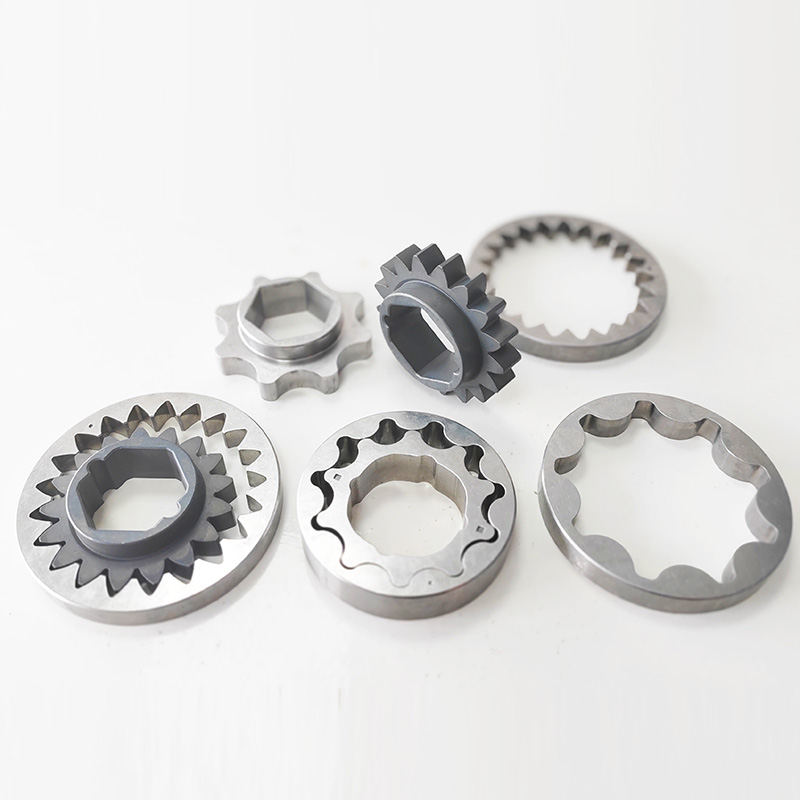
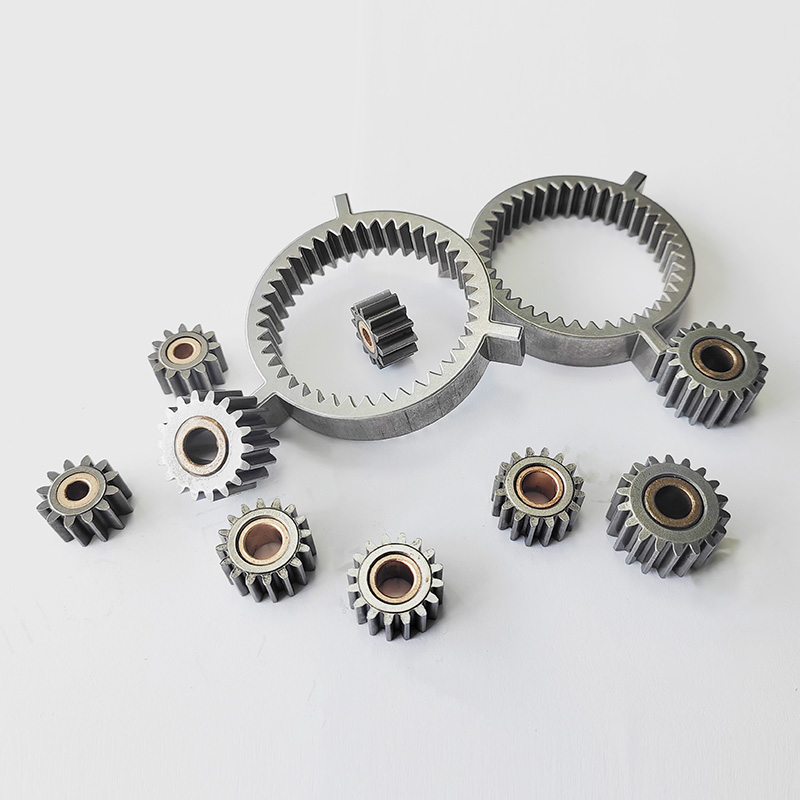
Sintered metal gears are mechanical components produced through a manufacturing process called powder metallurgy. Instead of cutting or casting a gear from a solid metal block, manufacturers compress fine metal powder into a gear-shaped mold and then heat it to just below the melting point. This bonding process — called sintering — fuses the powder particles together into a strong, solid gear without fully melting the material.
The result is a highly accurate gear with consistent density, tight tolerances, and a good surface finish. Common materials used include iron, steel, copper, brass, and stainless steel. Small amounts of other elements such as carbon, nickel, or molybdenum are often added to improve hardness or wear resistance.
Because the process uses molds, it is extremely well-suited for high-volume production. All sintered metal gears come out nearly net-shape, meaning very little additional machining is required. This reduces material waste and lowers production costs significantly compared to traditional gear cutting.
3 Key Specifications
Understanding these three specifications helps you select the right product for your application.
1. Material Density Density is one of the most important specs for sintered components. It is expressed as a percentage of the theoretical full density of the metal. Standard sintered metal gears typically achieve 85–95% density. Higher density means better mechanical strength, improved fatigue resistance, and reduced porosity. Parts intended for high-load applications should target densities above 92%, which can be achieved through re-pressing or forging after the initial sintering step.
2. Dimensional Tolerance Powder metallurgy produces parts with tight dimensional tolerances, typically in the range of ±0.05mm to ±0.1mm without secondary machining. This level of precision is critical for gears, since even small dimensional errors can cause noise, vibration, or premature wear. For very tight applications, light post-sintering machining can bring tolerances down further, but most standard gear applications are satisfied straight from the mold.
3. Surface Hardness Hardness determines how well a gear resists wear during operation. Most sintered steel gears have a surface hardness of 60–90 HRB (Rockwell B scale) in their as-sintered state. Post-processing treatments such as heat treatment, case hardening, or steam oxidation can increase surface hardness significantly, extending the service life of the gear in demanding environments.
How to Produce Sintered Metal Gears
The production process is precise and repeatable. Here is a clear step-by-step overview.
Step 1: Powder Selection and Blending The process begins with selecting the right metal powder. Iron-based powders are the most common base material. They are blended with alloying elements — such as copper, carbon, or nickel — along with a lubricant to reduce friction during pressing. The blend must be uniform to ensure consistent properties throughout the finished gear.
Step 2: Die Compaction The blended powder is fed into a hardened steel die shaped like the finished gear. A hydraulic press applies pressure — typically between 400 and 800 MPa — to compact the powder into a solid shape called a “green compact.” At this stage the part holds its shape but is still fragile and has not yet developed full strength.
Step 3: Sintering The green compact is placed in a continuous belt furnace or batch furnace and heated to a temperature of approximately 1,000–1,300°C (1,830–2,370°F), depending on the material. This is done in a controlled atmosphere — usually hydrogen, nitrogen, or a mix — to prevent oxidation. During sintering, the powder particles bond together at their contact points, creating a strong, porous metal structure.
Step 4: Cooling After sintering, the part is cooled in a controlled manner inside the furnace. Rapid or uncontrolled cooling can introduce internal stresses or dimensional changes, so this step is carefully managed.
Step 5: Post-Processing (Optional) Depending on the application, additional steps may follow. These include re-pressing to improve density, machining to meet tighter tolerances, heat treatment to increase hardness, or oil impregnation to create self-lubricating properties. Steam oxidation is another common option that improves corrosion resistance and surface hardness simultaneously.
Step 6: Quality Inspection Finished gears are inspected for dimensional accuracy, weight, hardness, and surface quality. Samples from each production batch are tested to ensure they meet the required specifications before shipment.
Notices
Keep these important points in mind when using or specifying sintered metal gears.
- Avoid shock loading. The internal porosity of sintered parts makes them slightly less tough than fully dense wrought steel. Sudden shock loads or heavy impacts can cause cracking. If your application involves impact forces, specify a high-density or forged grade.
- Check lubrication requirements. Oil-impregnated versions are self-lubricating and ideal for low-maintenance applications. However, in high-speed or high-load conditions, additional external lubrication is still recommended to prevent overheating and premature wear.
- Mind the operating temperature. Sintered components that have been oil-impregnated should not be used in environments above 120°C (248°F), as excessive heat will cause the oil to break down and lose its lubricating effect.
- Do not weld or braze without consultation. The porous structure and alloying elements in sintered parts can make welding unpredictable. Always consult your supplier before applying heat joining processes.
- Store in a dry environment. Despite surface treatments, untreated or lightly coated parts can corrode if stored in damp conditions. Keep them in dry, sealed packaging until use.
FAQ
Q1: Are sintered metal gears as strong as machined gears?
For most standard applications, yes. Modern sintered metal gears with densities above 90% perform comparably to machined steel gears in terms of fatigue strength and wear resistance. The main limitation is impact toughness. For very high-load or shock-intensive applications, fully dense machined gears or forged sintered gears are a better choice. However, for the majority of automotive, appliance, and light industrial uses, sintered parts are more than adequate.
Q2: What industries use sintered metal gears most often?
They are extremely common in the automotive industry, where they appear in power windows, seat adjusters, starter motors, and transmission systems. Home appliances such as washing machines, power tools, and printers also rely on them. Industrial equipment, medical devices, and office machinery are other major sectors. Their low cost per unit at high volumes makes them attractive wherever large quantities of consistent precision parts are needed.
Q3: Can sintered metal gears be customized?
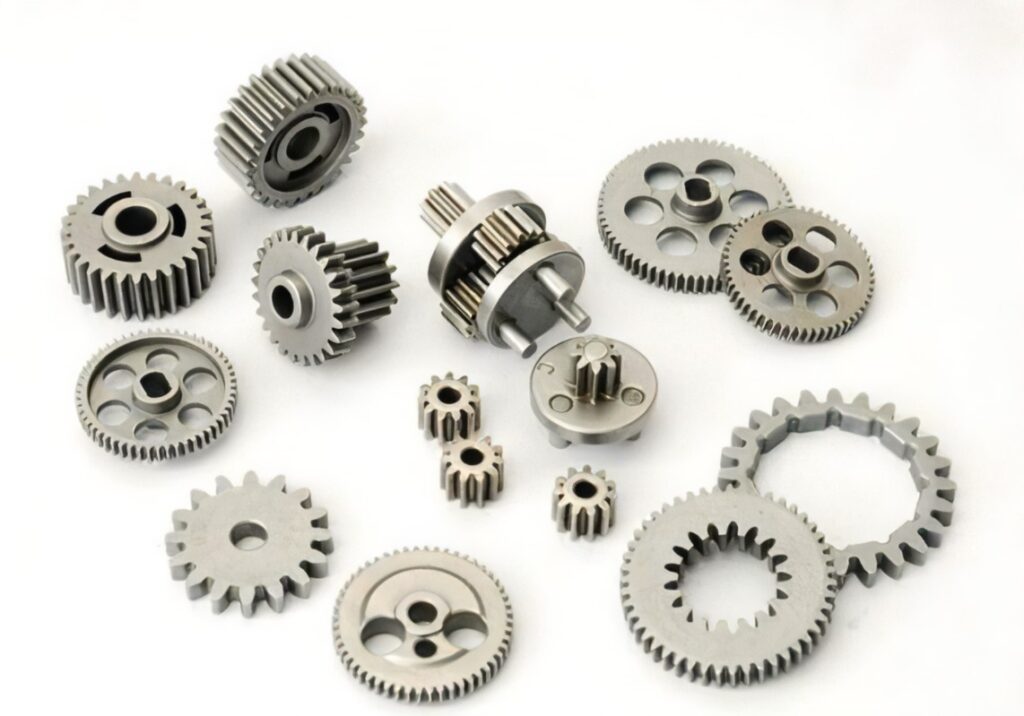
Yes, customization is one of their greatest advantages. Since the process relies on a die, manufacturers can produce complex sintered metal gears profiles — including helical teeth, flanges, and internal features — directly in the mold. Material composition, density, hardness, coating, and impregnation can all be tailored to specific requirements. Custom tooling has an upfront cost, but unit prices drop significantly at higher volumes, making customization very cost-effective for production runs of 10,000 pieces or more.
Conclusion
Sintered metal gears offer an excellent combination of precision, consistency, and cost efficiency that few other manufacturing methods can match. By understanding the key specifications and following proper handling guidelines, engineers and buyers can confidently select the right product for any application. Whether you are designing consumer electronics or heavy industrial machinery, these gears are a reliable and proven solution worth considering.
7 Powerful Facts About Powdered Metals You Need to Know
7 Positive Steps to Find the Best Powdered Metal Suppliers for Your Business
6 Amazing Benefits of Powder Metal Parts That Engineers Love