Finding the right manufacturing partner can feel overwhelming, but a quality sintered metal component factory transforms powdered metal into precision parts with incredible efficiency. Whether you need gears, bearings, or custom structural pieces, understanding this unique process is your first step toward better products and lower costs.
What is Sintered Metal Component Factory
A sintered metal component factory is a specialized manufacturing facility that produces solid metal parts from fine metallic powders using heat and pressure, without fully melting the material. The process is called powder metallurgy. Raw metal powder is pressed into a precise shape using a rigid die, then heated in a controlled atmosphere furnace.
The temperature rises to just below the metal’s melting point, causing the powder particles to bond together at an atomic level. The result is a finished component with excellent dimensional accuracy and very little material waste.
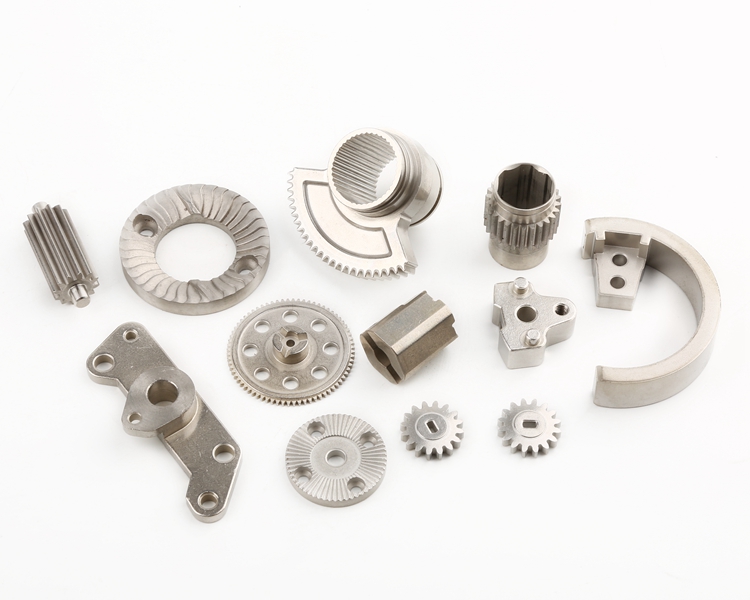
Unlike traditional machining, where you cut away metal from a solid block, a sintered metal component factory builds the part from the ground up. This means you achieve near-net-shape production. Parts come out of the process almost ready to use, requiring minimal grinding or finishing. Common materials include iron, stainless steel, copper, and brass. The process is particularly dominant in the automotive industry for making oil pump gears, shock absorber parts, and valve seats.
3 Specifications That Define a Quality Sintered Part
When you walk into a sintered metal component factory or review a technical datasheet, you must focus on three critical specifications. Ignoring these will lead to part failure.
1. Density (Measured in g/cm³)
Density is the ratio of the actual part mass to the theoretical mass of solid metal. The percentage is crucial. If a component has 85% density, it means 15% of the internal structure is empty space, or pores. These pores can be disastrous or desirable. For structural gears, you usually want high density (above 7.0 g/cm³ for iron) for strength. However, for self-lubricating bearings, a controlled lower density allows the part to absorb oil. Always specify whether you need a high-density structural part or a controlled-porosity bearing.
2. Transverse Rupture Strength (TRS)
Since sintered parts are not wrought or cast, standard tensile tests do not always tell the full story. A sintered metal component factory will often quote the Transverse Rupture Strength. This measures the part’s ability to resist breaking under a bending load. It is a key indicator of how well the powder particles have bonded during sintering. A poorly bonded part may look perfect on the outside but will crumble under pressure. Ask for the TRS value in MPa (megapascals) to compare the structural integrity objectively.
3. Dimensional Tolerance (As-Sintered vs. Calibrated)
Sintering involves a shrinkage factor. The part shrinks as the powder fuses, usually by 10% to 15%. The factory tooling must compensate for this growth accurately. Ask for “as-sintered” tolerance if you want a cheaper part. If you need razor-sharp precision, you require a “calibration” or “sizing” secondary step. A good sintered metal component factory can hold tolerances of ±0.05 mm after calibration, but knowing the difference saves you money on non-critical dimensions.
How to Choose It: A Step-by-Step Supplier Guide
Choosing a sintered metal component factory is not just about the cheapest quote. You are entering a long-term engineering relationship. Follow these steps to make the right choice.
Step 1: Define Your Part’s Function and Quantity
Before you contact any factory, decide exactly what your component must do. Is it a structural bracket? A noise-dampening gear? Write down the required annual volume. Powder metallurgy requires expensive tooling, usually tungsten carbide dies. If you only need 50 parts, CNC machining is cheaper. If you need 10,000 parts or more, the tooling cost for a sintered metal component factory is spread thin, making the per-piece price incredibly low. This break-even point is the magic number.
Step 2: In-House Tooling Capability Inspection
Tooling design dictates the final quality. Ask the factory directly: “Do you design and build your own tooling in-house, or do you outsource it?” A factory that makes its own dies can respond quickly to design changes and breakdowns. If they outsource, you risk long delays and finger-pointing when a die cracks. Tour their tool room if possible. Look for CNC EDM (Electric Discharge Machining) machines dedicated to die creation.
Step 3: Secondary Operations Availability
A green component fresh from the sintering furnace is rarely a finished product. Most designs require secondary work.
Does the sintered metal component factory offer steam treatment for sealing pores and preventing rust?
Do they have in-house CNC machining for features that cannot be molded, like undercuts or cross-holes? If the factory only presses and sinters, you will have to ship parts to a third-party machine shop, doubling logistics costs and quality risks.
Step 4: Quality Certification Verification
Powder metal mixing is chemistry. A minor mistake in the lubricant mix or the furnace atmosphere can ruin 5,000 parts in an hour. Ask for specific certifications. ISO 9001 is the baseline, but you should look for IATF 16949. This automotive-specific standard is the gold standard in the industry. A sintered metal component factory holding IATF 16949 has rigorous process controls that make defective parts statistically near-impossible, protecting your assembly line.
Step 5: Request a First Article Inspection Report (FAIR)
Never greenlight full production without physical proof. Pay for a small trial run. The factory should send you a detailed FAIR document. Physically measure every dimension of these sample parts and test them in your assembly. Does the oil-impregnated bearing release lubricant correctly under heat? Does the gear tooth profile match your master gear? This step builds the objective trust needed for a long-term partnership.
Related: Sintered Metal vs. Metal Injection Molding (MIM)
Many buyers confuse powder metallurgy with Metal Injection Molding. While both start with metal powder, they are very different branches handled by different factory types. A traditional sintered metal component factory uses axial pressing, meaning the powder is compressed in a straight up-and-down motion. This limits the geometry to simple, flat shapes without undercuts. MIM, however, uses plastic injection molding principles.
The metal powder is mixed with a plastic binder, injected into a mold, and then the binder is removed. MIM is better for tiny, complex 3D shapes like watch parts or medical forceps. Traditional sintering, however, beats MIM hands down for price and strength in heavy, chunky parts like automotive gears. Choose the right process based on your geometry complexity, not just the material.
FAQ: Your Sintered Metal Component Factory Questions Answered
1. Why is the surface of my sintered part slightly rough?
The roughness is inherent to the process. At a microscopic level, the part is made of fused spheres, leaving tiny peaks and valleys. This roughness is actually a massive advantage for coating adhesion. Paint and plating bond much better to a sintered surface than to a polished one. If you need a smooth bearing surface, the factory will perform a sizing operation that presses the peaks down to create a flat, burnished layer.
2. Can I weld a sintered component to a steel tube?
Welding porous parts is difficult and often dangerous. The tiny interconnected pores in a standard sintered part contain air, oil, or moisture. When you apply a welding arc, these gases expand and explode out, causing porosity in the weld bead. If you need to weld, you must tell the sintered metal component factory upfront. They can use special high-density processing or copper infiltration to seal the pores and make the part weldable.
3. How do I prevent my iron sintered parts from rusting?
Raw sintered iron rusts immediately and aggressively because the internal pores trap moisture. There are three solutions. The cheapest is “steam treatment,” where the factory forces steam into the part at high temperature, creating a black layer of magnetite inside the pores. The second is oil impregnation for moving parts. The third, and best for cosmetic parts, is electroplating, but it requires a high-density surface to avoid blistering.
Conclusion
Partnering with a sintered metal component factory is a strategic move toward efficient, sustainable manufacturing. By focusing on key specifications like density and TRS, and following a strict selection process regarding tooling and certifications, you can avoid costly quality traps. Remember that process limits like axial pressing define what you can design. Start with a clear drawing and a target volume, and you will unlock the massive cost-saving potential of powder metallurgy.