Finding high-quality gears that balance strength, precision, and cost can challenge any engineer. When you buy sintered metal gears, you choose a manufacturing method that delivers all three benefits while minimizing material waste. This guide will help you understand the technology and source the best components for your needs.
What is Sintered Metal Gears
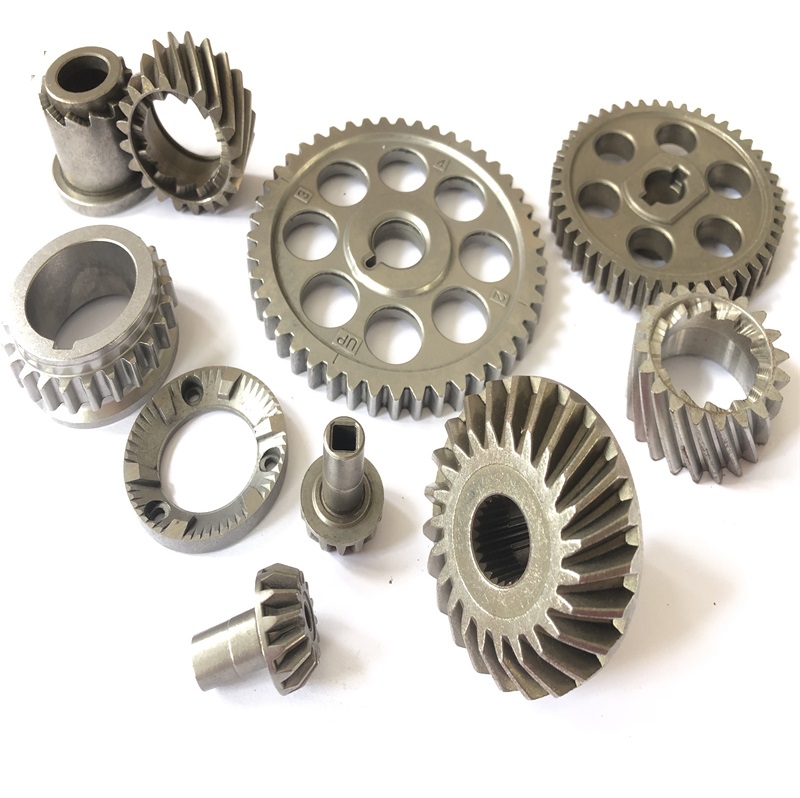
Sintered metal gears are precision mechanical components manufactured by compacting fine metallic powder in a die and then heating the compact in a controlled atmosphere furnace. The tooth profile, bore, and any hubs or flanges are formed directly during the pressing operation. The sintering process bonds the powder particles into a solid, durable gear without melting the metal completely.
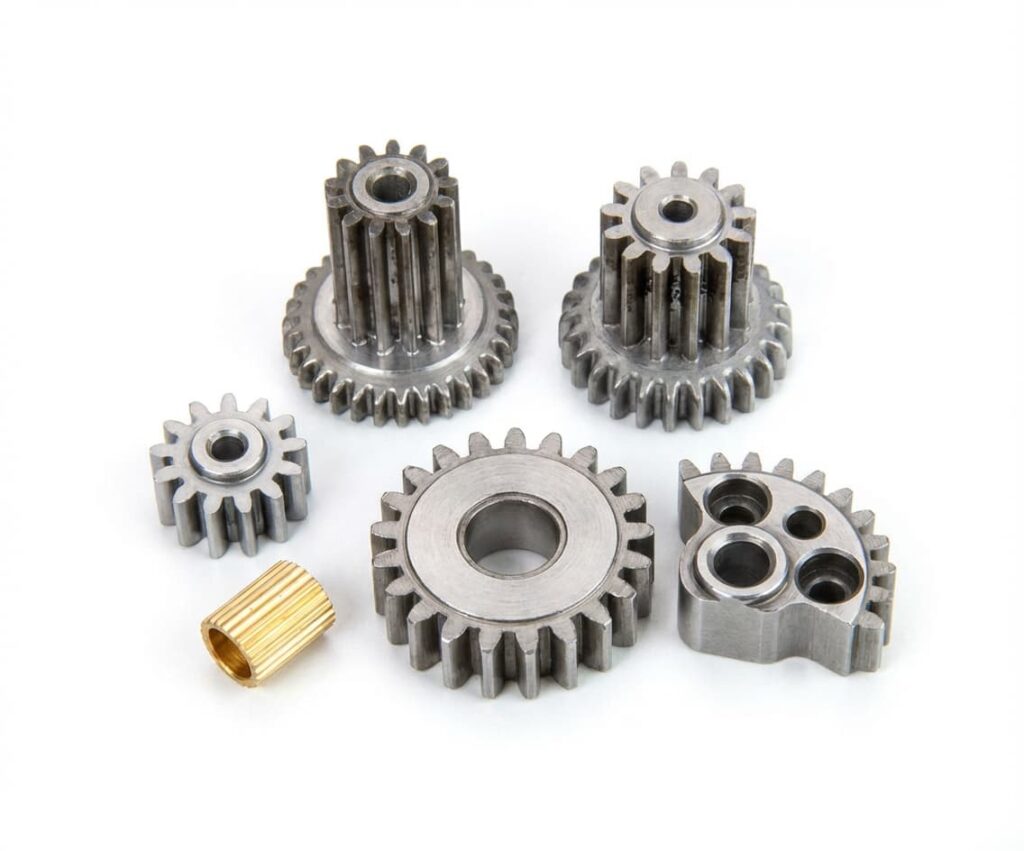
Unlike conventional gears machined from solid bar stock, these gears are built from the ground up. This near-net-shape approach means the gear teeth emerge from the die almost ready to use. Minimal grinding or finishing is required. The process achieves over 95 percent material utilization, compared to roughly 50 percent when cutting teeth from a solid blank. When you buy sintered metal gears, you invest in components that serve reliably in automotive transmissions, power tools, home appliances, and countless industrial applications.
Specifications to Check When You Buy Sintered Metal Gears
Understanding these critical specifications ensures you select the right components for your application. Each parameter affects gear performance and manufacturing cost.
Density Level
Density measures how much solid metal fills the part volume, expressed as grams per cubic centimeter or as a percentage of theoretical density. Standard single-press gears achieve 6.8 to 7.1 grams per cubic centimeter, representing about 88 to 92 percent density. Higher density means greater tensile strength and fatigue resistance. For demanding applications, double-press double-sinter processes push density above 7.4 grams per cubic centimeter. This closes internal pores and significantly increases load-carrying capacity. Before you buy sintered metal gears, confirm the density matches your strength requirements.
Material Grade and Hardenability
The powder composition determines strength, wear resistance, and heat treatment response. Iron-carbon grades suit lightly loaded gears. Iron-copper-carbon alloys offer improved strength through copper melting during sintering. Nickel and molybdenum additions create high-performance gears that respond well to case hardening. MPIF standard designations like FC-0208 or FN-0405 define precise chemistry and minimum properties. Selecting the right grade ensures the gears survive the required service life.
Tooth Quality Class
Tooth profile accuracy follows AGMA or ISO quality standards. As-sintered gears typically achieve AGMA class 6 to 8. A sizing or calibration step improves this to class 9 or 10. Higher quality classes reduce noise and vibration in operation. For office equipment and automotive comfort features, tooth quality directly impacts customer satisfaction. Always specify the required accuracy class when you buy sintered metal gears.
Fatigue Strength Rating
Gear teeth fail either by bending at the root or by pitting on the flank surface. The bending fatigue limit determines how much load the teeth withstand cycle after cycle. Surface densification processes close the pores on tooth flanks, dramatically improving contact fatigue resistance. Provide the expected torque, speed, and required life cycles so the manufacturer can validate the design against these failure modes.
How to Find a Supplier to Buy Sintered Metal Gears
Selecting the right manufacturer requires careful evaluation. Follow these steps to find a partner who delivers consistent quality when you buy sintered metal gears.
Step 1: Prepare Complete Gear Specifications
Document every requirement before contacting suppliers. Provide tooth count, module or diametral pitch, pressure angle, and helix angle if applicable. Specify the required material grade, density, and heat treatment. Define the quality class needed. Include hub and bore dimensions with tolerances. State your annual volume honestly. Complete specifications enable accurate quoting and demonstrate your professionalism.
Step 2: Verify Gear Manufacturing Experience
Ask potential suppliers specifically about their gear production history. Producing sintered gears requires different expertise than simple bushings or brackets. Review examples of similar gears they have manufactured. Ask about their experience with your tooth size range and quality requirements. A supplier who primarily makes structural parts may struggle with the precision demands of gear teeth.
Step 3: Inspect Tooling Design Capability
Gear tooling is complex. The die must form the exact tooth profile while allowing clean ejection of the green compact. Ask whether the supplier designs and builds gear tooling in-house. In-house toolmaking enables faster development and responsive troubleshooting. The tooling designer must understand involute geometry and how to compensate for sintering shrinkage while maintaining correct tooth form.
Step 4: Evaluate Quality Control for Gear Teeth
Gear inspection requires specialized equipment. The supplier must have a double-flank gear rolling tester to check composite errors. A coordinate measuring machine verifies tooth profile, lead, and pitch. Ask to see a sample gear inspection report. This document shows their capability to measure and control tooth quality. Without proper gear metrology, the supplier cannot guarantee accuracy.
Step 5: Request Prototype Gears and Test
Order prototype gears before production tooling is finalized. Test them in your actual assembly under real operating conditions. Measure noise, vibration, and temperature rise. Run durability tests to validate fatigue life. The prototype phase catches design issues before investing in full production. A confident supplier welcomes prototype orders and supports your testing process.
Step 6: Assess Secondary Processing Integration
Sintered gears often need finishing. Heat treatment hardens the teeth for wear resistance. Oil impregnation provides self-lubrication. Steam treatment seals pores and prevents rust. Some gears require bore grinding or honing for bearing fits. A supplier with these services in-house provides single-source accountability and shorter lead times when you buy sintered metal gears.
Step 7: Check References and Long-Term Reliability
Request references from clients producing similar gears. Contact those references and ask about quality consistency, delivery performance, and responsiveness to issues. A supplier with long-standing customers in your industry demonstrates reliability. The tooling investment makes switching suppliers costly and time-consuming, so choose carefully when you buy sintered metal gears.
Related: The Manufacturing Process Behind Sintered Metal Gears
Understanding how these gears are made helps you design parts that manufacture successfully and perform reliably.
The process begins with powder blending. Base iron powder mixes with alloying elements like copper, nickel, and graphite. A solid lubricant such as zinc stearate coats the particles. This lubricant reduces friction during compaction and helps the powder flow uniformly into the die cavity. Uniform powder distribution ensures consistent density throughout the gear.
Compaction forms the gear shape. The powder fills a die cavity with the exact tooth profile. Upper and lower punches apply pressure ranging from 400 to 800 megapascals. The powder particles deform and mechanically interlock. The tooth form is created in this single pressing operation. Complex gears with hubs and multiple levels require sophisticated tooling with independently controlled punches.
Sintering creates the metallurgical bonds. The green compacts travel through a furnace with a protective nitrogen-hydrogen atmosphere. Temperatures reach 1100 to 1150 degrees Celsius for ferrous materials. Atomic diffusion welds the particles together. Copper additions melt and flow through the iron skeleton, strengthening the structure. The gear shrinks in a controlled manner during sintering, and the tooling is designed oversized to compensate.
Sizing ensures final accuracy. The sintered gear is repressed in a precision die. This step corrects any thermal distortion and burnishes the tooth flanks to a smooth finish. For high-performance gears, surface densification rolls the tooth flanks under high pressure, closing surface pores to create a wrought-like surface layer. This technology allows you to buy sintered metal gears that rival the performance of cut and ground steel gears.
FAQ: Your Questions Answered When You Buy Sintered Metal Gears
1. Can sintered metal gears handle the same loads as cut steel gears?
Modern high-density sintered gears with density above 7.3 grams per cubic centimeter and proper heat treatment can match the bending fatigue strength of wrought steel gears. Surface densification technology closes the pores on tooth flanks, providing contact fatigue resistance comparable to cut and ground gears. The key is specifying adequate density and appropriate heat treatment for your specific load conditions when you buy sintered metal gears.
2. What is the maximum size available when you buy sintered metal gears?
The maximum size depends on press tonnage capacity. Most suppliers can produce gears up to 150 millimeters in diameter. Larger gears require proportionally larger presses. Some specialized manufacturers handle diameters up to 200 millimeters. The face width is limited by powder fill and compaction uniformity, typically up to 50 millimeters. Discuss your size requirements early with potential suppliers.
3. How long does tooling last for sintered metal gears?
Carbide tooling typically produces 300,000 to 1,000,000 gears before requiring refurbishment. The exact lifespan depends on the powder abrasiveness, compaction pressure, and part geometry. Tool steel dies wear faster but cost less initially. Most suppliers include tooling maintenance in the piece price or charge separately for periodic refurbishment. Discuss tooling life expectations and replacement costs before you buy sintered metal gears.
Conclusion
Choosing to buy sintered metal gears represents a smart investment in manufacturing efficiency and component performance. The near-net-shape process produces complex tooth profiles with minimal material waste and consistent quality across high production volumes. By understanding critical specifications like density, material grade, and tooth quality class, you can specify gears that meet demanding application requirements. Finding the right supplier through systematic evaluation of gear expertise, tooling capability, and quality systems ensures your project succeeds from prototype through full production. Whether you need quiet gears for office equipment or durable gears for power tools, sintered metal gears deliver reliable, cost-effective power transmission.
7 Smart Strategies for Choosing Reliable Powder Metal Parts Suppliers