Modern engineering demands components that are precise, durable, and cost-effective. Powder metallurgy gears deliver all three advantages while drastically reducing material waste compared to traditional cutting methods. This article will guide you through the technology, the critical specs, and why these gears might be the perfect fit for your next project.
What is Powder Metallurgy Gears
Powder metallurgy gears are precision mechanical components manufactured by compacting fine metal powder under immense pressure and then heating it in a controlled furnace. The process fuses the individual metal particles together without fully melting them, creating a solid gear with a precisely defined tooth profile. This near-net-shape technology means the gear comes out of the die almost ready to use.
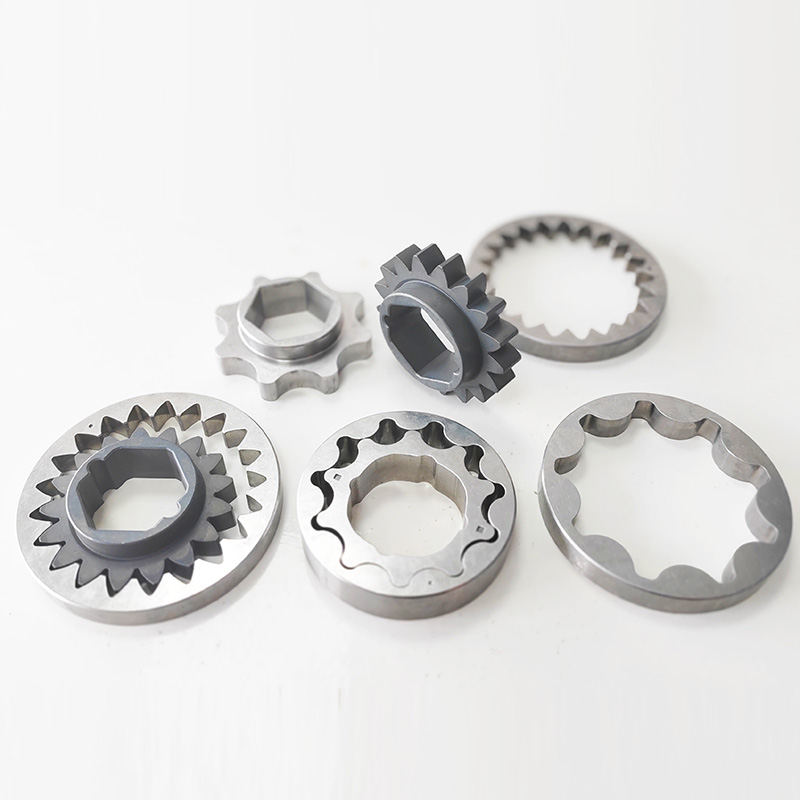
Unlike conventional cut gears, powder metallurgy gears do not require extensive hobbing, shaving, or grinding of the teeth. The tooth form is literally pressed into existence. This makes them incredibly attractive for high-volume industries like automotive, power tools, and home appliances where thousands of identical gears are needed daily.
3 Specifications That Define Quality
Not all gears are created equal. To specify a gear correctly, you must understand these three technical parameters that dictate performance.
1. Density Distribution
The overall density is important, but the distribution matters more for gears. A gear tooth experiences high bending stress at its root. If the density is low at the root fillet, the tooth will snap off. Advanced factories design the tooling so that the powder flow and compaction pressure are concentrated at the tooth profile. You should always ask for a cross-section micrograph of a tooth to verify that the density is uniform from the tip down to the root circle.
2. Tooth Contact Fatigue (TCF) Rating
Gears fail either by bending or by pitting on the flank surface. The porous nature of standard gears historically limited their resistance to surface fatigue. However, modern densification processes like surface rolling or shot peening close the pores on the flank. When assessing a sintered gear, check the TCF rating compared to wrought steel. High-density powder metallurgy gears can now match the TCF of case-hardened wrought gears at a fraction of the cost.
3. Sinter-Hardening Capability
Heat treatment is a secondary bottleneck. A highly advantageous spec is whether the material composition allows for “sinter-hardening.” This means the gear hardens directly during the cooling phase of the sintering furnace, eliminating the need for a separate quenching and tempering line. This saves time and prevents the distortion that often plagues traditionally heat-treated thin gears.
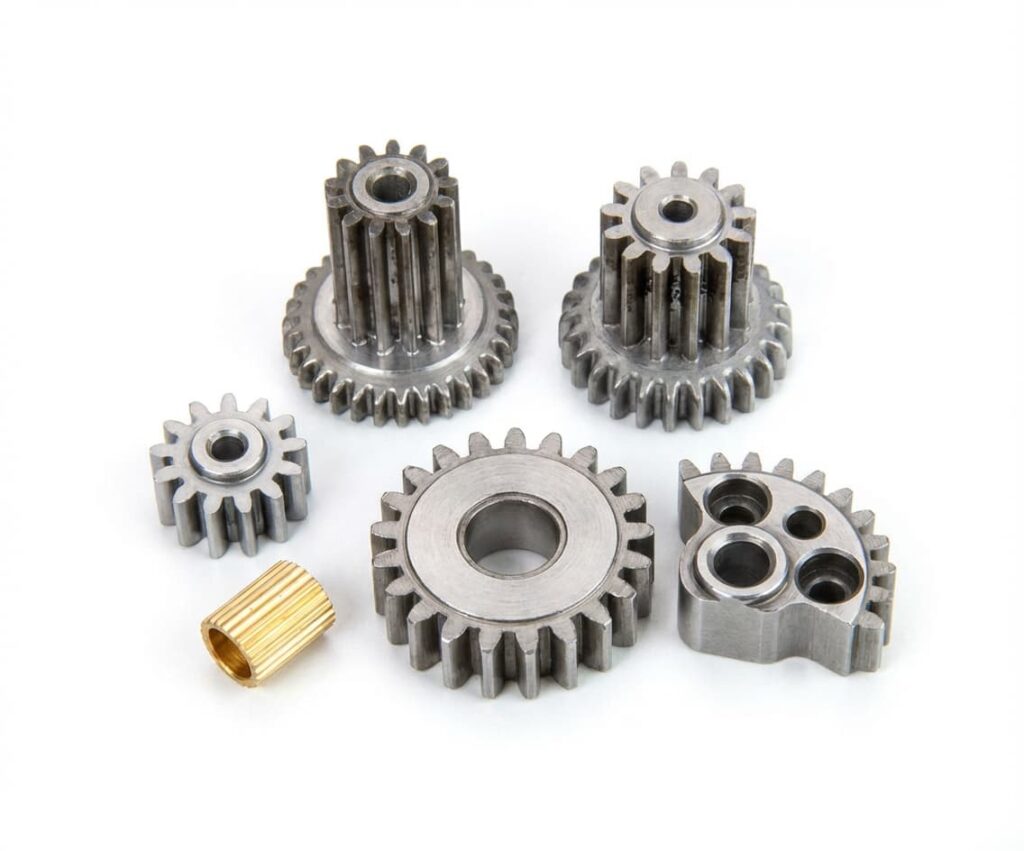
How to Produce It: Step-by-Step Manufacturing
Producing high-performance sintered gears involves a fascinating sequence of steps. Here is how a raw powder becomes a functional gear.
Step 1: Powder Selection and Mixing
The process begins with selecting the base powder, typically a high-compressibility water-atomized iron powder. Alloying elements like copper, nickel, and molybdenum are added to improve hardenability. Graphite powder is mixed in as a carbon source. A solid lubricant like zinc stearate is added to the blend. This lubricant coats the powder particles and reduces friction between the powder and the steel die walls, ensuring the powder compacts evenly.
Step 2: Compaction in a Rigid Die
The blended powder flows into a precisely machined die cavity that is the negative shape of the gear. A hydraulic or mechanical press applies force from both top and bottom punches. The pressure ranges between 400 and 800 megapascals. Under this incredible pressure, the loose powder compresses into a “green compact.” This green part holds its shape like wet sand, thanks to mechanical interlocking and cold welding. At this stage, the gear teeth are already perfectly formed, but the part is brittle as chalk.
Step 3: Sintering in a Controlled Atmosphere
The green compacts are placed on a mesh belt or ceramic trays and slowly conveyed through a sintering furnace. The furnace has a protective atmosphere of nitrogen and hydrogen to prevent oxidation. The temperature rises to about 1120°C for iron-based gears. The powder particles do not melt, but atomic diffusion occurs, welding the particles together and dissolving the graphite into the iron matrix. The gear shrinks in a controlled manner during this step, achieving its final strength.
Step 4: Sizing and Calibration
After sintering, the gear has high strength but may have slight thermal distortion. It is placed in a second precision die and repressed. This step, called sizing, corrects the tooth profile to extremely tight tolerances. It also increases the surface density of the tooth flanks, making them smooth and shiny. For powder metallurgy gears, sizing is what turns a good gear into a premium gear.
Step 5: Secondary Finishing
Depending on the application, the gear may require oil impregnation for self-lubrication. It might be dipped in a hot oil bath, where the vacuum effect of the internal pores sucks the oil in. Alternatively, case hardening using gas carburizing creates a hard surface layer while maintaining a tough core. Finally, magnetic particle inspection verifies the gear is free of cracks.
Related: Process Comparison for Gear Manufacturing
Understanding where powder metallurgy gears fit requires comparing them to other methods. Traditional gear hobbing starts with a solid steel blank and cuts material away. This is flexible for low volumes but wastes metal and time on high-volume runs. Die casting produces metal gears by forcing liquid metal into a mold, but the resulting internal structure is often porous and weaker unless extensively processed. Plastic injection molding is cheap but fails under heavy torque.
The true sibling of powder metallurgy gears is Metal Injection Molding (MIM). MIM uses a similar powder base but mixes it with a wax binder, allowing it to be injected like plastic. MIM is superior for tiny, ultra-complex helical gears weighing less than 10 grams. However, for gears in electric drills, car seat adjusters, or engine oil pumps, traditional pressing and sintering remain much more economical and robust. The simplicity of pressing powder into a tooth shape directly gives powder metallurgy a distinct advantage in speed and cost.
Another related field is surface densification. This advanced process rolls the flanks of a sintered gear under high pressure, effectively squashing the pores closed. This creates a “wrought-like” surface on a powder base. Powder metallurgy gears treated with surface densification can now replace heat-treated cut gears in passenger car manual transmissions, a milestone that was once considered impossible.
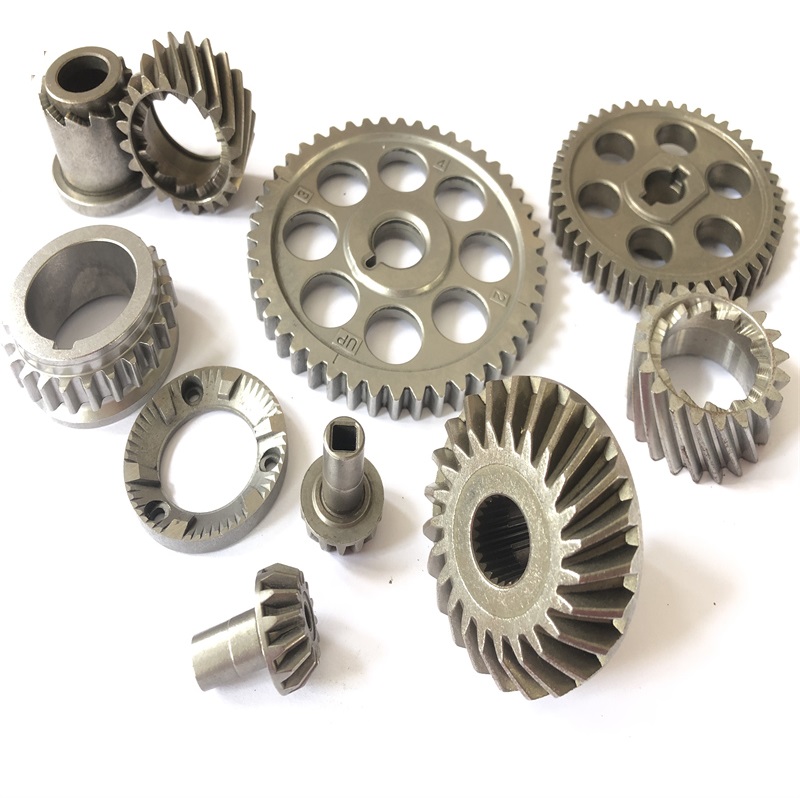
FAQ: Your Powder Metallurgy Gears Questions Answered
1. Can powder metallurgy gears handle high torque?
Yes, modern high-density grades absolutely can. Historically, the internal porosity limited impact resistance. Today, by using a density of 7.3 g/cm³ or higher, combined with sinter-hardening and shot peening, powder metallurgy gears can exceed 1000 MPa in bending fatigue strength. They are successfully used in power tools that stall under high torque and in heavy-duty automotive applications.
2. Do I need to machine the teeth after sintering?
Generally, no. This is the biggest selling point. The tooth profile is a net-shape feature. If your design requires very high precision for noise reduction, the factory applies a sizing or calibration step. However, this is a pressing operation, not a cutting one. If you must create true helical teeth with a twist angle exceeding 25 degrees, helical ejection of the green part becomes mechanically impossible without complex rotational tooling, so some machining might be needed there.
3. Are powder metallurgy gears suitable for wet clutch environments?
Yes, and they often perform better than wrought gears. The inherent porosity of a sintered gear acts as a reservoir for lubricating oil. In a wet clutch or oil pump environment, the gear self-lubricates under centrifugal force. However, the pores must be interconnected and the oil viscosity correctly matched. If the gear is too porous, the oil channels will collapse under heavy load, so a balance of density and permeability is required.
Conclusion
Powder metallurgy gears represent a mature yet constantly advancing technology that combines material efficiency with exceptional performance. By moving the material rather than cutting it away, manufacturers achieve complex tooth profiles that are immediately ready for assembly. From the initial powder blending to the final sizing operation, every process parameter is tightly controlled. Whether you are designing an electric window mechanism or a high-end power tool, powder metallurgy gears offer a proven, reliable, and cost-effective solution that is worth serious engineering consideration.
7 Trusted Custom Powder Metallurgy Companies That Deliver Outstanding Results