Introduction
Powdered metallurgy is a versatile, cost-effective manufacturing process shaping countless industries. This beginner-friendly guide explains basics, specs, advantages, applications, and FAQs to help you understand this essential production method.
What is Powdered Metallurgy?
Powdered metallurgy (PM) is a manufacturing technique that creates solid metal parts from metal powders instead of molten metal. The process typically involves blending fine metal powders, compacting them into a mold under high pressure, and then heating (sintering) the compacted shape in a controlled furnace to bond the particles together. Unlike casting or forging, this method minimizes waste, allows complex shapes, and delivers consistent part quality. It works with various metals and alloys, making it ideal for mass-producing precise, durable components used worldwide.
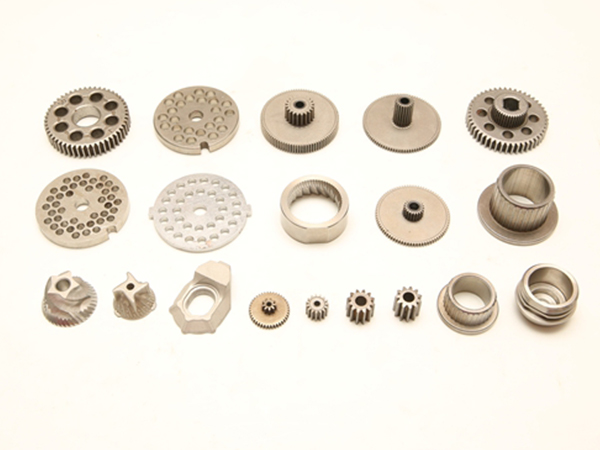
3 Key Specifications of Powdered Metallurgy Parts
When working with powdered metallurgy, three core specifications determine part performance, quality, and compatibility.
1). Particle Size and Distribution
The size of metal powders directly impacts density, strength, and surface finish. Fine powders create smoother surfaces and higher density, while coarser powders improve flowability during molding. Consistent particle distribution ensures uniform compaction and reduces defects in finished parts.
2). Green Density
Green density refers to the density of the metal powder compact before sintering. This specification affects dimensional stability, shrinkage control, and final mechanical properties. Maintaining optimal green density is critical for producing parts that meet exact size and strength requirements.
3). Sintering Temperature and Atmosphere
Sintering is a defining step. The temperature and furnace atmosphere (such as nitrogen or hydrogen) control metal particle bonding, hardness, and porosity. Precise sintering settings prevent cracking, ensure material integrity, and enhance the overall durability of components.
Top Advantages of Powdered Metallurgy
This process offers powerful benefits that make it a top choice for manufacturers across industries.
First, it drastically reduces material waste. Unlike traditional machining that cuts away excess metal, it forms parts near-net-shape, cutting waste to as low as 5% – lowering costs and supporting sustainability.
Second, it enables complex geometries. It produces intricate designs, tiny holes, threads, and custom shapes that are difficult or expensive to make with casting or forging, boosting design flexibility.
Third, it ensures high consistency and repeatability. Once set up, it delivers identical parts in mass production, minimizing errors and maintaining strict quality standards.
Fourth, it lowers production costs. The process uses less energy, reduces labor, and cuts finishing work, making it extremely cost-efficient for high-volume runs.
Fifth, it supports custom material properties. Manufacturers can blend powders to create unique alloys with specific strength, magnetism, or heat resistance tailored to exact application needs.
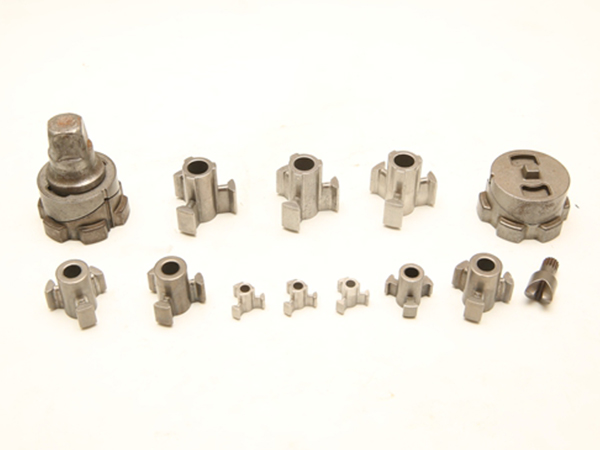
Differences between powder metallurgy and Casting
(1)Raw Material & Molding Principle
Casting relies on molten liquid metal poured into pre-made molds; metal solidifies naturally inside cavities after cooling. The alternative production method uses solid fine metal powder, shaped via mechanical compression then sinter bonding below metal melting point without full liquefaction.
(2)Material Loss & Cost
Casting inevitably produces waste from sprues, runners, gating leftovers and shrinkage rejects, with material wastage often exceeding 20%. Near-net-shape molding drastically cuts scrap rate under 5%, greatly saving raw material cost for bulk manufacturing.
(3)Precision & Structure Feature
Cooling shrinkage of molten metal makes casting hard to maintain tight dimensional tolerance and elaborate tiny inner structures. Compaction-sinter technology stably reproduces complex micro holes, fine tooth structures and customized porous layouts; self-lubricating porous bearings are exclusive to this production route, impossible for regular casting.
(4)Post-Processing Needs
Most cast workpieces require extra cutting, grinding and hole finishing to reach specifications. Parts from powder route nearly skip secondary machining, shortening overall production cycles and lowering labor expense.
(5)Application Scenarios
Casting fits large, thick-wall heavy mechanical parts. The powder-based technology dominates small, high-precision mass-produced components for auto, electronics and hardware industries.
Applications of powder metallurgy
This manufacturing method is used in countless everyday and industrial products due to its reliability and versatility.
In the automotive industry, it makes gears, bearings, valve seats, and engine components that withstand high stress and heat while keeping vehicles lightweight and fuel-efficient.
The hardware and tool industry relies on it for drill bits, fasteners, gears, and mechanical parts that offer long wear life and consistent performance.
Electrical and electronics manufacturers use it to create magnetic components, connectors, and small precision parts essential for motors, sensors, and consumer devices.
Additionally, it supports aerospace, medical devices, and home appliances, proving its value in high-tech and everyday equipment alike.
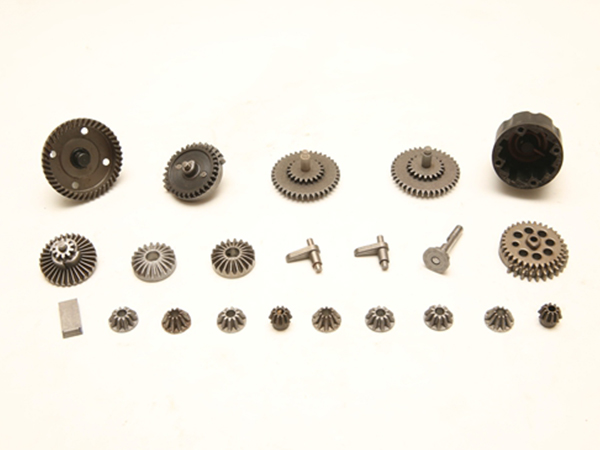
The Process of Powder Metallurgy
The process of powder metallurgy consists of three basic, repeatable steps that turn metal powder into a strong, finished component.
First is powder mixing. Pure metal or alloy powders are weighed and blended to ensure uniform composition. Lubricants may be added to improve flow and prevent sticking in the mold. This step ensures consistency in every batch.
Second is compacting. The mixed powder is poured into a precision die and pressed under high pressure—usually between 80,000 and 180,000 psi. The pressure binds particles tightly together, creating a “green compact” part. It holds its shape but is still fragile before heating.
Third is sintering. The green part is heated in a controlled-atmosphere furnace at a temperature below the metal’s melting point. The heat fuses metal particles together, strengthening the part and reducing porosity. Sintering improves hardness, structural stability, and durability.
Some parts receive extra steps like sizing, coining, or infiltration for tighter tolerances or better performance.
Overall, the process of powder metallurgy is efficient, eco-friendly, and ideal for mass-producing precise, complex parts with low waste and high consistency.
7 Great Stages of the Powder Metallurgy Process Every Engineer Should Know
FAQ About Powdered Metallurgy
Q1: Is powdered metallurgy only for small parts?
A: No. While it excels at small, precise components, it can also produce medium-sized parts used in machinery, automotive systems, and industrial tools.
Q2: How strong are parts made with powdered metallurgy?
A: Parts offer excellent strength, wear resistance, and durability. With proper sintering and alloy blending, they perform reliably in high-load, high-temperature environments.
Q3: Can powdered metallurgy replace casting or forging?
A: In many cases, yes. It is often more cost-effective, less wasteful, and better for complex shapes. It complements casting and forging and is a preferred choice for mass-produced precision components.
Conclusion
Powdered metallurgy is a forward-thinking, efficient manufacturing process that delivers high-quality, consistent parts with minimal waste. From its clear specifications and strong advantages to its wide-ranging applications, it continues to drive innovation in manufacturing. Whether you’re new to the industry or exploring production options, understanding this method reveals why it remains a vital and trusted way to build the products that power our world.