Modern manufacturing demands precision, efficiency, and value — and powder metal components deliver all three. From car engines to kitchen appliances, these versatile parts are quietly powering the products we rely on every day. Here’s everything you need to know.
What Are Powder Metal Components?
Powder metal components are solid metal parts manufactured through a process called powder metallurgy. Instead of cutting or casting metal from a solid block, the process starts with fine metal powders that are compressed into a mold and then heated to fuse the particles into a strong, finished shape.
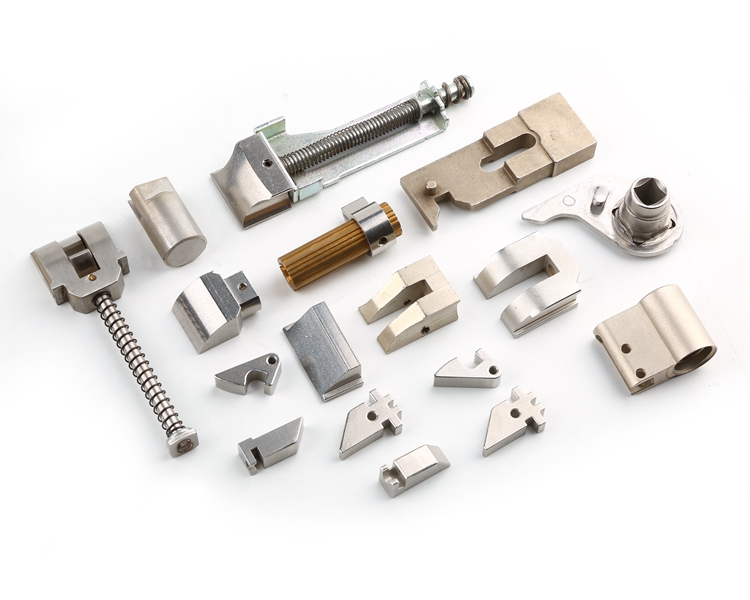
The base powders are typically iron, copper, nickel, stainless steel, or aluminum. Small amounts of lubricants and alloying elements are blended in to improve how the powder flows and compacts during pressing.
What makes these parts unique is their near-net-shape capability. This means each piece comes out of the mold very close to its final dimensions, requiring little or no additional machining. The result is minimal material waste, fast cycle times, and a repeatable process that suits high-volume production perfectly.
Industries ranging from automotive and aerospace to medical devices and consumer electronics depend on these parts for their reliability and dimensional consistency.
3 Key Specifications of Powder Metal Components
Understanding the core specifications helps you select the right parts for your application. Here are the three most important ones:
1. Sintered Density
Density is expressed as a percentage of the material’s theoretical full density. Most sintered parts reach between 80% and 95% of full density after sintering.
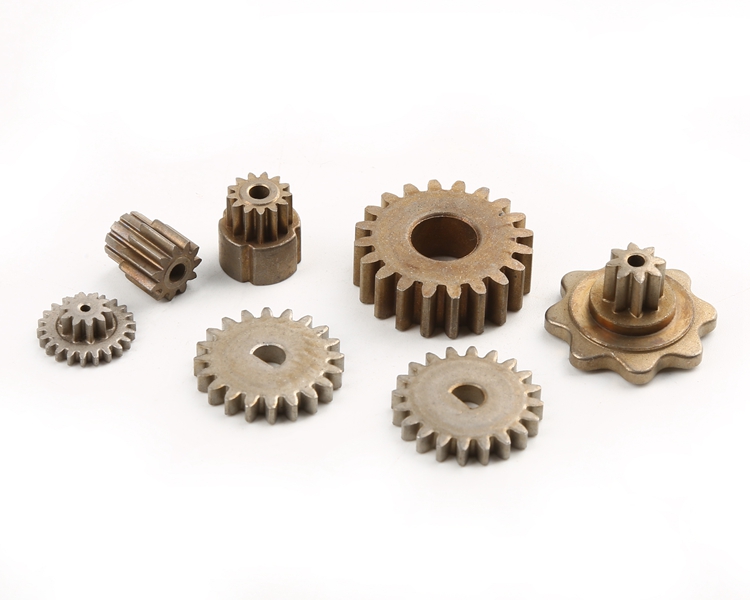
Higher density means greater strength and less porosity. For structural applications such as gears and connecting rods, a density above 90% is typically required. For self-lubricating bearings, lower-density parts are preferred because the open pores hold oil that continuously lubricates the bearing surface during operation.
2. Tensile Strength
Tensile strength measures how much force a part can handle before it breaks under tension. For these components, tensile strength depends on:
- The alloy system used (e.g., iron-copper, iron-nickel-molybdenum)
- The compaction pressure applied during pressing
- The sintering temperature and duration
- Whether secondary heat treatment is applied afterward
Standard grades range from 200 MPa to over 800 MPa in tensile strength. Heat-treated versions can match or approach the strength of many conventional machined steel parts, making them highly competitive in demanding structural applications.
3. Dimensional Tolerance
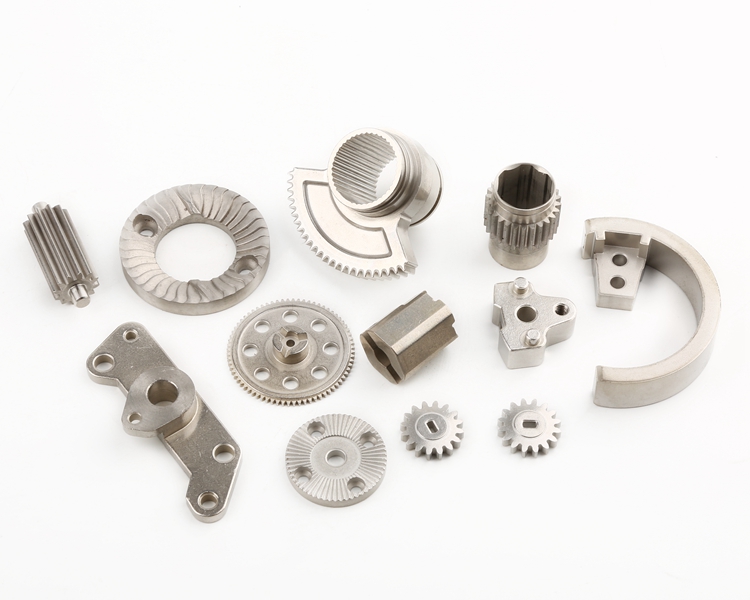
Tight dimensional control is one of the defining advantages of powder metal components. Standard production tolerances of ±0.05 mm on most dimensions are achievable directly from the press and sinter cycle — no grinding or turning required.
This level of precision puts powder metallurgy ahead of sand casting (±1.0 mm) and comparable to, or better than, many die-casting operations. For high-volume parts like timing gears or sprockets, this capability translates directly into consistent assembly performance and reduced quality rejects.
How to Produce Powder Metal Components (Step by Step)
The manufacturing sequence is straightforward once you understand each stage. Here is the complete process:
Step 1 — Select and Blend the Powder Choose the appropriate metal powder blend for the mechanical properties required. Iron-based blends are most common for structural parts. Powdered lubricants such as zinc stearate are mixed in to help the powder flow evenly into the die and release cleanly after pressing.
Step 2 — Design and Build the Tooling A precision die set is machined from hardened tool steel. The die defines the exact external and internal geometry of the finished part. Good tooling design is the foundation of consistent, high-quality production, so this step is worth investing in carefully.
Step 3 — Compact the Powder The blended powder is fed into the die cavity and compressed under pressures between 400 and 800 MPa using a hydraulic or mechanical press. The output — called a green compact — is fragile but already holds the final shape and dimensions of the part.
Step 4 — Sinter the Green Compact The green compact travels through a continuous sintering furnace under a controlled protective atmosphere (typically hydrogen or nitrogen). Temperatures of 1,100–1,300°C cause the powder particles to bond metallurgically without fully melting, producing a strong, solid piece.
Step 5 — Apply Secondary Operations if Needed Depending on the requirements, finished parts may undergo:
- Sizing — repressing to sharpen dimensional accuracy
- Machining — adding threads, cross-holes, or undercuts
- Heat treatment — carburizing or induction hardening for wear resistance
- Oil impregnation — vacuum-soaking for self-lubricating bearing applications
Step 6 — Inspect and Finish Each batch is inspected for dimensions, density, and surface condition. Finishing options include steam treating, zinc plating, electroless nickel, or painting, depending on the corrosion and appearance requirements.
Important Notices When Using Powder Metal Components
Keep these practical points in mind when designing or sourcing these parts:
Design for the process from the start. The process of powder metal components cannot directly produce undercuts, side holes, or re-entrant angles during pressing. Plan for secondary machining if these features are needed, and involve your supplier early in the design phase.
Respect minimum wall thickness. Walls thinner than 1.5 mm are prone to cracking during ejection from the die. Always design with adequate wall thickness and avoid sharp internal corners — use small radii wherever possible.
Protect against corrosion. Iron-based parts will rust without surface protection. Specify steam treating, plating, or oil impregnation for components used in humid, wet, or outdoor environments.
Volume drives value. The tooling investment is significant, so the best cost advantage comes at production volumes of 10,000 parts per year or more. Below that threshold, machining or casting may be more economical.
Frequently Asked Questions About Powder Metal Components
Q1: How do powder metal components compare to cast iron parts in strength?
Modern powder metal components made from iron-nickel or iron-molybdenum alloys with heat treatment can reach tensile strengths above 800 MPa, which is comparable to many cast iron and low-alloy steel grades. The key advantage of powder metallurgy is achieving this strength at net shape, eliminating extensive machining costs.
Q2: Can these parts be used in high-temperature environments?
Yes, with the right material selection. Standard iron-based parts perform well up to around 150°C. For higher temperatures, nickel-based or stainless steel powder alloys are available. Always consult your supplier when the operating temperature exceeds standard limits.
Q3: What surface finishes are available for these parts?
The most common surface treatments include steam treating (which improves hardness and seals surface pores), zinc phosphating, electroplating (nickel or zinc), and epoxy or powder coating. The right choice depends on the corrosion resistance, appearance, and wear requirements of your application.
Conclusion
Powder metal components combine precision, material efficiency, and production speed in a way that few other manufacturing methods can match. Understanding their key specs — sintered density, tensile strength, and dimensional tolerance — along with the step-by-step production process, gives you the foundation to specify and use them confidently. Whether you’re an engineer designing a new product or a buyer sourcing parts at scale, these components are a proven, cost-effective solution worth serious consideration.
6 Amazing Benefits of Powder Metal Parts That Engineers Love
7 Positive Steps to Find the Best Powdered Metal Suppliers for Your Business