Introduction
If you work in manufacturing, engineering, or product design, you’ve probably heard the term sintered metals. But what exactly are they, and why are they becoming so popular across industries? This guide covers everything you need to know — from production to supplier selection.
What Are Sintered Metals?
Sintered metals are materials produced by compacting metal powders and then heating them below their melting point. This process bonds the particles together through solid-state diffusion — creating a strong, dense, and precise component without ever fully melting the material.
Unlike traditional casting or machining, sintering allows manufacturers to create complex shapes with tight tolerances and minimal material waste. The result is a component that is highly consistent, porous or dense depending on design needs, and ready for use in demanding environments.
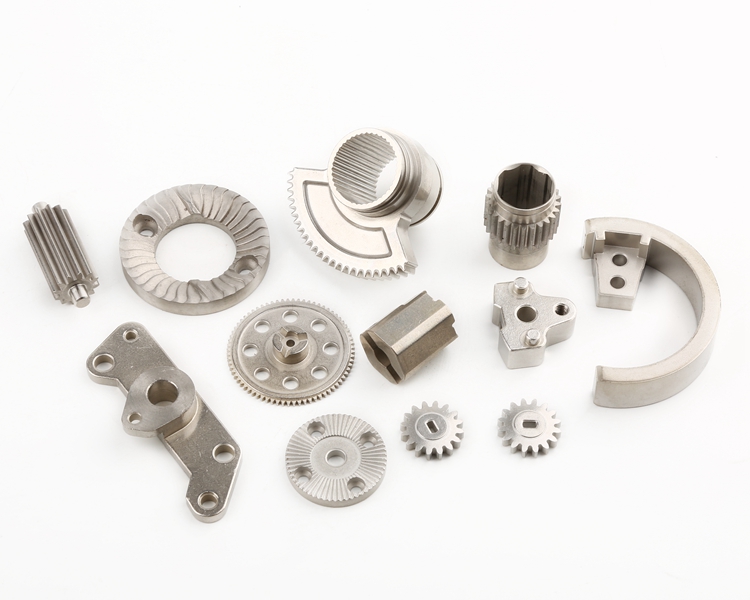
You’ll find these components in automotive parts, filtration systems, bearings, medical devices, gears, and countless other applications. Their unique microstructure gives them properties that other manufacturing methods simply cannot match.
Key Advantages of Sintered Metals
There are many reasons engineers and manufacturers choose these components over conventional alternatives:
- High dimensional accuracy — Components are near-net-shape, requiring little to no post-processing machining, which saves time and cost.
- Excellent material utilization — Metal powder is used efficiently with very little waste, making this an eco-friendly manufacturing option.
- Controlled porosity — Unlike solid castings, these components can be engineered with specific levels of porosity, which is essential for filters, bearings, and fluid-control applications.
- Consistent quality — Automated powder metallurgy processes deliver repeatable, high-quality output suitable for large production runs.
- Wide material compatibility — Stainless steel, bronze, iron, titanium, and many alloys can all be processed using sintering techniques.
- Cost-effectiveness at scale — High tooling investment is offset by low per-part costs in volume production.
- Tailored mechanical properties — Hardness, tensile strength, and porosity can be precisely adjusted to meet specific engineering requirements.
How to Produce Sintered Metals (Step-by-Step)
The manufacturing process follows a clear, controlled sequence:
Step 1: Powder Preparation Metal powders are selected or blended based on the target properties. Common options include iron, stainless steel, copper, and titanium. Particle size, shape, and distribution are carefully controlled at this stage.
Step 2: Mixing Lubricants or binders are often added to improve powder flow and compressibility. In some cases, multiple powders are mixed to create custom alloys.
Step 3: Compaction The powder mixture is poured into a die and compressed under high pressure — typically between 100 and 900 MPa. This forms a “green part” that holds its shape but is still fragile.
Step 4: Sintering (Heating) The green part is placed in a furnace and heated to a temperature just below the melting point of the base metal — usually 70–90% of the melting temperature. This causes solid-state diffusion, bonding the particles together into a strong, cohesive structure.
Step 5: Cooling The component is slowly cooled in a controlled atmosphere to prevent oxidation and reduce internal stress. Cooling rates affect the final microstructure and mechanical properties.
Step 6: Post-Processing (Optional) Depending on the application, additional steps such as sizing, coining, heat treatment, oil impregnation, or surface finishing may be applied to meet final specifications.
7 Tips for Choosing the Best Custom Powder Metal Suppliers
Materials Selection for Sintered Metals
Choosing the right material is critical for getting the best performance from your parts. Here are the most commonly used options:
Stainless Steel (e.g., 316L, 304) Ideal for corrosion-resistant applications such as filters, medical components, and food processing equipment. Offers excellent strength and hygiene properties.
Bronze and Copper-Based Alloys Widely used in self-lubricating bearings and bushings. Porous bronze components can be oil-impregnated to provide continuous lubrication without external maintenance.
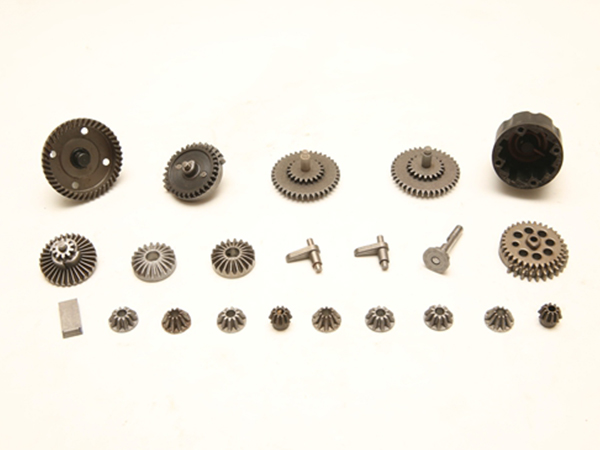
Iron and Iron-Carbon Alloys The most cost-effective choice for structural parts like gears, cams, and sprockets. Can be heat-treated for enhanced hardness.
Titanium Used in high-performance and medical-grade applications where both strength and biocompatibility are required. More expensive but offers outstanding corrosion resistance and a high strength-to-weight ratio.
Nickel and Nickel Alloys Suitable for high-temperature applications, such as aerospace components and heat exchangers.
When selecting a material, consider the operating environment (temperature, chemical exposure), required mechanical properties (tensile strength, hardness), porosity requirements, and budget constraints.
How to Choose a Reliable Sintered Metals Supplier
Finding the right supplier for sintered metals can make or break your project. Here’s what to look for:
1. Industry Experience and Certifications Choose a supplier with a proven track record in your specific industry. Look for ISO 9001 certification or other relevant quality standards that ensure consistent manufacturing processes.
2. Customization Capability Your application may require specific dimensions, porosity levels, or alloy compositions. A good supplier should offer custom engineering support, not just off-the-shelf products.
3. Material Range A reliable supplier should offer a broad range of materials — from stainless steel and bronze to titanium and nickel alloys — giving you flexibility as your product line evolves.
4. Technical Support Experienced engineers on staff can help you optimize your design for sintering and troubleshoot production challenges before they become costly problems.
5. Fast Lead Times and Global Shipping For businesses that need reliable production schedules, supplier responsiveness and logistics capability are essential.
Our Recommendation: SinteredMetals.com
If you’re looking for a trustworthy source, we highly recommend SinteredMetals.com. They specialize in high-quality sintered metals products including filters, bushings, bearings, and fully custom components. With deep expertise in powder metallurgy, a wide range of materials, and responsive customer support, they are an excellent partner for both prototyping and high-volume production. Whether you need standard catalog parts or tailored solutions, SinteredMetals.com delivers quality you can count on.
Frequently Asked Questions (FAQ)
Q1: What industries use sintered metals most commonly?
These components are used across a broad range of industries. The most common include automotive (gears, bearings, brake components), filtration (gas and liquid filters), medical devices (surgical tools, implants), aerospace (structural and thermal components), and industrial machinery (bushings, cams, sprockets). Their versatility makes them one of the most widely applied material categories in modern manufacturing.
Q2: Are these parts as strong as fully cast or machined metals?
In many applications, yes. While they may have slightly lower density than fully wrought metals, modern sintering technology — including hot isostatic pressing (HIP) and high-pressure compaction — produces components with mechanical properties comparable to conventional metals. For most engineering applications, sintered metals deliver more than sufficient strength, especially when factors like controlled porosity and near-net-shape accuracy are considered.
Q3: Can sintered metals be customized for specific pore sizes?
Absolutely. One of the greatest strengths of this manufacturing method is the ability to control porosity precisely. By adjusting powder particle size, compaction pressure, and sintering temperature, manufacturers can engineer specific pore diameters — ranging from sub-micron to several hundred microns. This makes these parts ideal for gas diffusers, liquid filtration, and acoustic dampening where pore size is critical.
Conclusion
Sintered metals represent one of the most versatile and efficient manufacturing solutions available today. From their precise production process to their wide range of material options and performance benefits, they offer real value for nearly every industry. Whether you’re an engineer selecting components or a procurement manager sourcing parts at scale, partnering with a trusted supplier like SinteredMetals.com is the best way to get expert guidance tailored to your exact needs.